




The AWS IoT Device SDK for Swift has officially reached general availability this week. As a participant in the Swift Server Workgroup (SSWG), I found this release particularly noteworthy. The new SDK equips Swift developers working on macOS, iOS, tvOS, and Linux with robust MQTT 5 connectivity, along with support for Device Shadow, Jobs, and fleet provisioning.
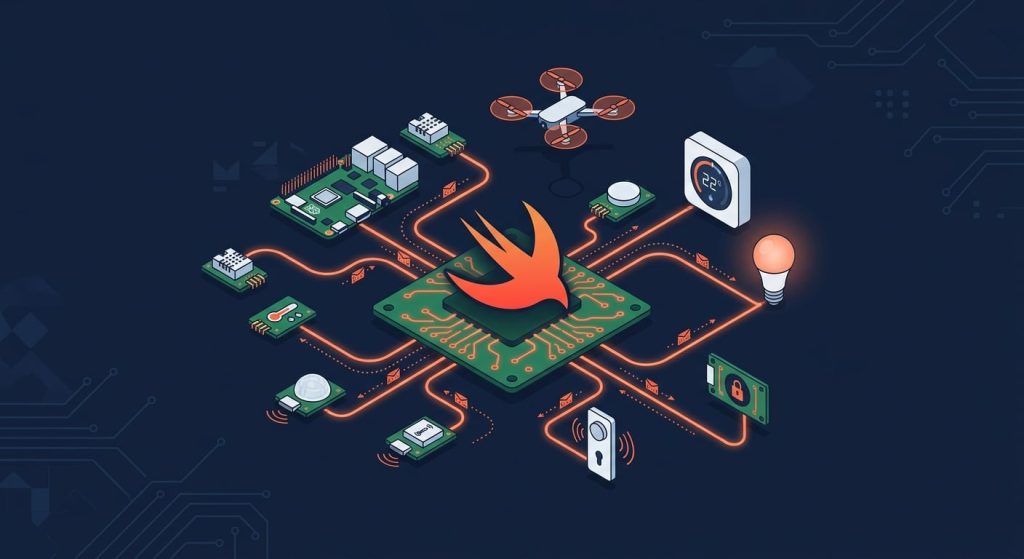
I’m eager to discover what you’ll create with this toolkit. Swift on the server has grown significantly more capable in recent years, and its expansion into the IoT sphere marks another milestone. This aligns with a wider movement toward deploying Swift at the edge. As an example, WendyOS is an open-source OS built for physical AI workloads, providing first-rate Swift support for distributing applications across NVIDIA Jetson and Raspberry Pi platforms. Across server-side development, IoT infrastructure, and edge computing scenarios, Swift is increasingly appearing in contexts that would have seemed unlikely not long ago.
With that, let’s turn to this week’s notable AWS updates.
Key Highlights
Amazon RDS for SQL Server adds Bring Your Own Media support — Those migrating SQL Server workloads from on-premises systems can now leverage their existing Microsoft SQL Server licenses, covering Software Assurance, through Microsoft’s License Mobility arrangement with Amazon RDS. BYOM integrates seamlessly with AWS License Manager to track license consumption and ensure compliance. Explore the details.
Amazon Cognito introduces multi-Region replication — You can now replicate both user and machine identity data—including credentials, user pool settings, and federation configurations—to a secondary user pool in a backup Region with near real-time synchronization. If an outage occurs in the primary Region, already-authenticated users maintain uninterrupted app access without needing to log in again, while registered users can sign in using their current credentials. Multi-Region replication is offered as an optional add-on for user pools at the Essentials or Plus tier across 16 Regions. Dive deeper.
OpenAI’s GPT-5.5, GPT-5.4, and Codex are now production-ready on Amazon Bedrock — These models are now available for production use on Amazon Bedrock. You can leverage GPT-5.5 and GPT-5.4 for enterprise workloads and tap into Codex for AI-assisted software engineering, all under the same security, governance, and operational frameworks you rely on throughout AWS. GPT-5.5 represents OpenAI’s most advanced model to date, with strong performance in agentic coding, data analysis, and multi-step autonomous workflows. Access Codex via the Codex App, the command-line interface, or IDE plugins for Visual Studio Code, JetBrains, and Xcode. Pricing aligns with OpenAI’s direct rates, and all usage contributes toward your existing AWS spending commitments. Learn more.
Recap of recent launches
Several updates and new releases from the past week stood out to me:
- Amazon Bedrock now exposes CloudWatch metrics for OpenAI- and Anthropic-compatible APIs — Monitor inference activity directed at the bedrock-mantle endpoint through detailed CloudWatch metrics. These include inference counts, input and output token volumes, and client error rates—all broken down by account, project, model, or a project-and-model breakdown.
- Amazon Bedrock rolls out a revamped console tailored for OpenAI- and Anthropic-compatible APIs — The updated console features a streamlined workflow, a browsable model catalog, side-by-side comparisons, project-based resource organization, and project-aware docs complete with auto-populated code samples.
- Amazon Bedrock AgentCore Identity adds bring-your-own secrets via AWS Secrets Manager — Link existing Secrets Manager secret ARNs within AgentCore Identity Credential Providers, giving you complete control over secrets management—including custom CMKs, tagging approaches, and automatic rotation policies.
- AWS Step Functions unveils an AgentCore-powered agentic reasoning step — Incorporate AI agent decision-making steps into Step Functions workflows by connecting to the managed orchestration layer in Amazon Bedrock AgentCore. Chain multiple agents together sequentially or in parallel, attach human approval checkpoints, and maintain full traceability over agent decisions.
- Amazon EKS and Amazon EKS Distro add Kubernetes version 1.36 support — Kubernetes 1.36 promotes User Namespaces to stable, debuts Mutating Admission Policies, enables vertical pod-level resource scaling without restarts, and introduces Resource Health Status tracking. Supported wherever EKS is available.
- Amazon ECS Managed Instances now accommodates AWS Trainium and AWS Inferentia hardware — Provision ECS Managed Instances using Inferentia2, Trainium1, and Trainium2 instance types, and ECS will automatically assign all accelerator resources to your pods.
- Amazon Quick introduces VPC connectivity for MCP connections — Enterprises can now securely link privately hosted MCP servers to Amazon Quick through VPC networking, granting controlled access to proprietary tools and internal applications without internet exposure.
- AWS Cost and Usage Report 2.0 adds native Athena and Redshift integration — CUR 2.0 outputs are delivered in the best-suited format for your selected query engine, along with ready-to-deploy infrastructure templates, table schemas, and data ingestion scripts.
- Amazon Location Service launches public transit and intermodal routing capabilities — The Routes API now includes two additional modes—Transit and Intermodal—for mapping trips that blend public transport with walking, driving, taxi, or rental segments across 13 Regions.
For every AWS announcement, stay up to date by bookmarking the What’s New with AWS page.
Coming up: AWS events
Explore AWS offerings, browse and sign up for upcoming AWS-hosted events—both in-person and virtual—including startup gatherings, developer workshops, AWS Summits, and AWS Community Days. Visit the AWS Builder Center to network with fellow builders, exchange solutions, and access resources to accelerate your development journey.
That wraps up this week’s roundup. Return next Monday for the next edition!
— seb
