



Follow ZDNET: Add us as a preferred source on Google.
ZDNET’s key takeaways
- Siri AI now matches the capabilities of leading AI assistants.
- It can handle complex, multi-step commands and requests.
- Apple has also broadened its range of AI models and upgraded its infrastructure.
After years of anticipation, Apple unveiled its AI-enhanced Siri at WWDC on Monday, officially named Siri AI. While retaining some of the familiar features loyal users expect, the assistant now leverages Apple Intelligence—the company’s privacy-focused AI platform introduced two years ago at WWDC 2024—to deliver significantly improved functionality.
However, unlocking the full potential of this new Siri might require an extra payment. Here’s what we currently know.
How Siri AI works
Described by Apple as an entirely reimagined version of Siri, this update makes the assistant far more conversational. It can now tap into internet data and interpret your screen content to respond to queries and perform tasks much more fluidly. This upgrade is powered by Apple Intelligence, now strengthened through a partnership with Google’s Gemini, which the two companies announced in January.
Also: iOS 27 is here: How to download the developer beta now
In practice, it matches what users have grown to rely on in competitors like Gemini and Claude—essentially delivering what many hoped Siri would become before other AI tools emerged. Just like Gemini Personal Intelligence, Siri AI now pulls context from across your Apple ecosystem, retrieving details from your messages, photos, calendars, emails, and other apps using simple, natural language prompts.
For instance, you could ask Siri AI to find the restaurant your colleague mentioned, retrieve a hotel booking from your inbox (similar to Gmail Live, recently launched by Google), compose emails on your behalf, tweak photos, or even help you brainstorm dishes for a group dinner—all while offering more accurate voice transcription.
Beyond the classic voice-activated mode—where “Hey Siri” still works perfectly—there’s now a dedicated Siri AI app that stores your conversation history, much like ChatGPT or Claude. This app syncs seamlessly across all your devices, so you can begin a chat on your iPhone and continue it on your Mac or iPad without missing a beat.
The trade-off for privacy
If these capabilities sound familiar, that’s because they largely mirror what competing AI assistants have offered over the past year. Siri AI essentially brings Apple’s built-in assistant in line with rival tools vying for a place on your device. But Apple emphasizes that it is uniquely engineered to safeguard your privacy—a cornerstone of the company’s brand identity.
This distinction matters. Concerns about data security and privacy have deterred many users from adopting AI features, however, Apple’s robust infrastructure could shift that mindset. The company states that Siri has been completely rebuilt using Apple’s latest Foundation Models, processing data both locally on-device and via the secure cloud environment known as Private Cloud Compute.
Also: The new iOS 27 child safety features I’m most excited about as a parent
“With powerful new features and unmatched privacy protections, Siri remains the world’s most private digital assistant,” Apple affirmed.
During the keynote, Apple’s SVP of Software Engineering, Craig Federighi, briefly mentioned that Siri AI will come with usage limits, and users who need more capacity can pay to upgrade.
The official blog elaborated further:
“Certain Apple Intelligence features—such as image generation—have daily usage caps because they require high-powered server models. Expanded access is included with most iCloud+ subscription plans, which also support Apple Intelligence for compatible Home cameras.”
This aligns with the industry-wide trend of rising AI service costs. Yet, this limitation reinforces the perception that Apple’s AI rollout is still playing catch-up. Worse yet, asking users to pay for image generation when they can get the same result for free from another AI tool may undermine Apple’s privacy advantage.
Availability and delays
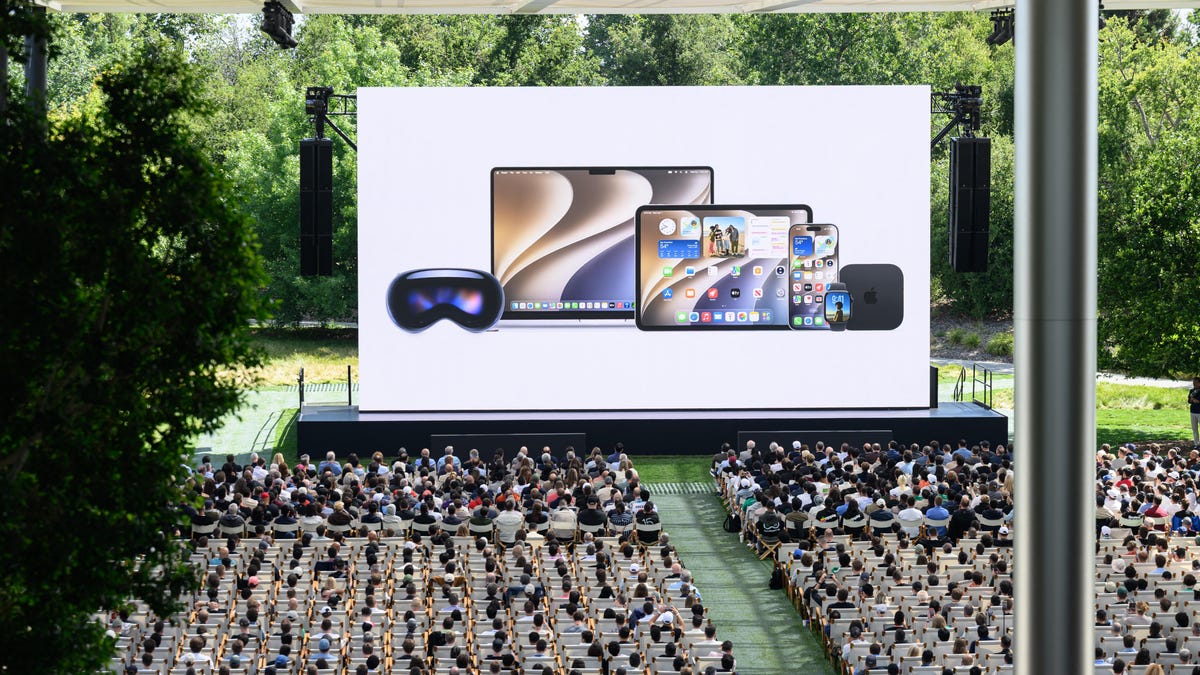
Siri AI is currently available for developer testing via each OS 27 beta—excluding WatchOS—with a public beta expected later this year for devices set to English. Supported devices include iPhone 16 and later, iPhone 15 Pro and Pro Max, iPad mini (A17 Pro), all iPads with M1 or later, Macs with M1 or later, Apple Vision Pro, Apple Watch Series 10 and later, and Apple Watch Ultra 2 and SE 3 (when linked to an AI-enabled iPhone). Apple confirmed this list in its announcement.
However, availability will be restricted in certain regions. Due to compliance with the European Union’s Digital Markets Act (DMA), Apple is currently blocked from launching Siri AI in iOS 27 and iPadOS 27 for EU users—an ironic twist given the feature’s privacy focus. It will, however, be available in macOS 27, VisionOS 27, and WatchOS 27 for those markets. Siri AI will not be released in China.
