



# Adhesives and Curing Technologies for Modern Manufacturing
## The Rise of Light-Curing Adhesives in Production Lines
Manufacturers today are constantly looking for ways to speed up production without sacrificing quality. One of the most effective solutions has been the adoption of UV- and light-curing adhesives. These materials are solvent-free and come as single-component systems, making them safe and straightforward to incorporate into continuous manufacturing workflows.
The key advantage? They solidify in seconds when exposed to ultraviolet or visible light. This rapid curing time means automated assembly lines can maintain their pace without costly delays. For companies running high-volume operations, this technology is a game-changer.
To get the best results from these adhesives, manufacturers need equipment that delivers the correct wavelength and intensity of light. Recent developments in curing equipment have made this easier than ever.
## Line Emitters for Speed and Uniformity
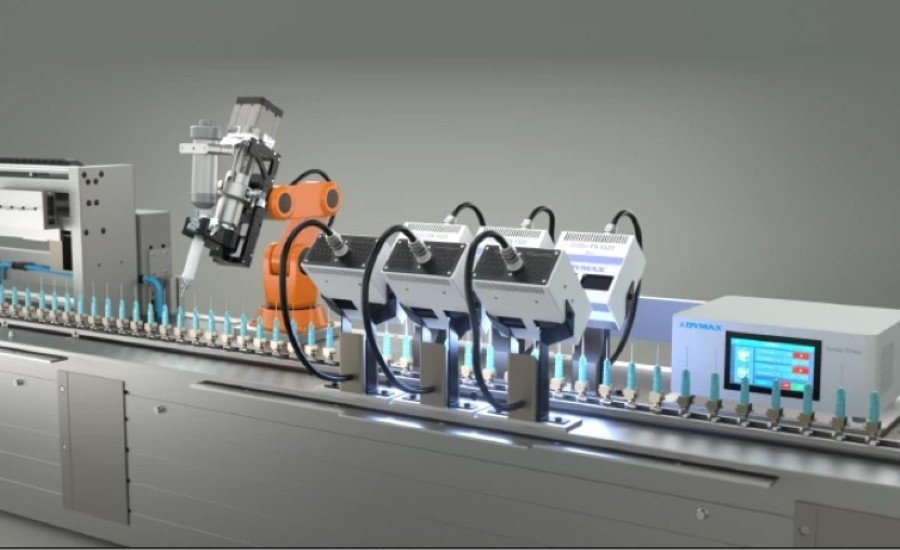
High-speed manufacturing demands consistent, even curing across every product. A new generation of line emitters has been developed to meet this challenge. These devices produce a concentrated band of UV and visible light along a defined line, making them ideal for bonding, printing, and coating applications.
The latest models can generate a peak intensity of 4.2 watts per square centimeter when positioned 25 millimeters from the target surface. Each emitter produces a light line measuring 25 millimeters in width, with lengths available in either 75 or 150 millimeters. Users can select from wavelengths of 365, 385, and 405 nanometers depending on the adhesive formulation and application requirements.
When paired with compatible controllers, these emitters offer scalable, automated integration. Dual-channel control, flexible wavelength configuration, and a user-friendly 7-inch touchscreen interface make operation simple and precise.
## Specialized Adhesives for Demanding Environments
### Potting Compounds for High-Voltage Equipment
In the world of electrical power generation, components need robust protection. Room-temperature vulcanizing (RTV) silicone potting compounds fill this need by providing electrical insulation and mechanical stability in high-voltage generators.
These compounds do more than just coat—they resist partial discharge, absorb mechanical stresses, and stabilize sensitive parts like windings and connection points. They can be formulated to match specific project needs. For instance, softer compounds with a Shore 00 hardness absorb vibration and movement between parts, while firmer formulations with a Shore A hardness of 35 add structural strength.
With a dielectric strength of at least 23 kilovolts per millimeter and low dielectric constants around 2.7, these materials are built for reliability. They are manufactured from ultra-pure raw materials with minimal ionic or metallic impurities. Because large volumes of material must be dispensed when potting generators, vacuum processing is essential to eliminate trapped air and voids. The compounds are specifically formulated to perform well under vacuum conditions, with long working lives, excellent degassing, and smooth flow for efficient, repeatable production.
### Low-Temperature Curing for Sensitive Electronics
One of the biggest challenges in electronics assembly is applying adhesives without damaging heat-sensitive parts. New dual-cure adhesives address this problem by combining UV light fixation with a low-temperature thermal cure step.
These adhesives fully cure in as little as 10 minutes at 60 degrees Celsius or in one hour at 45 degrees Celsius. Traditional adhesives often require temperatures of 80 degrees Celsius or extended bake times of 90 to 120 minutes at 60 degrees Celsius. The lower-temperature option cuts cycle times dramatically—up to 2.5 times faster in some cases—and protects delicate components from thermal damage.
The reduced heat also opens up new material possibilities. Small integrated batteries that would degrade in conventional curing ovens can now stay in place during assembly. Cellulose-based substrates, once considered incompatible with heat-curing processes, become viable bonding partners. Simulations have confirmed that curing at lower temperatures significantly reduces component deformation, leading to better optical stability and long-term reliability verified through temperature shock testing.
### Ceramic Adhesives for Extreme Heat
For applications involving extreme temperatures, alumina-based ceramic adhesives provide unmatched performance. These materials offer high thermal conductivity and excellent electrical resistance, making them perfect for high-power devices that must operate reliably at temperatures up to 3,000 degrees Fahrenheit.
The adhesive cures at room temperature within 24 hours, though heat can be applied to accelerate the process. Two formulations are available: a regular grade optimized for maximum thermal conductivity and an extra-fine grade suited for small, intricate components where precision matters.
### Bonding Difficult Substrates Like Silicone
Silicone is notoriously hard to bond because of its low surface energy. A new high-performance industrial adhesive has been developed specifically to overcome this challenge. It creates a permanent, high-strength bond to silicone substrates without sacrificing the flexibility or integrity of the silicone parts.
This adhesive works for silicone-to-silicone joints and also bonds silicone to metals, wood, and various plastics including ABS, polycarbonate, and thermoplastic polyurethane. The result is a durable, flexible connection suitable for demanding industrial applications.
## Advanced Dispensing for Next-Generation Packaging
As electronic packages grow larger and more complex, traditional dispensing methods fall short. A new fluid dispensing platform has been engineered to address the unique demands of panel-level packaging, particularly for advanced semiconductor applications.
Panel-level packaging offers significant advantages over wafer-level processing. It enables higher throughput and lower per-unit manufacturing costs, which becomes especially important as package sizes increase and production demands grow for applications like artificial intelligence hardware and electric vehicles.
However, scaling up to large-format panels introduces technical hurdles—warpage, thermal inconsistencies, and dispensing accuracy all require specialized solutions. The new platform tackles these challenges with features including improved underfill flow for void-free results, support for large panel sizes, integrated thermal management for rapid and uniform heating, multi-fiducial capture for fast alignment, confocal height sensing that works on both reflective and transparent glass panels, and post-dispense inspection to streamline rework.
—
## Frequently Asked Questions
**Q: What are UV-curing adhesives, and why are they popular in manufacturing?**
A: UV-curing adhesives are single-component, solvent-free materials that harden when exposed to ultraviolet or visible light. They are popular because they cure in seconds, which keeps automated production lines moving quickly without sacrificing bond quality.
**Q: Why is wavelength important in light-curing applications?**
A: Different adhesive formulations require specific wavelengths of light to initiate polymerization effectively. Using the wrong wavelength can result in incomplete curing, weak bonds, or production defects. Equipment that offers multiple wavelength options ensures compatibility with a wider range of adhesives.
**Q: What is potting, and why is vacuum processing used?**
A: Potting is the process of filling an entire assembly with a protective compound to shield it from moisture, vibration, and electrical interference. Vacuum processing removes air bubbles and trapped voids from the compound before it cures, ensuring a uniform, reliable protective layer.
**Q: How do low-temperature curing adhesives benefit electronics manufacturing?**
A: They allow adhesive bonds to form at temperatures well below what conventional processes require. This protects heat-sensitive components like batteries and flexible substrates, reduces cycle times significantly, and prevents warping or deformation of delicate parts.
**Q: What is panel-level packaging, and how does it differ from wafer-level packaging?**
A: Panel-level packaging processes multiple semiconductor packages on a larger panel substrate rather than individual wafers. It offers higher throughput and lower costs per unit, making it increasingly attractive for high-demand applications like AI computing and automotive electronics.
**Q: Can silicone be bonded to other materials reliably?**
A: Yes. Specialized adhesives formulated for low-surface-energy materials can create permanent, high-strength bonds between silicone and metals, plastics, wood, and other substrates. These adhesives maintain the flexibility of the silicone while delivering structural integrity.
—
## Conclusion
The adhesives and curing equipment landscape has evolved significantly to meet the demands of modern manufacturing. From light-curing systems that operate in seconds to specialized potting compounds for high-voltage equipment and low-temperature adhesives that protect sensitive electronics, manufacturers now have a powerful toolkit at their disposal. Innovations in dispensing technology further support the trend toward higher throughput and greater precision, particularly in advanced semiconductor packaging. By selecting the right combination of adhesive chemistry and curing equipment, production teams can achieve faster cycle times, improved product reliability, and expanded material compatibility—all critical advantages in today’s competitive manufacturing environment.
Thank you for reading
