



# How Robotic Driving Is Transforming Car Factory Lines
## A Major Milestone in Automated Manufacturing Logistics
Moving finished vehicles off a production line used to require a human driver behind the wheel. Now, autonomous driving technology is taking over that task — and one major automaker has just hit a remarkable milestone. A leading car manufacturer, working with a specialized robotics company, has successfully moved one million vehicles using automated driving systems across multiple factory sites in Europe.
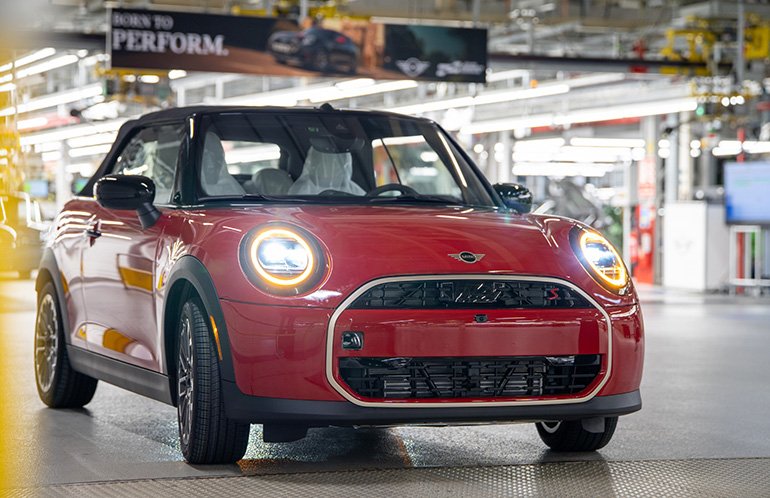
The technology is already in daily use at production facilities in Germany and the United Kingdom, handling vehicle transport tasks that range from moving cars between assembly stations to delivering finished vehicles to parking and shipping areas. What makes this achievement especially impressive is that it’s not a lab experiment — it’s running around the clock in real factory environments alongside human workers.
## Why This Matters for the Auto Industry
Car manufacturers are always looking for ways to make their factories safer, faster, and more flexible. Automated driving on the factory floor addresses several challenges at once:
– **Safety** — Reducing the risk of human error in a busy and often crowded production environment.
– **Reliability** — Keeping vehicles moving consistently without breaks tied to shift changes.
– **Precision** — Navigating tight factory spaces with exact control over every movement.
– **24/7 Operations** — Enabling round-the-clock vehicle transport regardless of staffing schedules.
The system works by using sensors and cameras installed in the factory environment itself rather than modifying each individual vehicle. This means existing production line vehicles can be moved autonomously without costly hardware upgrades.
## From Pilot Program to Full-Scale Deployment
What began as a smaller test project has grown into a full-scale, permanent operation. The automated system is now active at multiple production locations, supporting different car brands, vehicle types, and specific factory workflows. The rollout has shown that the technology is precise and dependable enough to be trusted in live, high-demand manufacturing settings.
Day-to-day operations involve a central system that manages routes, coordinates multiple vehicles at once, and communicates with the factory’s existing digital infrastructure. The result is a smoother, more predictable flow of vehicles through the factory, reducing bottlenecks and downtime.
## Looking Ahead
The success so far has opened the door to further expansion. Plans are already underway to bring the automated driving system to additional factory locations, and the companies behind the technology are exploring new applications and new partners across the automotive and logistics sectors.
The goal is clear: make factory vehicle transport smarter, safer, and more efficient — and eventually roll it out on a global scale.
—
## Frequently Asked Questions (FAQ)
**What is automated driving in a factory setting?**
It is the use of software and sensors to move vehicles — typically finished or partially finished cars — along predefined routes inside a manufacturing facility without a human driver behind the wheel.
**Why don’t the vehicles need to be modified?**
The system relies on sensors and cameras mounted in the factory environment, not on the vehicles themselves. This means any vehicle on the line can be moved autonomously as long as it has basic electronic controls that the system can interface with.
**Is this technology safe to use around human workers?**
Yes. The system is designed with a safety-first approach, using a separately certified architecture that enforces strict boundaries on how and where vehicles can move. It is built to operate safely alongside factory workers and manually driven vehicles at all times.
**Can the system handle all weather and factory conditions?**
The technology is designed to work reliably in all conditions found inside a factory, including varying lighting and environmental factors.
**How many vehicles does the system move each day?**
In its current deployment, the system handles thousands of vehicle movements per day while maintaining a very high level of operational availability — well above 99%.
**Are other car manufacturers using this technology?**
While the details of specific partnerships are often kept confidential, the technology has been proven effective across multiple brands and factory sites, and there is growing interest from other manufacturers looking to adopt similar solutions.
—
## Conclusion
The one million vehicle milestone is more than just a number — it represents proof that autonomous driving on a factory floor is no longer experimental. It works, it scales, and it delivers real value in terms of safety, efficiency, and operational flexibility. As car manufacturers around the world continue to modernize their production lines, automated vehicle transport is fast becoming a standard tool in the quest for smarter, more resilient factories.
Thank you for reading
