



# Humanoid Robots Are Taking Over Warehouses: How One Major Partnership Is Leading the Way
**Warehouse automation is entering a bold new chapter.** Two industry leaders have joined forces to put walking, human-shaped robots to work inside real fulfillment centers — and the results are drawing attention across the logistics world.
## The Partnership Behind the Movement
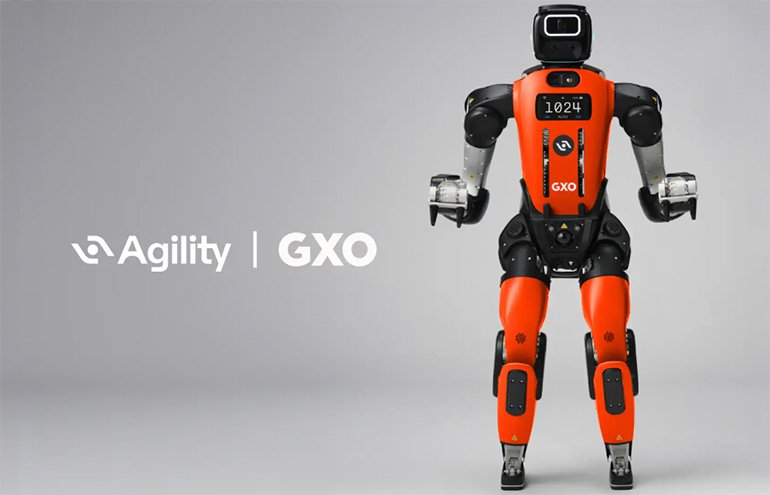
Agility Robotics, a company based in Salem, Oregon, has been building its Digit humanoid robot since its founding in 2015. GXO Logistics, one of the largest third-party logistics providers in the world, has been testing and working with Digit since late 2023. Together, the two companies are now expanding their collaboration to new warehouse locations across the southeastern United States.
The latest agreement calls for Digit robots to handle e-commerce fulfillment tasks at GXO sites in Statesville, Tennessee, and Lebanon, Indiana. Both companies plan to begin deploying the next-generation Digit 4 model in early 2027.
## What Can Digit Actually Do?
Digit is a bipedal humanoid robot designed for industrial environments. In GXO warehouses, the robot has been tasked with repetitive material handling — picking up containers called totes, carrying them across the floor, and placing them onto conveyor systems. It works alongside existing automated equipment and uses a cloud-based platform called Agility Arc to coordinate its movements with other robots and systems.
In one facility alone, Digit moved more than 100,000 totes over the course of a year. That track record gave the robot industry-wide recognition, including a prestigious Robot of the Year award in 2024.
The upcoming Digit 5 model features redesigned legs, improved safety sensors for working near human coworkers, and broader capabilities to handle different types of warehouse tasks. GXO has confirmed it will transition to Digit 5 once it becomes commercially available.
## Building for Scale
Agility Robotics isn’t just building robots — it’s building the infrastructure to produce them at scale. The company operates a 70,000-square-foot manufacturing facility called RoboFab, capable of producing up to 10,000 robots per year. Plans for a second facility in Pittsburgh, covering 50,000 square feet, are meant to support the growing demand for commercial deployments.
Agility says it has over 30 prospective customers in its pipeline spanning manufacturing, logistics, aerospace, defense, and consumer products. The company also recently struck a fast-charging deal with Nyobolt, deepened its partnership with NVIDIA, and is preparing for a 2027 deployment at an AGCO factory that builds agricultural equipment.
## Why GXO Chose Humanoids
GXO Logistics operates over 1,000 facilities worldwide with a workforce exceeding 150,000 people. The company has tested other humanoid robots as well, including Apollo from Apptronik and Reflex from Reflex Robotics, and has run more than 45 humanoid pilot programs across multiple continents.
According to GXO’s CEO, the goal is to use real-world testing to refine technology and unlock tangible value for both customers and employees. The company acknowledges that humanoid deployments have not yet delivered a measurable return on investment, but executives believe the long-term benefits — including a better work environment for warehouse teams — justify the investment.
## The Road Ahead
Humanoid robots in warehouses are no longer a futuristic concept. With companies like Agility and GXO proving that these machines can work reliably alongside people in active operations, the industry is shifting from asking “can this work?” to “where can we scale it?”
The combination of improved hardware, smarter software, and strong commercial partnerships suggests that humanoid robots will become a familiar sight in fulfillment centers in the near future.
—
## Frequently Asked Questions
**What is a humanoid robot?**
A humanoid robot is a machine designed with a body structure that resembles the human form, typically featuring two legs, two arms, and a torso. This design allows it to navigate environments built for people, such as warehouses, stairs, and hallways.
**What does Digit do in a warehouse?**
Digit picks up and carries containers called totes, moves them across the warehouse floor, and places them on conveyor belts or other automation systems. It handles repetitive material handling tasks that are physically demanding for human workers.
**Is this the first time humanoid robots have been used in commercial warehouses?**
The initial deployment of Digit at a GXO facility in late 2023 was widely recognized as the first commercial use of a humanoid robot in live warehouse operations under a formal agreement.
**How does the robot stay safe around human workers?**
The Digit robot uses advanced sensors and safety systems to detect people and obstacles in its path. The upcoming Digit 5 model includes further improvements specifically designed for safe operation near humans.
**Will human workers lose their jobs because of these robots?**
Both companies have emphasized that humanoid robots are being introduced to handle repetitive and physically demanding tasks, with the goal of improving the overall work environment rather than replacing workers entirely.
**What does “robotics-as-a-service” mean?**
Robotics-as-a-service (RaaS) is a business model where companies lease or subscribe to robotic systems rather than purchasing them outright. This allows businesses to try new technology with lower upfront costs and more flexibility.
**When can we expect to see more humanoid robots in warehouses?**
Early deployments are already underway, and companies are planning to expand to additional sites in 2027 and beyond. As costs decrease and capabilities improve, adoption is expected to grow steadily.
—
## Conclusion
The collaboration between Agility Robotics and GXO Logistics represents a significant step forward for the use of humanoid robots in real-world industrial settings. From moving tens of thousands of totes in active warehouses to preparing next-generation models for broader tasks, this partnership is helping bridge the gap between experimental technology and everyday operations. As manufacturing and logistics companies continue to invest in automation, humanoid robots like Digit are poised to become a regular part of the supply chain.
Thank you for reading
