



# Generative Bionics Unveils Plans for Europe’s Largest Physical AI Training Hub
Italy is about to become home to one of the most ambitious humanoid robotics projects in the world. Generative Bionics, a robotics company based in Genoa, Italy, has announced plans to construct a massive new facility designed to train the next generation of industrial humanoid robots using real-world physical data.
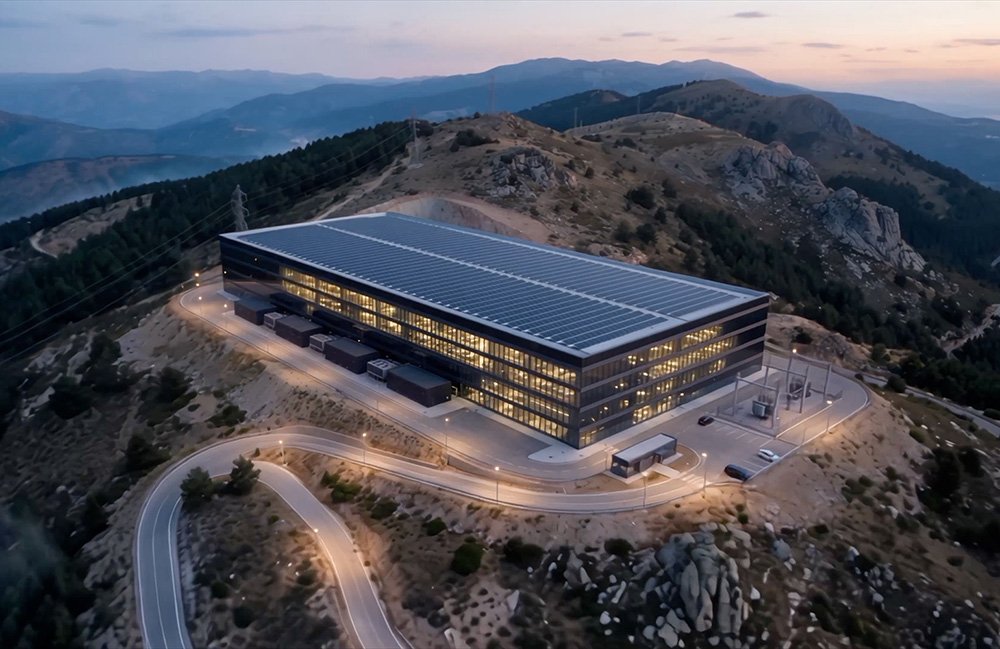
The so-called “Physical AI Data Factory” will span 5,000 square meters (roughly 54,000 square feet) and is expected to be fully operational by the fourth quarter of 2027. This hub will serve as the foundation for a growing network of facilities, with plans for a second location elsewhere in Europe and a third facility aimed at serving global markets down the road.
## Why This Matters for the Future of Humanoid Robots
Humanoid robots have long been showcased in impressive laboratory demonstrations, but translating those flashy displays into dependable, real-world industrial applications has proven difficult. One of the biggest hurdles is the lack of high-quality physical data — the kind of information robots need to understand how to interact with the real world safely and effectively.
The Data Factory aims to solve this problem by creating a continuous loop between real-world operations, computer simulations, and AI training. Robots will perform actual industrial tasks, the data from those tasks will be fed into AI models, and those models will be tested in thousands of simulated variations before being deployed back to the robots for validation. This “real-to-sim-to-real” cycle is designed to accelerate how quickly humanoid robots become reliable and safe for everyday industrial work.
## Built with AMD Technology at Its Core
To power this enormous data-processing and simulation effort, Generative Bionics has partnered with Advanced Micro Devices Inc. (AMD). AMD’s Helios rack-scale architecture will provide the computing backbone needed to process both real physical data and synthetic data generated through digital twins, train complex AI models, and run massive simulation scenarios all at once.
## Meet GENE.01: A Humanoid Built for Industrial Work
At the heart of this initiative is GENE.01, Generative Bionics’ flagship humanoid robot. Unlike many robots that rely primarily on cameras and speech for perception, GENE.01 is equipped with full-body tactile sensing, allowing it to feel touch, pressure, proximity, temperature, and contact forces across its entire body.
CEO Daniele Pucci emphasized the importance of this multi-sensory approach.
> “A robot is not only vision and is not only language. It is position, velocity, acceleration, temperature, and contact forces, so there is a large variety of data that you have to take into account.”
This rich sensory capability is what will allow GENE.01 to learn how to operate safely alongside humans and in unpredictable industrial environments.
## Europe’s Path to Robotics Independence
One of the central motivations behind the Data Factory is the desire for European humanoid sovereignty. Pucci argues that Europe already has a tremendous advantage — decades of automation and industrial expertise — but that advantage will only matter if the continent can produce its own data, its own robots, and its own AI models.
> “We have the ambition of being the European champion in physical AI, and even robotics, designed to scale globally,” Pucci said.
Pucci also took a moment to address the growing global conversation around humanoid robots, particularly the attention surrounding Chinese robotics companies.
> “Many of the Chinese robots that are out there are simply not certified to enter industrial settings,” she said. “The narrative that the Chinese solved the issues is very far from reality.”
Generative Bionics is positioning itself as a company that takes safety and industrial certification seriously, aiming to serve business-to-business (B2B) customers first rather than chasing entertainment or demo-focused markets.
## Built for Many Industries, Not Just One
A key design philosophy behind GENE.01 is modularity. Rather than trying to build a single robot that does everything, Generative Bionics is creating a common platform that can be customized at three levels:
– **AI Software** — Different industries require different decision-making capabilities. A robot that moves boxes in a warehouse needs a different AI model than one assisting in a hospital.
– **Exterior Design** — The robot’s body may need to withstand extreme heat, sparks, dust, or sterile environments depending on where it works.
– **Hands and Feet** — The physical end-effectors are adapted to handle the specific tools, objects, and surfaces of each industry.
This approach mirrors the strategy used in the automotive industry, where a single manufacturing platform can be adapted to produce different vehicle models.
## The Long Road Ahead
The company is drawing on more than 20 years of humanoid robotics research from the Italian Institute of Technology (IIT), from which Generative Bionics spun out in 2024. With exclusive licenses to key technologies from IIT, the company is entering a phase of scaling that could reshape how humanoid robots move from research labs to factory floors.
The first Data Factory hub in Genoa will be the proof of concept. If successful, it could become one of Europe’s largest physical AI training facilities and a blueprint for how the world trains robots for real-world work.
—
## Frequently Asked Questions (FAQ)
**What is Generative Bionics?**
Generative Bionics is an Italian robotics company headquartered in Genoa, Italy, that develops humanoid robots and physical AI systems for industrial applications. It was spun out of the Italian Institute of Technology in 2024.
**What is the Physical AI Data Factory?**
The Physical AI Data Factory is a planned network of facilities where humanoid robots like GENE.01 will perform real industrial tasks, generating physical data that is used to train AI models. This data is also used to create digital twins for simulation, creating a continuous cycle of learning and improvement.
**Where is the first facility being built?**
The first Data Factory hub will be located in Genoa, Italy. It is expected to span 5,000 square meters and become operational in Q4 2027.
**Who is Generative Bionics partnering with?**
Advanced Micro Devices Inc. (AMD) is the company’s AI infrastructure partner. AMD’s Helios rack-scale architecture will power the computing needs of the Data Factory network.
**What is GENE.01?**
GENE.01 is Generative Bionics’ humanoid robot platform. It features full-body tactile sensing, including the ability to detect touch, pressure, proximity, temperature, and contact forces across its entire body.
**Why is European sovereignty in humanoid robotics important?**
Generative Bionics believes Europe has an opportunity to control the full pipeline of humanoid robotics — from data collection and model training to robot manufacturing — rather than relying on external sources for these critical technologies.
**How does the Data Factory use digital twins?**
Digital twins are virtual recreations of both physical environments and robots. By simulating the same tasks across thousands of different conditions, layouts, and failure scenarios, the Data Factory can train and test AI models at a scale that would be impractical or impossible to achieve through physical testing alone.
**Can GENE.01 be adapted for different industries?**
Yes. The platform is designed to be customized at three levels — the AI software, the exterior design, and the hands and feet — allowing it to be tailored for industries ranging from manufacturing and warehousing to healthcare and beyond.
**Is Generative Bionics focused on consumer or business customers?**
The company is focused on business-to-business (B2B) deployment, with an emphasis on safety, certification, and industrial reliability rather than entertainment or consumer applications.
—
## Conclusion
Generative Bionics’ Physical AI Data Factory represents a bold step toward closing the gap between humanoid robotics demos and real-world industrial deployment. By combining real-world data collection, powerful simulation, and cutting-edge AI infrastructure powered by AMD, the company is building a system designed to accelerate learning in ways that have never been done at this scale before.
With a clear vision for European sovereignty in robotics, a modular and customizable robot platform, and two decades of research to build upon, Generative Bionics is positioned to become a key player in the global humanoid robotics landscape. The success of the first facility in Genoa could set a standard for how the world trains and deploys intelligent machines in the workplace.
Thank you for reading
