



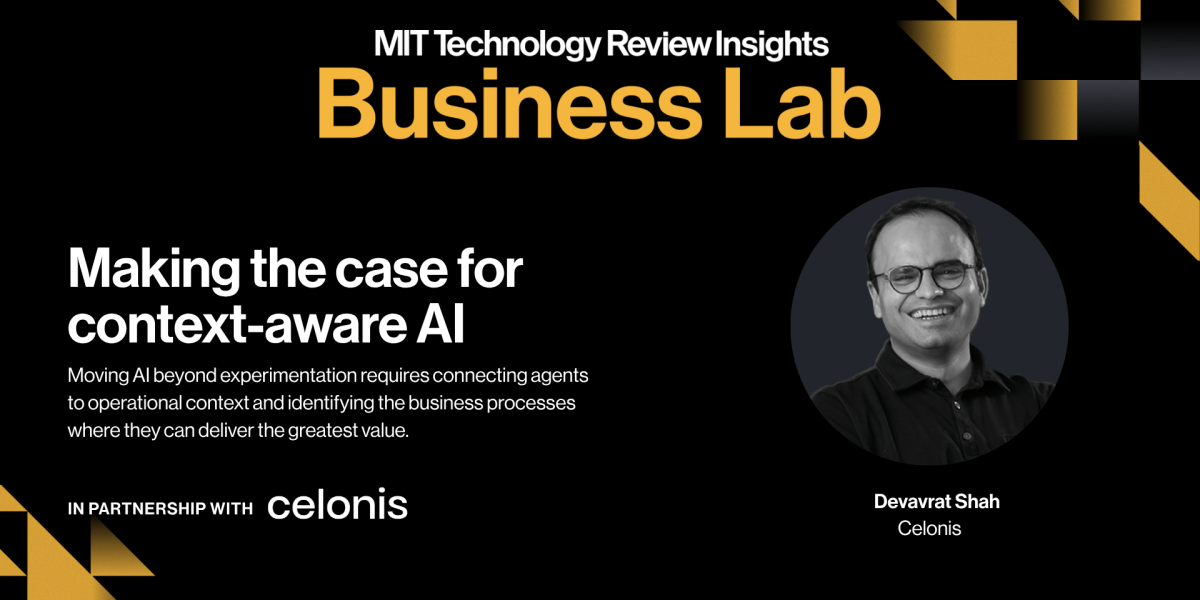
# How AI Is Transforming Enterprise Decision-Making
Artificial intelligence is no longer a futuristic concept reserved for tech experiments. It has quietly moved into the mainstream, and businesses of all sizes are beginning to recognize its enormous potential. But as organizations race to adopt AI, an important question emerges: **How can companies use AI to make better decisions without creating costly mistakes?**
The answer lies in something called **decision intelligence**, and it all starts with understanding context.
—
## Why AI Needs Context to Make Good Decisions
Think about how decisions work inside a typical organization. There are high-level strategic choices made occasionally — things like entering a new market or launching a product. Then there are operational decisions that happen every single day — routing orders, managing supply chains, approving invoices, and coordinating teams.
Behind every one of these decisions are roles and tasks performed by people. Someone reviews the data. Someone applies their expertise. Someone follows a process. And at the end of all those steps, a decision is reached.
AI has the power to step into many of these roles. It can support, augment, or even automate parts of the decision-making process. But here’s the catch: **AI cannot do this effectively without understanding the context**.
Imagine handing an incredibly smart person a global encyclopedia and asking them to recommend a restaurant in your neighborhood. Eventually, they might figure it out, but it would take a ridiculous amount of effort for such a simple task. Worse, they might give you a suggestion that completely ignores your dietary restrictions, your budget, or the fact that you’re vegetarian.
That is what happens when AI is deployed without the right context in an enterprise. For low-stakes decisions, the mistake might be minor — like a recommendation that doesn’t quite land. But for high-stakes business decisions, the consequences can be severe. A poorly informed AI forecast could lead to massive financial losses or operational failures.
This is why context is not optional — it is essential.
—
## The Role of Process Intelligence
So how do organizations actually provide AI with the context it needs? The key lies in understanding the **processes** that already exist within the business.
Every enterprise has processes — some well-documented, some informal, and some tangled together in complex ways. Process intelligence is the discipline of mapping, analyzing, and improving these processes so that they work more efficiently and reliably.
By digitizing and understanding these processes, organizations create a clear picture of how work actually gets done. They can identify bottlenecks, spot inefficiencies, and understand the constraints and guardrails that keep the business running smoothly.
When AI agents are built on top of this process intelligence, they don’t operate blindly. Instead, they understand the specific role they are playing within a larger workflow. They know what step comes next, what information is available, and what boundaries they need to respect.
This approach allows businesses to bring **AI-powered agents** into their operations in a structured, reliable way — turning raw data into intelligent, context-aware decision support.
—
## How Digital Twins Fit Into the Picture
One of the most powerful ways organizations can provide AI with real-time context is through **digital twins** — dynamic, up-to-date virtual representations of their actual operations.
A digital twin continuously mirrors what is happening across an organization’s systems and processes. It captures live data, tracks performance, and reflects changes as they occur. Think of it as a living map of the business that always shows the current state of operations.
When AI is connected to a digital twin, it gains access to a constant stream of accurate, real-time information. This means decisions are informed by what is actually happening right now, not by stale or incomplete data. It also means that AI systems can be monitored and corrected more easily because there is always a clear reference point for what “normal” looks like.
—
## Building Layers of Intelligence
For AI to deliver maximum value, it needs to work alongside — not replace — the existing systems that keep a business running. This is why a layered approach to AI adoption makes so much sense.
At the foundation, there are the **systems of record** — the databases, ERP platforms, and transactional systems that store the raw facts and figures of the business. Above that sits the **process intelligence layer**, which organizes and interprets that data into meaningful workflows and insights. At the top is the **AI decision layer**, where intelligent agents use all of the context below them to support or automate decisions.
Each layer feeds into the one above it. Without a solid foundation of clean, structured data, AI cannot function well. Without process intelligence, AI lacks the operational context it needs. And without a well-designed decision layer, all the data and process knowledge in the world goes to waste.
—
## The Future of AI in Business
We are standing at an exciting crossroads. AI is transitioning from experimental technology to a mainstream tool that can genuinely transform how enterprises operate. But the organizations that will succeed are the ones that understand AI is not just about models and algorithms — it is about **intelligent decision-making supported by real-world context**.
Process intelligence, digital twins, and layered architectures are not just technical concepts. They are the foundation on which trustworthy, impactful AI is built.
The future belongs to businesses that can combine the power of AI with a deep understanding of how their own operations actually work.
—
## Frequently Asked Questions (FAQ)
**Q: What is decision intelligence?**
A: Decision intelligence is an approach that uses data, processes, and AI to help organizations make better, more informed decisions. It combines context, analysis, and intelligent automation to support decision-makers at every level.
**Q: Why is context so important for AI in enterprises?**
A: Without context, AI operates without understanding the boundaries, constraints, and nuances of a specific business situation. This can lead to irrelevant recommendations or costly errors, especially in high-stakes environments.
**Q: What is process intelligence?**
A: Process intelligence is the practice of mapping, analyzing, and improving the workflows and operations within an organization. It helps businesses understand how work actually gets done and where improvements can be made.
**Q: What is a digital twin?**
A: A digital twin is a real-time virtual model of an organization’s operations. It mirrors actual processes and systems, giving AI and decision-makers a live, accurate view of what is happening across the business.
**Q: Can AI replace human decision-makers entirely?**
A: While AI can automate and augment many decisions, human judgment remains critical — especially for strategic, high-stakes choices. The best approach uses AI to support and inform human decision-makers rather than fully replacing them.
**Q: What are the risks of deploying AI without a context layer?**
A: Deploying AI without proper context can lead to inaccurate predictions, poor recommendations, compliance violations, and financial losses. In the worst cases, it can undermine trust in AI systems across the entire organization.
—
## Conclusion
AI is reshaping the way enterprises make decisions, but its success depends entirely on the foundation it is built upon. By investing in process intelligence, leveraging digital twins, and layering AI within a clear understanding of business operations, organizations can unlock the true power of decision intelligence.
The technology is ready. The opportunity is real. The companies that move forward with thoughtful, context-driven AI adoption will be the ones that lead in the years ahead.
Thank you for reading
