



Across the U.S., manufacturers are struggling to find skilled workers ready to handle the demands of today’s shop floors. While the need for qualified talent continues to intensify, traditional education programs frequently fall short of meeting industry’s immediate requirements.
Initiatives such as America’s Cutting Edge (ACE) are stepping in to bridge this divide by delivering fast-paced, practical training that equips people for manufacturing positions in days rather than the years traditional programs require.
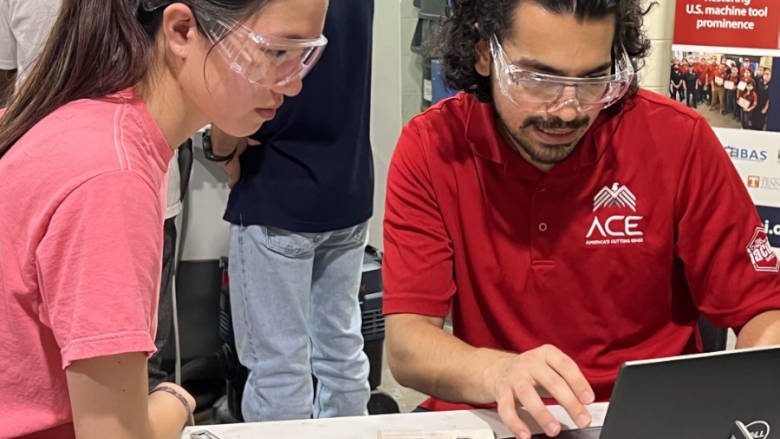
ACE, a nationwide workforce development effort backed by IACMI, pairs online coursework with in-person instruction to introduce learners to essential manufacturing principles. The curriculum emphasizes applied skills including print reading, CAD/CAM basics and machining techniques, while also offering participants hands-on exposure to actual equipment and processes.
“We’re creating fast-track pathways for people to pick up new qualifications and move into manufacturing rapidly,” explains Justin Brooks, deputy director of workforce development at IACMI.
The format is structured to serve both employees and employers. Learners first dedicate several hours to online coursework, then attend a concentrated one-week boot camp where they put their knowledge into action in a practical workshop setting.
For employers, the advantages are significant. Workers entering their roles after completing the program already grasp industry terminology, standard procedures and workplace expectations, dramatically cutting down the time companies spend on training and orientation.
“Industry needs people immediately — there’s no time to wait,” Brooks points out. “This approach reduces how long it takes someone to become self-sufficient on the job.”
Looking for quick answers on assembly and manufacturing topics?
Try Ask ASM, our new smart AI search tool.
Ask ASM
Interest in programs like these keeps climbing. Enrollment has surged rapidly, reflecting both the growing demand from industry and heightened curiosity from those considering manufacturing as a career.
Meanwhile, attitudes toward manufacturing careers are evolving.
“Manufacturing is transforming into a hub of innovation,” Brooks notes. “More people are beginning to recognize that reality.”
One of the most powerful elements of programs like ACE is the real-world, hands-on experience they offer. For many learners, directly operating tools and machinery generates a level of involvement and enthusiasm that classroom-only education simply can’t match.
“When someone produces something with their own hands, it shifts their outlook entirely,” Brooks says. “It builds self-assurance and sparks genuine interest in pursuing a manufacturing career.”
The program has also grown well beyond its original emphasis on CNC machining. Current training options now cover composites, smart manufacturing, metrology and other specialized fields. Complementary initiatives, including the METAL program, target expertise in casting, forging and plate rolling, further widening the range of available career paths.
This growth stems from deepening partnerships between educational institutions and industry players. By maintaining close engagement with manufacturers, program designers can continuously update curricula to reflect shifting workforce demands.
“We’re always asking manufacturers what skills they need and reshaping our programs to fit,” Brooks explains.
That engagement reaches into recruitment as well. Numerous manufacturers connect directly with training facilities, visiting boot camps, holding interviews and forging connections with participants. This establishes a more seamless journey from classroom to career.
Beyond technical abilities, the program also strengthens core competencies like measurement, critical thinking and collaboration. These skills are vital for thriving in manufacturing but don’t always receive adequate attention in conventional schooling.
Another growing priority is preparing workers for advanced technologies such as automation and data-driven manufacturing. Participants gain exposure to concepts like sensors, data gathering and process oversight, equipping them to understand how contemporary manufacturing systems function.
As these innovations become standard across the sector, workforce training efforts are increasingly geared toward ensuring workers can engage with and thrive alongside these technologies.
Looking to the future, Brooks stresses the importance of reaching people at younger ages. Bringing manufacturing concepts to students before they finalize career choices can help widen the talent pool and reshape assumptions about the industry.
“We need to reach people sooner and open their eyes to the possibilities,” he says.
Ultimately, bridging the skills gap will demand sustained partnerships among industry, education and government. Programs like ACE illustrate how focused, hands-on training can create viable entry points into manufacturing while helping businesses get the skilled workers they need.
