



**Precision Microdispensing: The Cornerstone of Reliable Medical Device Assembly**
In the world of medical device manufacturing, precision is not just a goal; it is an absolute requirement. This is especially critical for Class III devices—high-risk implants and life-support systems where failure can have severe consequences. These devices demand flawless execution in every step of assembly, particularly in the application of adhesives, coatings, and potting compounds.
A prime example of this need for exactitude is the deep brain stimulator (DBS). Used to treat debilitating conditions like Parkinson’s disease and therapy-resistant epilepsy, a DBS system functions by delivering targeted electrical impulses to the brain via extremely fine electrodes. The successful function of these complex devices hinges on the meticulous application of micro-doses of materials.
**The Critical Role of Adhesive Application**
For medical device assembly, precise adhesive application is vital for several reasons. Small amounts of adhesive are used to ensure that every contact point and block segment is securely locked in place before the potting process. This initial tack prevents components from shifting and stops gaps from opening up, which could allow the potting compound to penetrate uncontrollably.
The potting process itself creates a single, homogeneous protective layer that ensures long-term biocompatibility and provides resilience against vibration and shock. Given that body fluids can migrate into the gap between primary and secondary barriers, an adhesion promoter is frequently applied to create an even more robust and stable seal.
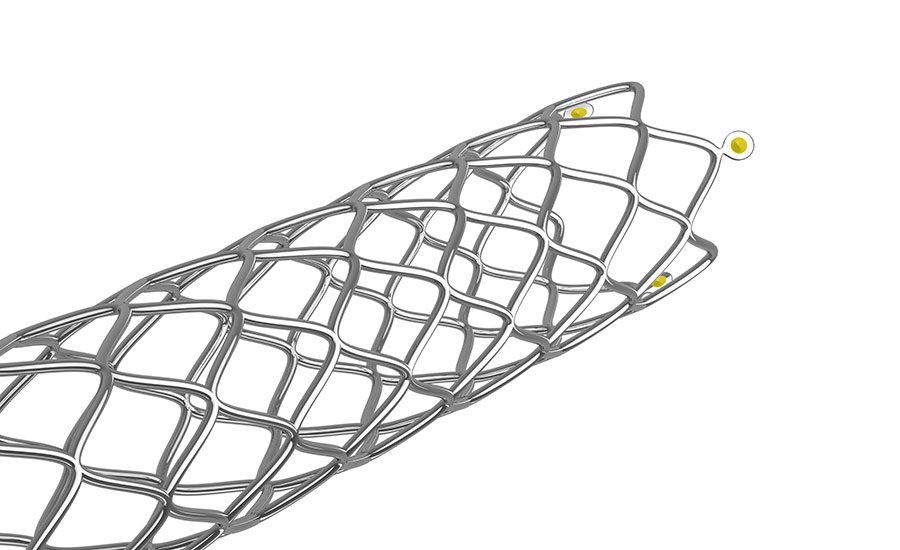
This focus on precision is also essential when assembling stents, particularly those made from low-radiopacity materials like nitinol. Because these stents are difficult to visualize in X-ray images, tiny radiopaque markers are applied to them for accurate positioning within the body. Applying these minute markers requires filling gaps of only 15 to 30 microns with minute quantities of adhesive, a process that must preserve the stent’s mobility and flexibility while ensuring long-term biocompatibility.
Similarly, catheters present their own challenges. These devices often require the joining of various components, such as connectors, within extremely tight tolerances. Tiny dots of adhesive must be applied to secure the assembly without affecting the catheter’s flexibility or restricting flow in its lumens. Overdosing can cause constrictions, blockages, or particle detachment, while underdosing can create weak mechanical points.
**Facing the Technological Challenges**
Microdispensing places significant demands on equipment, as even the smallest deviation can lead to product failure. The axis accuracy of the dispensing platform must be both precise and repeatable. A major challenge for these systems is managing material variations caused by temperature differences, entrapped air, or manufacturer-related viscosity deviations. Traditional time-pressure dispensing systems are particularly vulnerable to these issues, as their performance is heavily dependent on the fill level of the pressurized cartridge. A full, half-full, or nearly empty cartridge can all produce different application volumes because air compresses differently than liquid.
Companies like Rehm Thermal Systems address these challenges with advanced dispensing technology from ViscoTec. A key advantage of ViscoTec’s systems is their progressive cavity design. A rotating screw transports material uniformly and without pulsation, ensuring high repeatability and making the process independent of viscosity fluctuations. Unlike time-pressure systems, this is a purely volumetric process; the screw displaces the same volume of material per revolution, regardless of the cartridge’s fill level.
This design also means that material variations, such as temperature changes or the presence of fillers, have little effect on dispensing consistency. The screw conveys highly viscous or filled media gently and at a constant rate, keeping fillers in suspension and preventing air entrapment or phase separation.
**Ensuring Quality Through Maintenance and Calibration**
In validated medical device assembly processes, regular maintenance and calibration are non-negotiable. A clean applicator is paramount. ViscoTec’s technology addresses this need with a progressive-cavity screw that can rotate both forwards and backwards. Engineers can program a specific retraction amount to create a defined string break without any dripping, preventing unwanted material discharge.
Rehm’s systems also utilize a tape that automatically cleans the dispensing needle before each application. The machine controller allows engineers to set every parameter, including material type, nozzle diameter, dispensing volume, and flow behavior. Material output is monitored via precision load cells to catch any deviations early. For complex-shaped medical products, automatic needle measurement systems check and readjust applicators at defined intervals. An integrated fiducial camera detects alignment marks and corrects the zero point, while a 3D height sensor compensates for any warpage of thin substrates.
**Flexibility, Reliability, and Cleanroom Integration**
For operations requiring flexibility, Rehm’s dispensing systems can adapt to new applications quickly. The technology can handle various materials, from viscous silicones to watery acrylates and filled epoxy resins, and it automatically adjusts to different nozzle types, needle lengths, and application patterns. Central control software manages material and process parameters, and programs can be loaded automatically based on the product, minimizing changeover times.
It is important to note that for medical device assembly, process stability is prioritized over flexibility during high-volume production, and systems are often tailored to a single product to meet strict regulatory standards. Operators are required to intervene as little as possible. Regardless of production volume, cleanliness is critical, and Rehm’s systems are designed to meet ISO 7 clean room standards. Material compatibility is also essential; all parts of the dispensing system must be compatible with the material being dispensed, often requiring stainless-steel components to ensure biocompatibility.
**Data, Traceability, and the Path to Automation**
Data collection and analysis are fundamental for quality assurance and regulatory compliance in medical device assembly. Systems must be capable of tracing every step of the process for years. When a problem arises, it is necessary to identify exactly which serial numbers were affected, what process parameters were used, and under what conditions the product was made. Rehm’s systems achieve this through consistent traceability with configurable interfaces and continuous data acquisition, capturing temperatures, material batches, serial numbers, and process histories. This data is synchronized horizontally between machines and reported vertically to higher-level MES systems.
Material and process interlocks provide an additional layer of safety. Before each cycle, the system verifies that the current program matches the intended product and material. If there is a mismatch, the process is not released, preventing errors.
Looking to the future, scaling prototypes up to series production remains a challenge. To shorten development timeframes, it is crucial to consider future automation during the product design phase. Providers like Rehm and ViscoTec support customers early on by conducting practical trials with production and prototype parts. This collaboration under realistic conditions helps identify optimal process parameters and address potential challenges upfront, accelerating the transition from development to production.
—
### FAQ
**Q: Why is precision so critical in medical device assembly?**
**A:** Precision is vital to ensure the device functions correctly and safely. For Class III devices like implants, even minor errors in applying adhesives or potting compounds can lead to device failure, compromising patient safety. Precise dispensing ensures components are securely fixed, prevents leaks, and maintains long-term biocompatibility.
**Q: What are the main challenges in microdispensing for medical devices?**
**A:** The primary challenges include managing material variations caused by temperature, viscosity differences, and air entrapment. Traditional time-pressure dispensing systems are particularly susceptible to these issues because their output depends on the cartridge’s fill level.
**Q: How does volumetric dispensing improve the process?**
**A:** Volumetric dispensing, such as that offered by ViscoTec’s progressive cavity technology, measures and dispenses a precise volume of material per cycle, independent of the cartridge’s fill level. This ensures consistent output and high repeatability, even with highly viscous or filled materials.
**Q: What role does automated cleaning play in quality assurance?**
**A:** Automated cleaning of the dispensing needle before each application ensures a clean and uncontaminated process. This, combined with real-time monitoring of material output and automatic needle measurement, helps maintain consistent quality and prevents defects.
**Q: How is data traceability maintained in medical device assembly?**
**A:** Comprehensive data collection systems capture and synchronize information such as material batches, serial numbers, process parameters, and temperatures. This data is reported to higher-level systems, enabling full traceability, quick identification of any issues, and targeted recalls if necessary.
—
### Conclusion
Precision microdispensing is the backbone of reliable and safe medical device manufacturing. The ability to apply minute quantities of adhesive, coating, or potting compound with absolute accuracy determines the functionality and biocompatibility of complex devices like DBS systems, stents, and catheters. By adopting advanced volumetric dispensing technologies, prioritizing rigorous maintenance and calibration, and ensuring seamless data traceability, manufacturers can overcome significant technological challenges. This commitment to precision not only meets stringent regulatory requirements but ultimately delivers the life-saving reliability that the medical industry and its patients depend on.
