



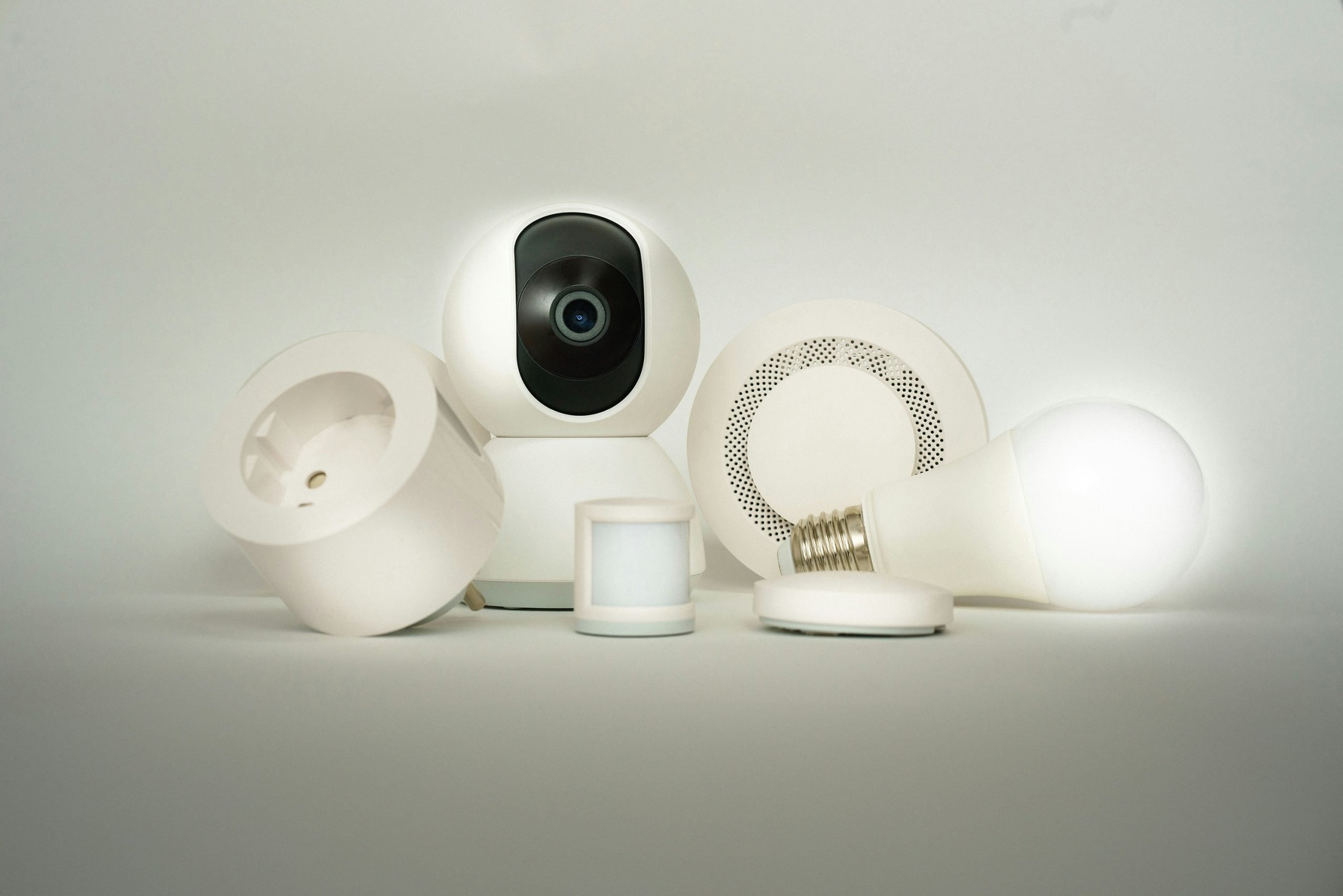
Imagine a security system that doesn’t just scare off threats—it actively responds to them. That’s exactly what artificial intelligence (AI) brings to the table. By embedding AI directly into Internet of Things (IoT) devices, smart home security reaches an entirely new level. But here’s the catch: not every platform performs equally well when it comes to speed, safety, or energy use. Homeowners should understand what truly sets the best platforms apart from the competition.
Why Should Your Home Security System Include AI?
AI transforms ordinary IoT devices into intelligent, situationally aware guardians. Conventional security systems rely on basic triggers—movement is sensed, and an alarm sounds. AI-driven systems go much further by interpreting what that movement actually means. They can tell the difference between a familiar dog walker, an unfamiliar intruder, or a courier leaving a parcel at your doorstep.
This smarter approach to detection makes a huge difference in accuracy. In spacious homes, AI identifies safety concerns with 89.36% accuracy, while conventional systems manage only 77.76%. Compact homes perform even better, reaching 94.43% accuracy. By automating monitoring and making decisions based on context, AI delivers far more precise and timely protection than older methods.
Homeowners are clearly embracing this shift. Studies indicate that 28% of people with smart security systems already rely on AI-based person or package detection. Meanwhile, 39% express interest in adding facial recognition. As the technology keeps improving, enthusiasm for AI-driven features is only growing stronger.
Key Factors to Consider When Choosing an AI Security Platform
Several factors influence which platform works best for your home—property design, how data gets handled, the System-on-a-Chip (SoC) design, and energy consumption all matter.
Property Design
The dimensions and configuration of your property shape the ideal security setup. A home with large glass doors facing the street, for instance, might gain more from AI-powered cameras than from smart locks alone. Bigger properties with several entrances need wider sensor coverage and greater processing capability to handle multiple camera streams at once.
Data Handling
AI platforms process information either locally on the device or through cloud servers. On-device (edge) processing keeps data right where it’s collected instead of transmitting it to distant servers. This method offers major security benefits since the information never travels across networks where hackers might intercept it. It also cuts down on delays, allowing threats to be identified more quickly.
SoC Design
A System-on-a-Chip is a single integrated circuit that packs all the essential components of a computer or electronic system onto one chip. For smart security gadgets, designs that combine a central processing unit (CPU), graphics processing unit (GPU), and neural processing unit (NPU) deliver peak efficiency. These all-in-one solutions handle real-time processing without draining power or slowing down.
However, not every design is the same. Different configurations serve different purposes—a vision-focused SoC might handle 4K video streaming, while an audio-oriented SoC could power voice recognition. Older-generation chips may have a lower purchase price but tend to use more energy and process data more slowly, which drives up long-term costs.
Energy Consumption
Devices that run on batteries or are sensitive to power usage—like smart locks and cameras—need platforms that sip energy rather than gulp it. Efficient platforms last longer between charges and require less upkeep, making round-the-clock operation realistic for extended periods.
Leading AI Technology Platforms for Home Security
A number of B2B companies supply the core technology behind AI-powered home security products. The chips, systems, and algorithms they create define each platform’s performance, capabilities, security strengths, and device compatibility. Knowing what’s under the hood helps homeowners make smarter choices.
Synaptics
Synaptics is a semiconductor and AI technology firm dedicated to building intelligent, connected devices through edge AI, IoT solutions, and human interface innovations. With thousands of patents to its name, the company has a proven track record of pushing boundaries.
Its AI-driven edge computing platform leverages neural processing and computer vision to identify and react to security events in real time. The Astra AI-Native platform combines CPU, NPU, and GPU processing into a single, software-rich SoC. This allows smart decisions to be made right on the device, resulting in quicker and more responsive security.
Its audio SoCs and voice DSP technologies deliver precise far-field voice recognition, making hands-free security control seamless. The integrated processing handles natural voice commands accurately, even in loud surroundings.
SEALSQ
SEALSQ creates semiconductor security solutions tailored for IoT environments and digital infrastructure. Its platforms build in cryptographic acceleration, device verification, tamper resistance, and hardware-based identity protection directly at the chip level to reinforce hardware security.
The secure ARM SC300 microcontroller MS6001 forms the backbone of keyless entry systems. When built into an electronic lock, it can independently verify access credentials without needing an internet connection. Its hardware platforms carry Common Criteria EAL5+ certification—one of the highest commercially available security ratings—verified by independent testing labs.
AONDevices
AONDevices is a semiconductor company that designs ultra-low-power smart edge AI processors. Its products are engineered specifically for always-on devices like smart security cameras and locks, where minimal energy draw is essential for long battery life.
The company builds AI processors and algorithms crafted exclusively for always-on IoT applications. These chips allow devices to recognize who is speaking, interpret environmental surroundings, identify scenes, and detect activity patterns. In practical security terms, this means telling apart the sound of a knock from the sound of someone forcing a door open.
The AONx360 platform handles voice, gesture, and motion detection, supporting everything from intelligent data gathering to edge deployment. Processing data locally means faster reactions and stronger data privacy.
Ambarella
Ambarella designs AI vision processors for physical edge uses, including security cameras and smart locks. It provides a comprehensive edge AI platform spanning from programmable software to agentic AI frameworks that coordinate decisions across multiple devices.
Its energy-efficient SoCs use proprietary perception and deep learning neural network accelerators to boost efficiency and independence.
Its four-nanometer SoC delivers advanced on-device edge AI processing while consuming very little power. This 8K vision SoC supports multisensor perception and simultaneous multistream video. It uses 20% less power than the previous generation.
The Smart Future of Home Security
AI-driven security keeps advancing as semiconductor companies expand the limits of what on-device processing can accomplish. Platforms that emphasize local data handling, robust security features, and energy optimization provide the most dependable and responsive protection. As homeowners weigh their options, understanding the technology powering these solutions enables them to choose platforms that meet today’s needs while staying ready for tomorrow’s challenges.
