



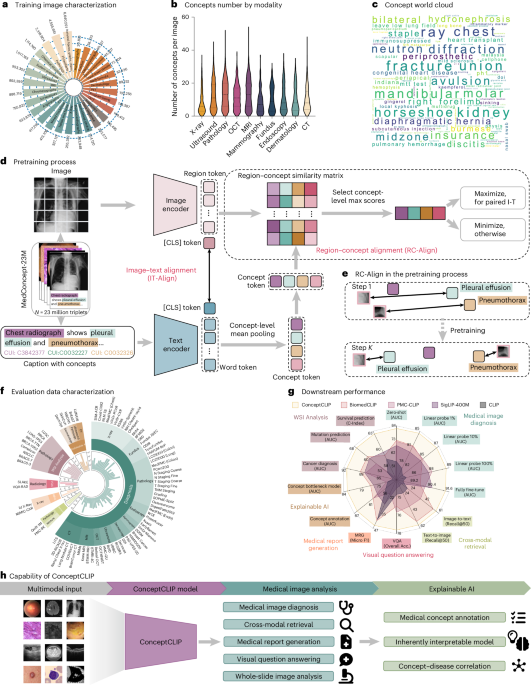
Based on the provided content, which appears to be a list of academic references related to medical AI and imaging, I will craft a comprehensive article. I will infer the main topic from the references, which focus on medical imaging datasets, AI models, and evaluation frameworks like METRIC. I will add logical sections such as an introduction, body, FAQ, and conclusion to create a complete, coherent article.
***
## **Navigating the Landscape: A Guide to Medical Imaging Datasets, AI Models, and Quality Assessment**
The field of medical artificial intelligence (AI) is rapidly evolving, driven by the availability of large-scale datasets and the development of sophisticated foundation models. However, for these AI systems to be trustworthy and clinically viable, the quality and integrity of the underlying data are paramount. This article explores the key components of modern medical AI research, focusing on essential datasets, the emergence of multimodal foundation models, and the critical frameworks used to assess data quality.
### **The Foundation of Trustworthy AI: Data Quality Assessment**
Before diving into the datasets and models, it’s crucial to understand the framework for evaluating them. The METRIC-framework, as outlined in a pivotal systematic review, provides a structured approach for assessing data quality in the context of trustworthy AI for medicine. This framework is not just a checklist; it’s a systematic methodology that helps researchers and clinicians determine if a dataset is reliable enough to build or validate an AI model. Without high-quality data, even the most advanced AI algorithms can produce misleading or harmful results. The METRIC framework addresses this by evaluating data from multiple dimensions, ensuring that the data used is robust, relevant, and reliable for its intended medical application.
### **The Rise of Multimodal Biomedical Foundation Models**
A significant shift in medical AI is the move from single-modality models to **multimodal foundation models**. These advanced AI systems are trained on diverse data types, such as images and text, allowing them to learn more complex representations of medical conditions. A landmark study highlighted in the references describes a model trained on an immense dataset of fifteen million image-text pairs, demonstrating the potential of this approach. Furthermore, techniques like **PMC-CLIP** showcase how models can be pre-trained using biomedical documents and images, enhancing their ability to understand and interpret complex medical scenarios. This multimodal capability is a game-changer, moving AI from simple image classification to more nuanced understanding and reasoning.
### **Essential Datasets Powering Medical AI Innovation**
The development and validation of these AI models rely heavily on publicly available and well-annotated datasets. The references list an extensive array of datasets, each serving a specific purpose in the medical imaging ecosystem:
* **Large-Scale Public Benchmarks:** Datasets like **CheXpert**, **MIMIC-CXR**, and **NIH Chest X-ray** provide massive collections of chest X-rays with annotations, forming the bedrock for training and evaluating diagnostic models for thoracic diseases.
* **Specialized and Expert-Annotated Data:** For highly specific tasks, datasets like **DermNet**, **HAM10000**, and **BRACS** offer curated images for skin lesion classification and breast cancer subtyping, often annotated by domain experts to ensure high fidelity.
* **Advanced and Emerging Domains:** Newer datasets are tackling more complex challenges, such as **Ikezogwo et al.’s Quilt-1M** for histopathology and **Kvasir** for gastrointestinal disease detection, pushing the boundaries of what’s possible with AI in medical analysis.
These datasets are not just collections of images; they are the essential fuel that trains and tests the AI models, directly impacting their performance and reliability.
### **Frequently Asked Questions (FAQ)**
**Q1: Why is data quality more important than algorithm complexity in medical AI?**
A1: In medical AI, the principle of “garbage in, garbage out” is amplified. An algorithm can be incredibly sophisticated, but if it’s trained on low-quality, biased, or incorrect data, it will produce unreliable and potentially dangerous results. High-quality data ensures that the model learns the true patterns of disease, leading to safer and more effective clinical tools. Frameworks like METRIC are designed to systematically evaluate and ensure this data quality.
**Q2: What is the difference between a standard dataset and a “foundation model” dataset?**
A2: A standard dataset is typically a curated collection for a single task, like classifying pneumonia in chest X-rays. A foundation model dataset, on the other hand, is massive and multimodal, designed to train a general-purpose AI that can perform a wide variety of tasks. For example, a model trained on 15 million image-text pairs can learn to recognize diseases, understand clinical notes, and even generate diagnostic reports, making it a versatile “foundation” for many medical applications.
**Q3: How are these datasets used to create trustworthy AI?**
A3: Trustworthiness is built through transparency and rigorous validation. Datasets provide the necessary ground truth for this process. By using well-validated datasets (as assessed by frameworks like METRIC), researchers can perform robust validation and comparison of different AI algorithms. This ensures that the final AI model is not only accurate but also generalizable and safe for real-world clinical use, adhering to principles outlined in initiatives like “Do no harm: a roadmap for responsible machine learning for health care.”
### **Conclusion**
The landscape of medical AI is defined by a powerful synergy between high-quality data, advanced multimodal models, and rigorous evaluation frameworks. The availability of vast and diverse datasets, from large public repositories to specialized expert-annotated collections, has been the catalyst for innovation. However, the ultimate goal is not just innovation, but **trustworthy** innovation. By adhering to data quality assessment frameworks like METRIC and leveraging the power of foundation models, the medical AI community is moving towards a future where AI is not just a tool, but a reliable and integral part of healthcare. The journey is complex, but with a strong foundation of data and responsible development practices, the potential to improve patient outcomes is immense.
