



**The Hidden Junctures Where Shipping Errors Actually Happen (And How to Prevent Them)**
In the logistics industry, it is easy to assume that major system crashes or catastrophic failures cause shipping errors. While these events certainly cause disruption, the reality is far more mundane. Most errors sneak in during the quiet, repetitive handoffs of daily operations—when an operator copies an address, retypes a weight, or manually transfers data between screens.
These mundane moments are where automation delivers its highest value. By removing the human element from these specific handoffs, businesses can maintain speed without sacrificing accuracy. Below, we explore how a modern shipping automation platform keeps parcel data intact from the order screen to the loading dock.
### Automation Keeps the Shipment Record Intact from Order to Dispatch
The biggest shipping mistakes rarely happen in a single dramatic event; they occur when an order is recreated across multiple screens. An operator might copy an address from the order system, enter package details into carrier software, and then return to the original record to add tracking information. With every transfer, the physical package and its digital record drift further apart.
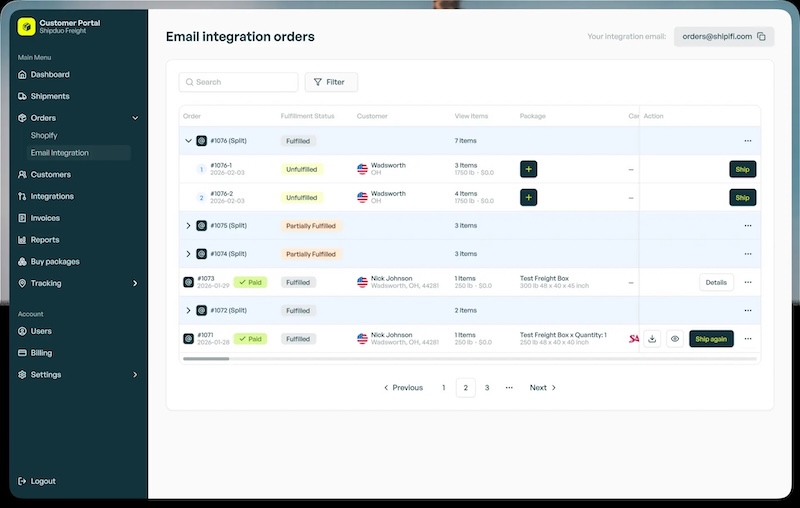
A smart shipping platform eliminates these breaks in continuity. It carries the same order record through packing, rating, label creation, and dispatch. When the operator scans the parcel, the system retrieves the already-approved shipment details, eliminating the need for new data entry. Corrections remain visible in a single interface, providing supervisors with a reliable audit trail and ensuring the desk remains efficient during peak periods.
### 1. Address Problems Stop Before Label Creation
It is significantly cheaper to correct an address before a label prints than after a package arrives at a distribution center. Automated validation can standardize address formats and compare the delivery point against postal or carrier databases in real time.
When the system detects an incomplete unit number or an invalid postal code, it routes the order to an exception queue rather than allowing it to proceed to dispatch. This pause prevents costly correction fees or returns imposed by carriers.
However, validation has its limits. A recognized delivery point does not guarantee the recipient is actually present. Customer service may still need to confirm ambiguous addresses, but this conversation should happen before the carrier applies a penalty. Address type classification is equally important; identifying whether a destination is residential or commercial before rating ensures the system selects the correct service and pricing.
### 2. Package Data Comes Directly from the Carton
Manual data entry is a primary source of shipping errors. Someone might misread a scale or mistype a number, throwing off weight and pricing. Connected scales eliminate this transcription step by sending measurements directly to the shipment record.
Dimensions require the same treatment. Carriers often charge based on dimensional weight, which uses the space a parcel occupies rather than its actual weight. Automated dimensioning captures the carton as it is packed, which is far more reliable than measuring a generic box that may have changed shape during packing.
Live measurements also support an additional layer of control. If the recorded weight falls outside the expected range for the contents, the system can hold the order for review. This brief pause might reveal a missing item before the package ever leaves the building.
### 3. Service Selection Follows the Shipping Promise
During busy periods, experienced staff rely on habit to choose carrier services. What feels efficient is not always what is most cost-effective. An operator might choose a familiar air service even when a slower, cheaper option would meet the customer’s delivery commitment.
Rule-based automation reverses this logic. It begins with the delivery promise made to the customer and removes services that cannot meet the date. From the remaining options, the system applies the company’s carrier agreements to select the appropriate rate. This approach prevents unnecessary upgrades without slowing down the packing desk.
Managers benefit as well. Reviewing the logic used to select a rate is far more productive than trying to reconstruct an operator’s decision after an unexpected invoice arrives.
### 4. Labels Stay Tied to the Correct Order
Once the carrier accepts a shipment request, label creation should remain within the same transaction. Carrier APIs can return the approved label and tracking number directly back to the shipping system, removing the need to copy tracking data between applications.
Reprints require careful control. An extra label can create confusion at the workstation. Good software keeps the reprint linked to the existing shipment rather than opening a second, conflicting record. If package details change, the original shipment can be voided before a replacement label is produced.
Printer routing can also be automated, ensuring the label prints on the device assigned to the active station. This reduces the chance that a label prints in the wrong location and is picked up by the wrong person.
### 5. Scanning Confirms the Parcel Before Release
Even a perfectly printed label can end up on the wrong carton. Final scan verification compares the package identifier with the carrier label before shipment confirmation. A mismatch halts the transaction immediately, while a correct pairing allows the parcel to proceed.
Readability is just as important as accuracy. Barcode verification can detect weak printing or damaged labels before they reach the carrier’s sorting equipment. Catching these defects at the desk takes seconds; catching them after the parcel enters the network leads to manual handling and delayed tracking information.
Manifesting closes the record after the physical check. Shipment status and tracking information return to the order system, giving customer service an accurate view of what actually left the facility. Automation is most effective when exceptions remain visible; a failed validation should lead to a clear review step rather than a hidden override.
***
### FAQ
**Q: Does automation remove human judgment from shipping?**
**A:** No. Automation handles routine, repeatable data handoffs, but staff are still essential for handling damaged packaging, unusual customer requests, and complex exceptions.
**Q: Why is address validation done before printing a label?**
**A:** Correcting an address before printing is significantly cheaper than dealing with a returned parcel, carrier correction fees, and customer complaints after the fact.
**Q: What happens if the weight read by the scale is unusual?**
**A:** The system can hold the order for review. This pause helps identify issues like missing items or incorrect packing before the shipment leaves the facility.
**Q: Can the system prevent choosing an expensive carrier service when a cheaper one would suffice?**
**A:** Yes. Rule-based automation selects services based on the delivery promise already made to the customer, removing unnecessary air upgrades and controlling costs.
**Q: What happens if a label needs to be reprinted?**
**A:** Good software keeps the reprint linked to the original shipment record, preventing duplicate or conflicting labels. If details have changed, the original shipment can be voided before the replacement is created.
### Conclusion
Shipping errors are less about dramatic system failures and more about the small, repetitive data handoffs that occur between orders, carts, and carriers. By implementing shipping automation that validates data at the point of capture—whether it is an address, a weight, or a service level—businesses can stop mistakes before they leave the dock. The goal is not to remove human oversight, but to ensure that human judgment is reserved for genuine exceptions, while routine orders flow through a reliable, automated pipeline that keeps records accurate and operations moving.
