



**Hardware Pioneers Max 2026: A Paradigm Shift in Embedded Systems and Edge AI**
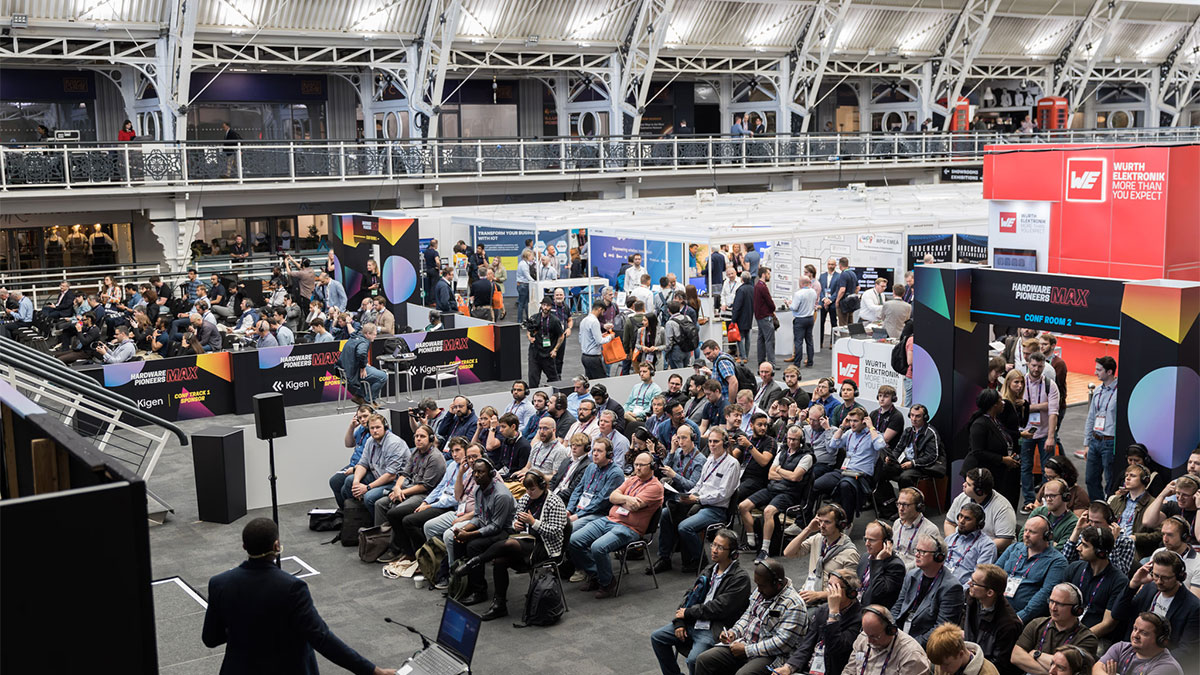
The landscape of embedded systems and Edge AI is undergoing a significant transformation, exemplified by the recent move of Hardware Pioneers Max to the ExCeL London in Docklands for its 2026 edition. This relocation signifies more than just an expansion; it marks a strategic shift in focus towards the practical challenges of deploying production-ready hardware in real-world industrial environments. The event is poised to host over 6,000 attendees, 250 exhibitors, and 100 speakers, reflecting a maturing ecosystem where the conversation has moved beyond showcasing components to addressing system-level integration under stringent constraints.
**Shifting Focus: From Lab to Life**
The core theme of Hardware Pioneers Max 2026 is the collision between theoretical performance and field reality. As highlighted by speakers like Fabiano Bellisario, the exhibition will showcase a vast array of technologies, from the latest wireless modules and memory chips to cutting-edge AI processors and embedded camera modules. However, the central question driving the conference is no longer “what is possible in a lab?” but rather, “can it operate reliably, efficiently, and sustainably where it matters most?”
This shift is driven by a convergence of critical constraints that are now primary design inputs. Power budgets, thermal limits, latency, and bandwidth are no longer afterthoughts but foundational pillars of system architecture. The gap between a component’s benchmark performance and its real-world behavior—exposed to scale, environmental variability, and long-term operation—remains a persistent challenge. Consequently, energy efficiency has emerged as a parallel and equally critical constraint, reshaping system architecture and elevating the importance of power electronics and materials science to the forefront of computing strategy.
**Real-World Constraints and Systemic Risk**
The practical implications of these constraints are starkly visible in industrial and remote deployments. Speakers like Dan Ambrose of Ground Control emphasize the necessity of remote monitoring, illustrating the difficulty of accessing systems in vast or inhospitable environments. The viability of edge intelligence is intrinsically linked to its ability to be observed and managed under conditions of limited connectivity, where satellite links may be the only option.
Furthermore, the risk landscape has expanded. As Daniel Grundy of Jaguar Land Rover will argue, lifecycle risk now encompasses more than component availability. The insidious threat of counterfeit components, which can remain undetected until they cause catastrophic failure, product recalls, and reputational damage, demands a cross-functional approach to verification. Traceability and validation are becoming integral, non-negotiable requirements woven into the entire engineering and supply chain process.
These developments point to a fundamental restructuring of the industry. With hardware systems becoming increasingly software-defined and distributed, the source of risk is no longer a single faulty part but the complex interaction across the entire system stack. The sector’s central challenge is thus redefined: it is not what can be built, but what can be sustained, observed, and reliably operated under real-world conditions. This perspective even extends to emerging frontiers like neurotechnology, where the semiconductor revolution continues to meet directly with the human nervous system.
**Strategic Partnerships and Innovation on Display**
The event also features key exhibitors demonstrating how power and intelligent systems converge. Arrow Electronics, for instance, will showcase solutions at booth L8 that integrate advanced power architectures with Edge processing and connectivity, enabling applications from predictive maintenance to energy-efficient infrastructure. Their participation includes expert-led sessions that delve deeper into these critical themes for the industry.
**PICO Technology’s Advancements in Measurement**
In a separate but complementary development, PICO Technology has launched the PicoScope 5000E Series 16-bit oscilloscopes. This represents a major leap in measurement technology, bridging the historical compromise between speed and sensitivity. The series offers native 16-bit resolution and a high dynamic range, providing 256 times more vertical detail than standard 8-bit scopes. With an ultra-low noise floor of just 22 µV RMS and a spurious-free dynamic range exceeding 73 dB, it allows engineers to detect minute ripple, noise, and distortion even when superimposed on larger DC voltages. The innovative FlexRes® technology offers flexibility, allowing users to switch between high-precision 16-bit mode and high-speed 8-bit mode. Supported by 2 GS of deep capture memory and a portable, USB-C powered design, the 5000E Series replaces bulky benchtop equipment with lab-grade performance, empowering engineers to debug complex, long-duration signals with nanosecond time resolution.
—
### FAQ Section
**Q1: What is the primary reason for Hardware Pioneers Max’s move to ExCeL London?**
A1: The move to ExCeL London reflects the event’s significant scale expansion and a strategic shift in emphasis from merely showcasing individual electronic components to addressing the complex, real-world challenges of system-level deployment for embedded systems and Edge AI in industrial settings.
**Q2: How many people are expected to attend Hardware Pioneers Max 2026?**
A2: The event expects more than 6,000 attendees, supported by 250 exhibitors and 100 speakers.
**Q3: What are the key constraints discussed at the event for Edge AI deployment?**
A3: The key constraints discussed include power budgets, thermal limits, latency, and bandwidth. These are now treated as primary design inputs, essential for ensuring systems can function reliably outside the controlled lab environment.
**Q4: Why is energy efficiency becoming a central pillar of system design at Hardware Pioneers Max?**
A4: Energy efficiency is critical because compute growth is increasingly limited by energy availability and heat dissipation, rather than raw processing power. This makes power electronics and materials science fundamental to the future of computing strategy.
**Q5: What is the significance of counterfeit components in the supply chain?**
A5: Counterfeit components represent a high-risk threat that can enter the supply chain at multiple stages. They can remain undetected until they cause catastrophic failures after deployment, leading to product recalls and severe reputational and financial losses, making detection and prevention a cross-functional priority.
**Q6: Who are two key speakers mentioned and what are their main topics?**
A6:
* **Jalal Bagherli** discusses the strategic role of power systems and power electronics for AI infrastructure, highlighting the UK’s potential in developing energy-efficient data centres.
* **Dan Ambrose** addresses the challenge of remote monitoring at scale, emphasizing that edge intelligence is only useful if it remains observable under constraints of distance, bandwidth, and access, often necessitating satellite connectivity.
**Q7: What technological breakthrough does the PicoScope 5000E Series offer?**
A7: The PicoScope 5000E Series offers the world’s first four-channel USB oscilloscope with native 16-bit resolution and a high dynamic range. This provides 256 times more vertical detail than an 8-bit scope, allowing for the measurement of minute signals like microvolt-level noise and ripple that were previously invisible on standard scopes.
—
### Conclusion
Hardware Pioneers Max 2026 encapsulates a maturing embedded systems and Edge AI sector that is moving decisively from theoretical possibility to practical, large-scale implementation. The conference underscores that the next-generation challenge is not just about building smarter chips, but about building systems that are robust, efficient, and observable under the harsh and unpredictable conditions of the real world. From managing power and thermal constraints to mitigating systemic risks like counterfeiting, the industry is forging a new paradigm where sustainability and reliability are as important as raw performance. This evolution is crucial for enabling the next wave of intelligent, connected systems across all industrial domains.
