



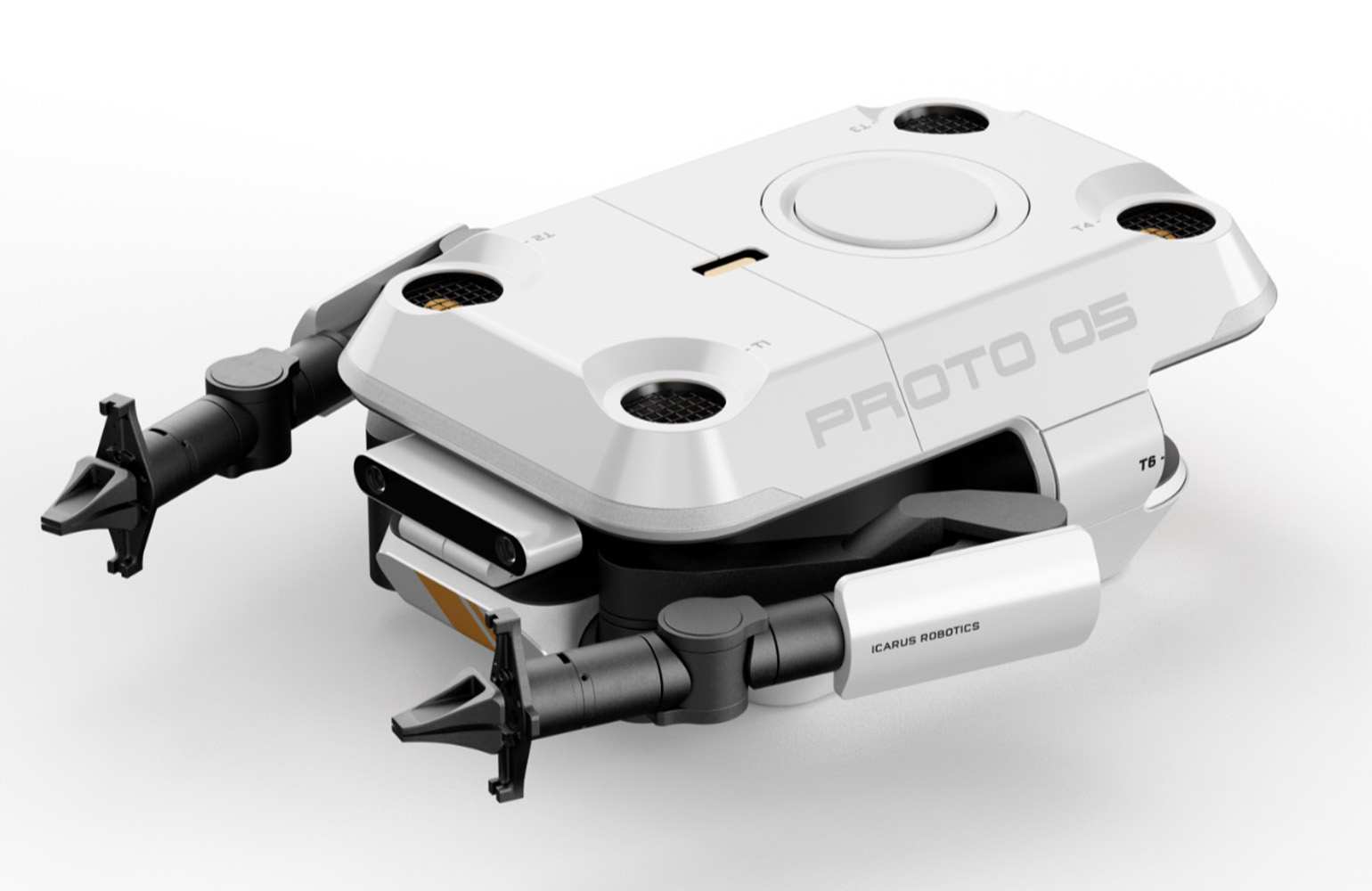
**Icarus Robotics and KULR Technology Partner for Autonomous Space Robot**
Icarus Robotics has announced a significant partnership with KULR Technology Group to power its JOY autonomous robot for an upcoming mission to the International Space Station (ISS). Scheduled for launch in early 2027, this mission marks a key step in deploying autonomous robotics for in-space tasks.
Under the agreement, KULR will supply its KULR ONE Space (K1S) battery systems to provide reliable power for JOY’s operations. These batteries are designed to meet NASA’s rigorous safety standards for human spaceflight and have already been proven on high-profile missions like Artemis II.
According to Ethan Barajas, co-founder and CEO of Icarus Robotics, choosing KULR was an easy decision due to its flight heritage and domestic manufacturing capabilities. “In the space domain, flight heritage is everything,” Barajas said. “KULR’s battery architecture has already flown on the Artemis program, which means when we’re working with Voyager and the ISS team, we can point to that and say, ‘This is a known variable.’”
### What Does It Take to Charge a Robot in Space?
Charging robots in space involves significant challenges and safety requirements. NASA’s JSC 20793 standards classify batteries into three risk tiers, with systems over 80 watt-hours falling into the highest-risk category. JOY’s battery system is built to meet these strict requirements, including passive propagation resistance to prevent thermal runaway.
Currently, JOY will be crew-tended, with astronauts manually charging the robot to build operational experience. While autonomous charging capabilities are in development, they will be rolled out as the platform matures and gains clearance for greater autonomy.
### What’s Next for Icarus Robotics?
JOY is set to fly aboard the ISS in early 2027 as part of the JOYRIDE-1 mission. This mission will test the robot’s ability to assist with tasks such as maintenance and future commercial activities. As Icarus Robotics continues to scale its platform, partnerships with companies like KULR will play a crucial role in advancing autonomous operations in space.
—
## FAQ
**Q: What is JOY?**
JOY is an autonomous free-flying robot developed by Icarus Robotics for use on the International Space Station. It is designed to assist with routine tasks, infrastructure maintenance, and commercial activities.
**Q: Why did Icarus Robotics choose KULR Technology Group as a partner?**
Icarus Robotics selected KULR because of KULR’s proven flight heritage, particularly its role in the Artemis II mission, and its domestic manufacturing capabilities, which are critical for space mission reliability.
**Q: What makes KULR ONE Space batteries suitable for JOY?**
KULR ONE Space batteries are engineered to NASA safety standards, including strict requirements for human spaceflight. They feature passive propagation resistance, lightweight design, and radiation tolerance, making them ideal for space missions.
**Q: Will JOY be fully autonomous from the start?**
No, initially JOY will be crew-tended, with astronauts manually charging the robot. Autonomous charging capabilities will be introduced incrementally as the platform matures and gains clearance.
**Q: What is the long-term vision for JOY and similar robots?**
The goal is to deploy robotic labor on space stations to reduce astronauts’ workload, enabling them to focus on high-value research and mission objectives. Robotic platforms like JOY are seen as essential for the growth of the orbital economy.
—
## Conclusion
The partnership between Icarus Robotics and KULR Technology Group represents a significant milestone in the deployment of autonomous robots in space. By leveraging KULR’s space-qualified battery technology and flight heritage, JOY is poised to demonstrate the viability of robotic assistance on the ISS. As the mission progresses, it will set the stage for broader adoption of autonomous systems in space, supporting the development of a sustainable orbital economy.
