



# Understanding Reinforcement Learning: From Theory to Practice
## What Is Reinforcement Learning?
Reinforcement Learning (RL) is a branch of machine learning in which an autonomous agent learns to make decisions by interacting with an environment. Instead of being handed a dataset of labeled examples or a set of hardcoded rules, the agent discovers what works through repeated trial and error. Each action it takes produces either a reward or a penalty, and over time the agent builds an internal strategy for choosing actions that maximize its long-term cumulative reward.
This learning paradigm draws a striking resemblance to how humans and animals naturally acquire skills — by experimenting, observing outcomes, and gradually refining behavior based on feedback. That parallel is what makes reinforcement learning such a compelling and intuitive framework for building intelligent systems.
—
## A Brief History of Reinforcement Learning
The intellectual roots of reinforcement learning stretch back to the 1950s, when researchers began grappling with optimal control problems — the challenge of designing systems that follow a set of rules while minimizing or maximizing some measure of performance over time. One of the earliest and most influential contributions came from Richard Bellman, who introduced **dynamic programming** as a method for solving sequential decision-making problems. His work gave rise to foundational algorithms such as Bellman-Ford and Floyd-Warshall, which are still widely used today.
For decades, the fields of optimal control and dynamic programming developed largely in isolation from the idea of learning. The bridge between them was built in the late 1970s by Paul Werbos, who proposed **Heuristic Dynamic Programming**, and later by Chris Watkins, who merged dynamic programming techniques with online learning in the 1980s. This synthesis laid the groundwork for what we now call reinforcement learning.
Throughout the 1990s, Dimitri Bertsekas and John Tsitsiklis advanced the field further by introducing the concept of **neuro-dynamic programming**, which combined neural networks with reinforcement learning principles. Their work helped open the door to applying RL to increasingly complex, real-world problems.
Today, reinforcement learning powers systems across a vast range of domains — from robotics and game-playing engines like AlphaGo to natural language processing and large language model fine-tuning. Its applications span advertising systems, A/B testing frameworks, dynamic pricing engines, autonomous navigation, and much more.
—
## Core Concepts of Reinforcement Learning
To understand how reinforcement learning algorithms work, it helps to think of the process as a system with several interacting components.
### The Agent and the Environment
At the center of every RL problem is the **agent** — the learner or decision-maker — and the **environment** — everything the agent interacts with. The agent observes the current state of the environment, takes an action, and receives feedback in the form of a reward or penalty. The environment then transitions to a new state, and the cycle repeats.
### State
The **state** is a description of the environment as it appears to the agent at a given moment. It captures all the information the agent needs to decide what to do next. For example, in a grid-world labyrinth, the state might be the agent’s current cell coordinates. Every action the agent takes changes the state, and the available actions and potential rewards depend on which state the agent is currently in.
### Policy
A **policy** is the agent’s strategy for choosing actions. It can be thought of as a rulebook that maps states to actions. Policies can be **deterministic**, meaning they specify exactly one action for each state, or **stochastic**, meaning they assign probabilities to each possible action in a given state. As the agent gains experience, its policy is updated to reflect what it has learned about which actions lead to better outcomes.
### Reward Signal
The **reward signal** is the immediate feedback the agent receives after taking an action in a given state. It tells the agent whether the action was good or bad. The reward signal is entirely dependent on both the current state and the action taken, meaning the same action can yield very different rewards in different situations.
### Value Function
While the reward signal provides immediate feedback, the **value function** captures the long-term picture. It estimates how much cumulative reward the agent can expect to accumulate starting from a particular state and following its current policy going forward. The value function is crucial because it encourages the agent to think beyond immediate gains and instead optimize for the best outcomes over time.
### Model of the Environment
Some reinforcement learning algorithms, known as **model-based** methods, maintain an internal model that predicts what the next state and reward will be given the current state and action. This allows the agent to plan ahead without having to physically try every possible action. Other algorithms, called **model-free** methods, learn purely through direct experience — trial and error — without building an explicit model of the environment.
—
## Key Characteristics That Set RL Apart
Reinforcement learning differs from other forms of machine learning in several important ways:
1. **Closed-Loop Nature**: Everything happens within a feedback loop. The agent acts in the environment, and those actions change the environment, which in turn affects future observations and available actions. The system is self-contained and continuously evolving.
2. **No Explicit Instructions**: The agent is not told which actions to take. Instead, it must discover the best course of action on its own, gradually learning which behaviors lead to higher rewards through experience.
3. **Delayed Consequences**: The results of an agent’s actions are not always immediate. A decision made now might only reveal its consequences many steps later, much like navigating an unfamiliar building where a wrong turn leads to a dead end before you realize it.
—
## The Exploration vs. Exploitation Trade-Off
One of the most fundamental challenges in reinforcement learning is balancing **exploration** and **exploitation**.
**Exploration** means trying out new actions to discover their potential rewards. **Exploitation** means sticking with actions that the agent already knows yield high rewards. An agent that only exploits may miss better options it has never tried, while an agent that only explores may never settle on a good strategy and waste time on suboptimal actions.
The tension between these two forces is what drives much of the complexity in RL algorithms. A purely greedy agent — one that always chooses the action it currently believes to be the best — can easily get trapped if its early experiences are misleading. A near-greedy agent, sometimes called an **epsilon-greedy agent**, strikes a balance by occasionally exploring random actions with a probability of epsilon (ε), while mostly relying on its accumulated knowledge.
—
## The Multi-Armed Bandit Problem
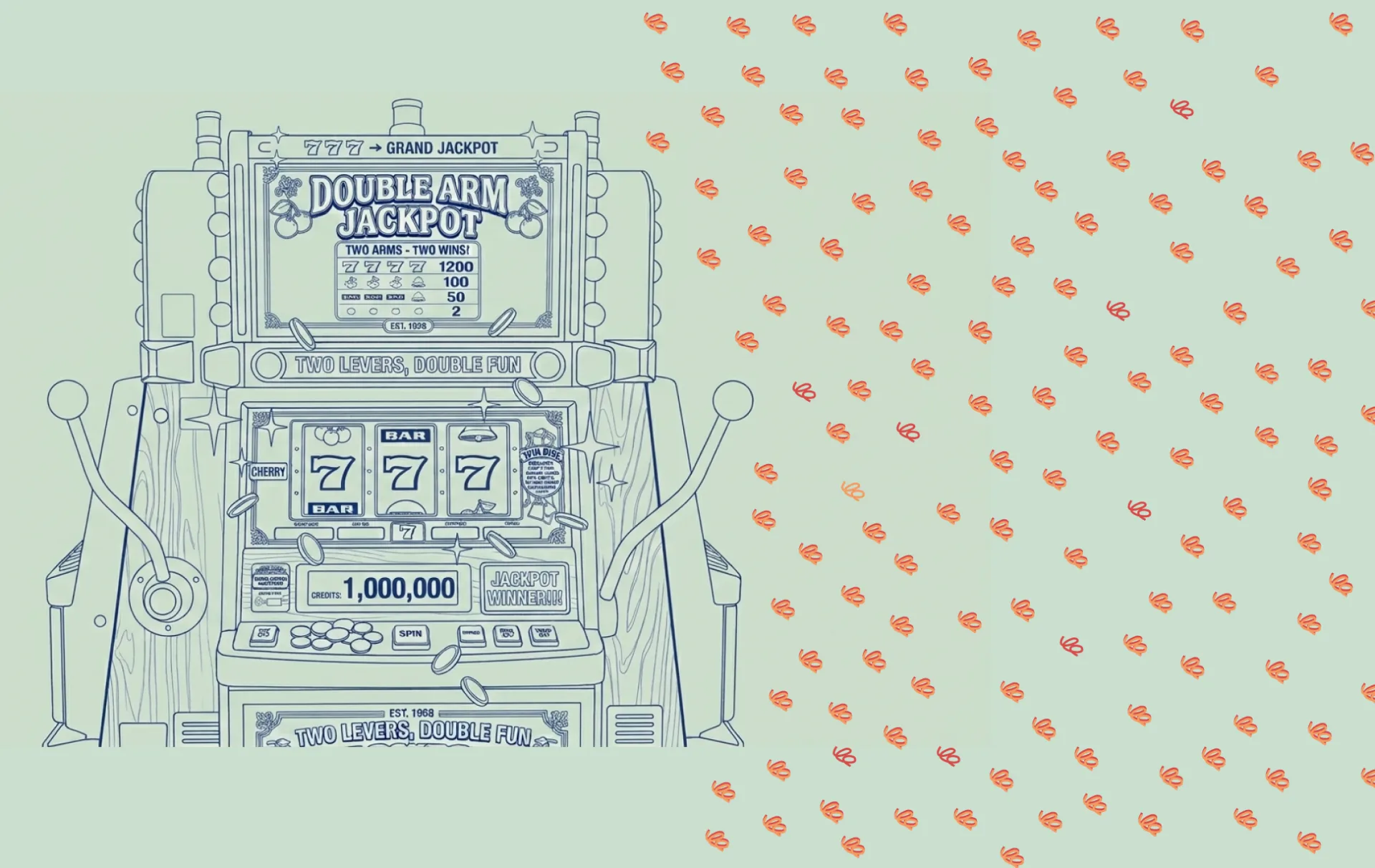
The **multi-armed bandit** problem is a classic framework for studying the exploration-exploitation trade-off. It is named after the analogy of a row of slot machines, each with a different (and unknown) probability of paying out. The agent must decide which machine to pull at each step, trying to maximize its total winnings over time.
### Greedy Agent
A greedy agent always pulls the arm that currently has the highest estimated value. It never tries anything else. This approach works well if the agent’s initial estimates are accurate, but it is vulnerable to getting stuck on a suboptimal arm if early results are misleading.
### Near-Greedy (Epsilon-Greedy) Agent
An epsilon-greedy agent pulls the best-known arm most of the time but occasionally explores other arms with a small probability ε. This exploratory behavior allows it to gather more information and, over time, identify the truly best arm. While it may sacrifice some short-term reward during exploration, it often achieves a higher long-term win rate.
### Estimating Action Values
At each step, the agent maintains an estimated value for each action, calculated as the average of all rewards received from that action so far. These estimates evolve over time as the agent pulls more arms and gathers more data. Because the agent never knows the true value of an action in advance, its estimates are constantly being revised based on new experience.
### Reward Structures
In practice, rewards in multi-armed bandit problems can be modeled in several ways:
– **IID (Independent and Identically Distributed) Rewards**: Each arm pull yields a reward drawn from a fixed probability distribution specific to that arm.
– **Adversarial Rewards**: Rewards are chosen by an adversary trying to confuse the agent, mimicking competitive or unpredictable environments.
– **Stochastic Processes**: The reward distribution for each arm can evolve over time, following processes like random walks or Markov chains.
—
## Simulating the Bandit: Putting Theory into Practice
When comparing a greedy agent to a near-greedy agent in a multi-armed bandit scenario, the results are often illuminating. In a simulation with 15 arms and 700 steps, the greedy agent locked onto a single arm after its first win and stuck with it for the entire run — even though that arm was not the true best. The near-greedy agent, with an exploration rate of ε = 0.2, tried many different arms before eventually settling on the one with the highest true win probability.
The greedy agent’s early luck gave it a short-lived advantage, but its lack of exploration meant it never discovered the best option. The near-greedy agent started behind but gradually closed the gap, eventually achieving a significantly higher overall win rate. This pattern illustrates a core insight of reinforcement learning: short-term exploration is often a necessary investment for long-term reward maximization.
—
## Real-World Applications
Reinforcement learning has moved well beyond academic research and into practical applications across many industries:
– **Robotics**: RL enables robots to learn complex motor skills, navigate environments, and adapt to changing conditions through trial and error.
– **Game AI**: Systems like AlphaGo have demonstrated superhuman performance in games like Go by training through self-play and RL.
– **Natural Language Processing**: Modern large language models are often fine-tuned using RL-based techniques, such as reinforcement learning from human feedback (RLHF), to improve the quality and safety of their outputs.
– **Digital Advertising**: RL algorithms optimize the selection of ads and banners shown to users, maximizing click-through rates and conversions.
– **A/B Testing**: RL approaches can dynamically allocate traffic to different variants, learning which performs best faster than traditional static testing methods.
– **Dynamic Pricing**: Companies use RL to adjust prices in real time based on demand patterns, competitor behavior, and customer responses.
—
## Frequently Asked Questions
### Q1: How is reinforcement learning different from supervised learning?
In supervised learning, the model is trained on a labeled dataset where the correct answer is provided for each input. In reinforcement learning, there are no labeled examples — the agent must discover which actions are good through its own experience, guided only by a reward signal.
### Q2: What is the role of the discount factor in reinforcement learning?
The discount factor (often denoted γ) determines how much the agent values future rewards compared to immediate rewards. A discount factor close to 0 makes the agent myopic, focusing on short-term gains. A discount factor close to 1 encourages the agent to consider long-term consequences when evaluating actions.
### Q3: Why is exploration important even if exploitation yields good immediate results?
Without exploration, the agent may never discover actions or states that lead to better long-term outcomes. A strategy that appears optimal based on limited early experience could be significantly outperformed by an alternative the agent never tried.
### Q4: Can reinforcement learning be used in continuous action spaces?
Yes. While the multi-armed bandit problem deals with discrete actions, many real-world RL applications involve continuous action spaces — such as steering a robot or adjusting a valve. Algorithms like Deep Deterministic Policy Gradient (DDPG) and Proximal Policy Optimization (PPO) are specifically designed to handle continuous actions.
### Q5: What are some common challenges in reinforcement learning?
Key challenges include the exploration-exploitation trade-off, the curse of dimensionality (where the state and action spaces become too large to handle), sparse or delayed rewards, and ensuring that the learned policy is stable and generalizes well to new situations.
### Q6: Is reinforcement learning the same as deep reinforcement learning?
Not exactly. Reinforcement learning is the broader framework. Deep reinforcement learning combines RL with deep neural networks, allowing agents to learn from high-dimensional inputs like images or text. The “deep” part refers to the architecture used for function approximation, not the RL algorithm itself.
—
## Conclusion
Reinforcement learning represents one of the most powerful and versatile paradigms in modern artificial intelligence. From its theoretical foundations in dynamic programming and optimal control to its cutting-edge applications in robotics, gaming, and language models, RL continues to push the boundaries of what machines can learn.
The multi-armed bandit problem, while deceptively simple, captures the essence of what makes RL challenging and rewarding: the need to balance the known against the unknown, the immediate against the long-term, and exploitation against exploration. Understanding this balance is the key to unlocking the full potential of reinforcement learning systems.
As research advances and computational resources grow, the reach of RL will only expand, making it an essential area of study for anyone interested in the future of intelligent systems.
Thank you for reading!
