



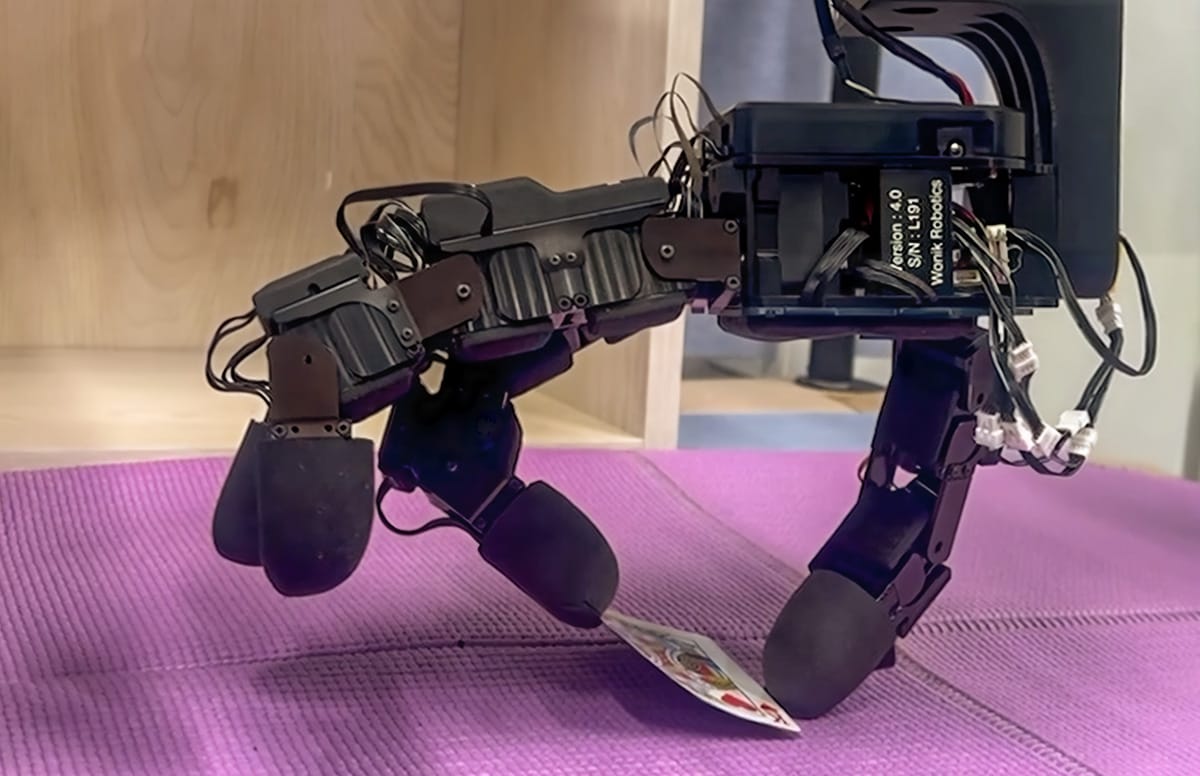
A joint demonstration with Waseda University illustrates how a highly responsive robotic fingernail autonomously lifts a playing card—a skill acquired by observing and learning from a human operator. Source: XELA Robotics
XELA Robotics Co. is set to showcase its newest tactile sensing advancements at three upcoming events in May and June 2026, beginning with the Robotics Summit & Expo in Boston this week. The company will present a range of updates and hands-on demos covering new sensor hardware, enhanced software, and broader compatibility with top robotic platforms.
Key Technologies on Display at the Robotics Summit
- Robotic fingertip with integrated nail: In a groundbreaking development, XELA Robotics has created a robotic fingertip featuring a six-axis, force-sensitive nail, complemented by 30 tri-axial force sensing points embedded in the fingertip pulp. This innovative nail works alongside the fingertip’s tactile sensors to allow precise handling of ultra-thin items like playing cards and keys, as well as complex tasks such as peeling tape off surfaces.
- uSkin integration in Universal Manipulation Interface (UMI): The open-source UMI gripper facilitates AI-driven human-to-robot skill transfer by capturing data from humans performing routine actions—like grabbing a water bottle and pouring it into a glass—and then replicating those actions with robotic grippers. uSkin enhances this process by adding detailed distributed force-vector data to the collected information.
- Magnetic interference compensation: Debuting at the Robotics Summit & Expo, this feature eliminates even the most challenging magnetic interference caused by nearby magnets or ferromagnetic materials. This advancement is essential for working with iron and other metals in industrial settings, as well as specialized components like magnetic clips. It significantly improves upon previous solutions, which could only handle interference except when strong, small magnets were in direct contact with the sensors.
- Enhanced delicate grasping capability: uSkin tactile sensors now offer even greater precision when handling extremely fragile objects. This improvement comes from upgraded software that incorporates machine vision for object detection, refined robot arm control, and an improved third-party graphical user interface—all working together to streamline the creation of sophisticated robotic tasks. Attendees at XELA Robotics’ booth can try a state-of-the-art pick-and-place challenge involving a paper origami crane and a quail egg.
- High-durability models: XELA has upgraded its fingertip covers for increased resilience. If damaged, these covers can be quickly replaced without replacing the entire sensor or fingertip. The new design supports higher force sensing and greater durability, though with slightly reduced sensitivity.
- Automatic weight and hardness detection: Robots fitted with uSkin tactile sensors can now automatically assess both the weight and hardness of objects they lift.
- Improved version of the uSPr DS: The uSPr delivers omnidirectional sensing and softness detection. XELA’s latest iteration reduces measurement hysteresis and has been structurally reinforced without compromising sensitivity. This combination of all-around sensing, minimal hysteresis, and high durability is particularly useful in applications like bin-picking, where avoiding damage to nearby objects is critical.
- High-speed CAN FD communication: According to the company, its sensors now support output via CAN FD (Controller Area Network Flexible Data-Rate), a modern high-speed communication standard. CAN FD allows more sensor modules to operate on the same data line without sacrificing performance, thanks to faster data transfer rates (up to 8 Mbps) and larger data payloads (up to 64 bytes per frame, compared to 8 bytes in traditional CAN). Combined with XELA’s proprietary event-based communication protocol, this ensures stable operation even when numerous sensing points are active at once. Minimal wiring is crucial for integrating multiple sensors into compact spaces, such as humanoid robot hands, the company explained.
- Improved microcontrollers: XELA Robotics reports that its upgraded microcontrollers deliver higher operating frequencies. For instance, the uSPr HE35 for the Robotiq Hand-E now runs at 500 Hz. The Hand-E fingertips are just 6.6 mm thick, contain 60 sensing points each, and feature a easily replaceable top layer.
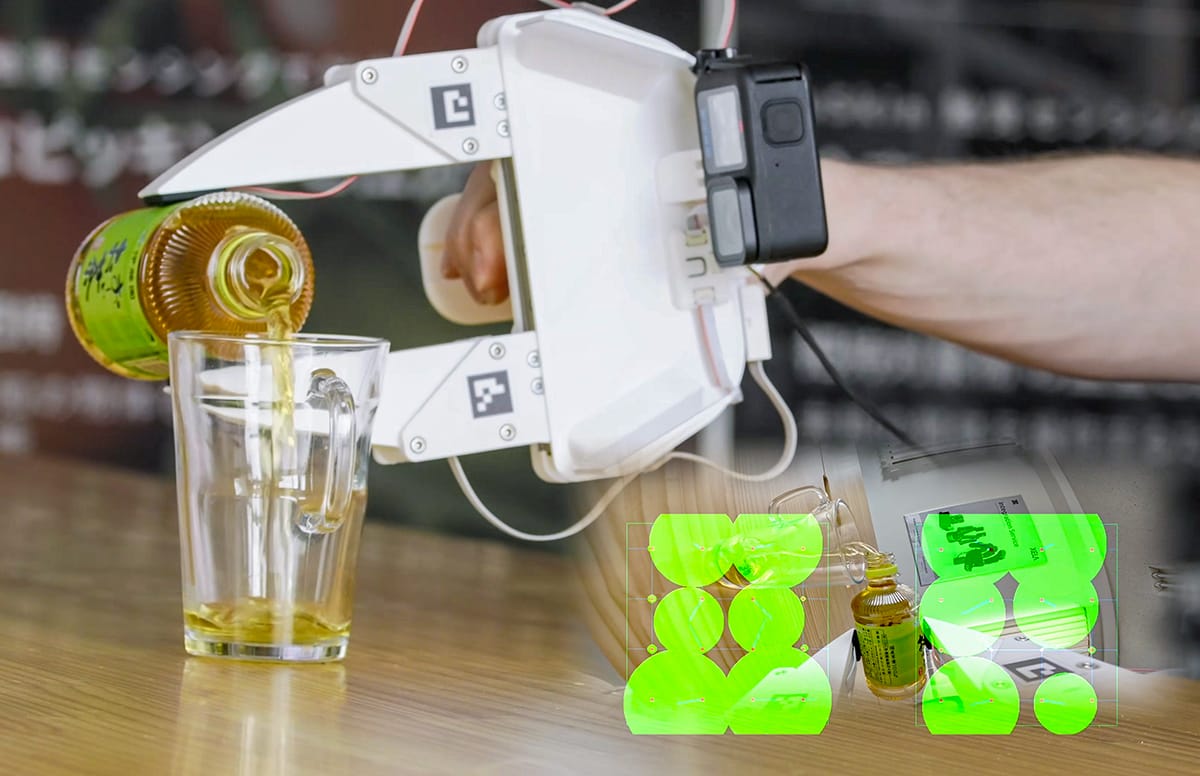
UMI gripper fitted with uSkin sensors in the fingertips, displaying real-time tactile feedback. Source: XELA Robotics
XELA Robotics to Showcase Hardware-Agnostic Integration
XELA Robotics emphasized that its uSkin technology is hardware-agnostic, meaning it can be seamlessly integrated into various robot hands and grippers. During the event, the company will demonstrate this versatility using the Tesollo and Allegro hands, as well as the Robotiq Hand-E and 2F grippers.
From standalone patch sensors and individual fingertips to full robotic arm setups, visitors will experience firsthand how effortlessly XELA’s technology incorporates into complete robotic systems.
- Robotics Summit & Expo: May 27–28, Boston, Booth 616
- ICRA 2026: June 1–5, Vienna, Booth 107
- Automate 2026: June 22–25, Chicago, Booth 1888, South Hall. XELA will participate in the Humanoid Robot Pavilion sponsored by NVIDIA.
Established in 2018 as a spin-off from Waseda University, XELA Robotics is headquartered in Tokyo. The company’s team brings over 70 years of combined expertise in robotics and tactile sensing research.
XELA is dedicated to applying tactile data in practical ways—enhancing how robots grasp, manipulate, and interact with their surroundings. Its mission is to make automation more reliable, flexible, and widely accessible across industries, especially as global working populations age, including in Japan.

