



**From Demos to Deployment: The Harsh Lessons of Building Real-World Outdoor Robots**
In 2018, Burro’s robot performed exactly as it should. The demo was a success—the robot worked. The team was excited, believing they understood the problem. But they soon realized they had only proven a best-case scenario, not the brutal reality of the real world.
The gap between a polished demo and a functional product is where most robotics companies stumble. Their technology may be solid, but they optimized for the wrong conditions. They kept the demo alive while real-world deployment problems remained unsolved.
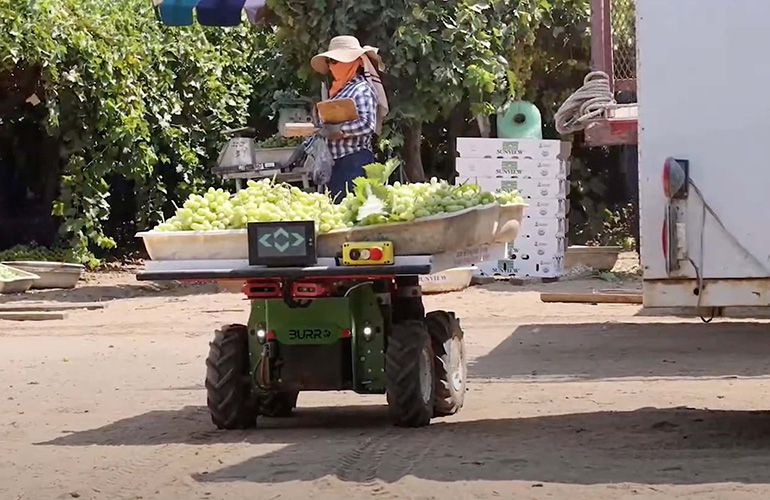
Burro chose a different path. Not because they were smarter, but because they had no alternative. They operated in outdoor agricultural settings—unpredictable environments with no fixed infrastructure, unreliable GPS, and no controlled lighting. Agricultural workers couldn’t adapt their workflows for a machine; they expected reliability immediately.
What Burro learned first was about tolerance. When a customer adopts an autonomous system, they initially see it as a novelty. But within weeks, if it delivers value, their mindset shifts to dependency. The robot becomes critical infrastructure. Failure isn’t just disappointing—it’s infuriating, like a power outage. This shift from novelty to dependency happens faster than companies expect, and the reliability bar is higher than any lab can simulate.
The second lesson concerned environmental variability. Outdoor conditions change constantly—dawn, midday, dusk, summer, winter, rain, sun, dust, and mud. Temperature swings from below freezing to 120°F (49°C). A robot that performs reliably across all these conditions isn’t a slightly improved version of a single-environment robot; it’s a fundamentally different engineering achievement, refined through real-world exposure, not simulation.
### Turning a Demo into a Product
The industrial outdoor environment magnifies these challenges. A port yard adds heavy vehicle traffic and irregular human movement to outdoor variability. A logistics campus demands throughput without downtime. A construction site changes physically every day.
None of these problems can be solved in a lab or through simulation alone. They require presence—accumulating real operational data, failing safely, learning rapidly, and iterating at fleet scale. A mistake absorbed and corrected in one environment makes every unit operating everywhere more reliable. This isn’t theoretical; it’s the only way such problems get solved.
The research foundation for the next phase of outdoor and industrial autonomous robotics is infrastructure-free localization and perception in unstructured open-world conditions. The ability to know exactly where you are and what surrounds you, maintain that knowledge as sensors degrade, and adapt to changing environments without supporting infrastructure, separates demo systems from real-world systems.
Indoor environments received a decade of research investment in this area. Outdoor unstructured environments have not, creating a critical bottleneck. The industrial automation industry excels in controlled settings, but the next decade’s value lies outside—in yards, corridors, and active sites where the physical economy operates.
The path forward isn’t in research papers. It’s in field experience—in years of operation, in datasets no one else has, and in understanding the concrete difference between a demo and a deployment. Burro knows that cost; they paid it in full.
—
### About the Author
Vibhor Sood is co-founder and vice president of engineering at Burro Robotics. He builds Burro robots and controls their software. Sood developed many of the computer-vision approaches to localization and autonomy at Philadelphia-based Burro.
Before Burro, he worked as a researcher at Lehigh University’s Vader Labs, specializing in accurate infrastructure-free outdoor localization, and as a software engineer at Samsung.
Sood holds an M.E.E. from Lehigh and a B.S. in electrical, electronics, and communications engineering from Manav Rachna International University in Faridabad, India.
—
### FAQ
**Q: What is the main challenge in moving from a robotics demo to a real-world product?**
A: The primary challenge is the gap between controlled demo conditions and unpredictable real-world environments. Demos prove concept, but real-world deployment requires tolerance for failure, adaptation to environmental variability, and the ability to learn and iterate at scale in actual operating conditions.
**Q: Why can’t simulation and lab testing replace real-world experience for outdoor robotics?**
A: Outdoor environments are dynamic and variable—lighting, weather, terrain, and human interaction change constantly. No simulation can fully replicate this variability. Only real-world operation builds the necessary robustness and reliability.
**Q: What does “infrastructure-free localization” mean for outdoor robots?**
A: It means the robot can accurately determine its location and understand its surroundings without relying on external infrastructure like GPS, beacons, or pre-mapped routes. This capability is essential for unstructured, outdoor environments.
**Q: Why is tolerance for failure so critical for agricultural robots?**
A: Agricultural workers depend on robots for their livelihood; they have zero tolerance for unreliability. When a robot becomes part of critical workflow, failure feels like a disruption of essential infrastructure, making reliability paramount.
**Q: How does Burro approach learning in real-world conditions?**
A: Burro confronts real-world problems immediately, operating in the environment from day one. They accumulate operational data, fail safely, learn rapidly, and iterate at fleet scale, turning mistakes into systemic improvements.
—
### Conclusion
The journey from a successful demo to a reliable, real-world robot is not a technological one—it’s a test of endurance, adaptability, and operational learning. Burro’s experience highlights that outdoor robotics cannot be optimized in isolation; it must be earned through exposure to the harsh, variable reality of the field. The future of industrial outdoor robotics lies not in simulation, but in the hard-won knowledge that comes from working where the economy actually operates. The difference between a demo and a deployment isn’t just technical—it’s the price of admission to the real world.
