



Pros and Cons
- Lightning-quick performance
- Outstanding Cherry MX keyboard
- New matte OLED display option
- Sturdy, premium build quality
- High price tag
- Heavy, even by gaming laptop standards
- Battery life is very limited
More buying options
Follow ZDNET: Add us as a preferred source on Google.
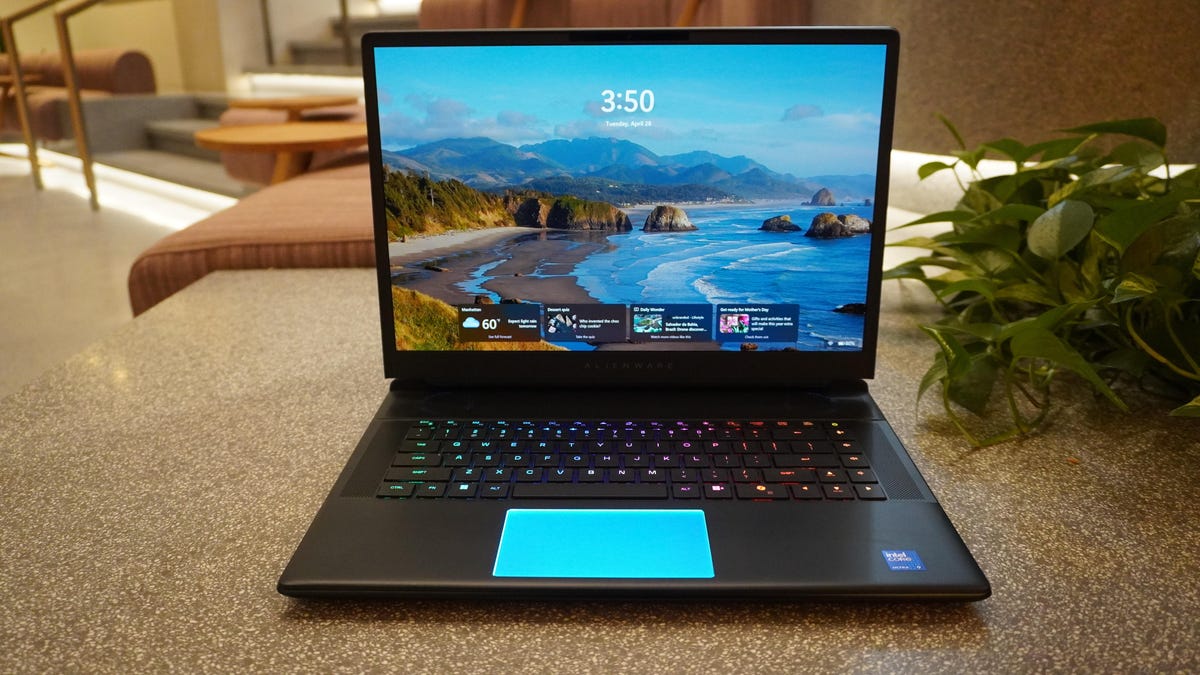
Are laptops replacing desktops? Dell’s top-tier gaming laptops now rival desktop-level performance — and with the steep cost of RAM and related components, the price difference isn’t as significant as it used to be. I’ve been testing Dell’s Alienware 16 Area-51 for the past few weeks and have been thoroughly impressed by its raw power.
Also: I’ve spent a week with Dell’s new XPS 16, and it’s the top Windows laptop of 2026
Every aspect of this laptop is fast. Applications launch instantly, the system boots up in seconds, and it radiates power. The fans positioned above each side of the keyboard push a noticeable volume of air and aren’t just functional — they’re lit up, showcasing the advanced cooling system.
In terms of physical design, the laptop is nearly identical to last year’s Alienware 16, with the most significant upgrades under the hood — newer Intel processors (up to the Intel Core Ultra 9 290HX Plus), an excellent CherryMX keyboard, and a brand-new addition: an OLED display.
Top laptop deals this week
Deals are selected by the CNET Group commerce team and may not be related to this article.
Build and Design
This machine feels solid, with the robust, futuristic construction you’d expect from Alienware. The “Liquid Teal” color scheme, paired with rounded edges, gives it a sleek, alien-inspired look that’s distinctive to the brand. On the downside, the lid is a magnet for fingerprints.
All the ports are situated on the back — except for the SD card slot and headphone jack. Weighing in at 7.5 pounds, the 16-inch Area-51 pushes the boundaries of portability. With the 2.2-pound, 360-watt power adapter, the total setup comes to 9.7 pounds — manageable for occasional travel, but probably not ideal for daily commuting.
Also: Not enough people are discussing the most powerful Lenovo laptop available right now
Dell has pointed to customer feedback as a key influence on this year’s design, and one of the most requested features from Alienware users was an OLED display. It’s finally available on the 16-inch Area-51, offering a 240Hz refresh rate, 620-nit peak HDR brightness, and a 0.2ms response time. The matte coating does a good job of reducing glare, and while the display doesn’t deliver the striking contrast of a glossy panel, games and media look excellent on it.
It’s worth noting, though, that choosing the OLED means committing to the high-end Intel Core Ultra 290HX CPU and 32GB of RAM, pushing the starting price to $3,500. Dell frequently ties specific features to certain hardware configurations, but having a 16GB/OLED combination would have been a welcome option.
All this hardware demands more power, and that’s the other major change. The Alienware 16 now supports a higher power ceiling of 240W: 175W of that is total graphics power (TGP), and 65W is thermal design power (TDP). This increased power budget is intended to give the components the energy they need to handle gaming at the highest graphics settings.
As you’d expect, thermal management also needed an upgrade to keep up. Dell’s Cryo-Chamber cooling system sits at the bottom, with the design creating extra space between the laptop and the surface beneath it. Dell also highlights 32% larger fans that push up to 35% more air through the system. Greater airflow means better cooling, and when they’re running at full speed, you can feel the air moving.
Also: I didn’t expect a Razer keyboard to boost my office productivity — here’s how it happened
The cooling system is also visible. Configurations with the GeForce RTX 5070 Ti or above include a transparent Gorilla Glass panel that reveals the AlienFX fans and offers a peek inside for that enthusiast desktop feel — complete with RGB lighting effects, naturally.
With all this thermal management in place, I never found the laptop getting uncomfortably hot, though the 16-inch model did run slightly warmer on average than the 18-inch version.
Usability and Battery Life
The keyboard is simply outstanding. It features Cherry MX ultra low-profile keys with 1.8mm of key travel and the satisfyingly clicky, tactile feedback you’d expect. The layout is well thought out, properly spaced, and roomy — and it’s about as good as any laptop keyboard on the market today.
The 16-inch model doesn’t include a number pad (that’s exclusive to the 18-inch), but it still has the dedicated mic and volume keys on the far right side that I personally find very practical.
Similarly, the trackpad is solid, but it’s not haptic and is somewhat small. It’s a good example of no-nonsense, functional technology that skips flashy design in favor of reliability… Just kidding. This thing glows — and not just in a single static color. The trackpad pulses with neon rainbow effects, breathes like a living creature, and yes, it looks incredibly cool. But I have to say: for a $4,000 laptop, haptic feedback would be a great addition, even if it means sacrificing the lights.
Of course, you can turn off the lighting and customize each key however you like through the Alienware Command Center app, with saved profiles for when you need to tone things down in the office (or when you’re running on battery).
Also: The meaning behind USB port colors: Why your device may feel slow in the wrong slot
And speaking of battery — you probably already see the direction this is heading — while this is an incredibly powerful laptop with a large battery that draws significant power, it’s not built to run unplugged for extended periods. Dell claims over six hours of battery life,
However, that estimate assumes optimal video-streaming conditions.
In actual everyday use, you’ll get roughly three hours of standard Windows productivity on balanced mode. For gaming, battery life drops significantly: one to two hours, depending on the game and its graphical intensity.

The Thunderbolt 5 ports on the side support 100W charging, so you won’t necessarily need the bulky 360W adapter for regular day-to-day work. During gaming sessions, though, that won’t cut it—you’ll want the full-power charger, since 100W simply can’t sustain this machine while you’re running titles like “Crimson Desert” at maximum settings for extended periods.
Gaming performance
Dell claims the 2026 Alienware 16 Area-51 delivers 10–12% more performance than its predecessor, thanks to a boosted 175W TGP and the new Arrow Lake-HX architecture.
I tested a variety of games from my Steam library, including Monster Hunter Wilds, Cyberpunk 2077, No Man’s Sky, and Eve Online, and consistently saw outstanding frame rates across the board. One standout observation is how little performance compromises in Balanced mode compared to Performance mode, all while running noticeably cooler.
Synthetic benchmark results reinforce this: in 3DMark’s Steel Nomad 4K test, the Alienware 16 Area-51 posted a strong 52.8 FPS, holding its own against much larger 18-inch flagship laptops.
For creative professionals, this laptop doesn’t disappoint either. Video editing in Adobe Premiere Pro and DaVinci Resolve is smooth and extremely responsive. That said, the cooling fans can become quite intrusive during editing sessions—soaring past 50 dB (and even higher in Performance mode)—loud enough to drown out your audio. Using headphones is highly recommended for accurate sound work.
ZDNET’s buying advice
The Alienware 16 Area-51 is an unmistakably premium machine, engineered with serious gaming in mind and priced accordingly. If you’re committed to that tier, both the 16- and 18-inch versions deliver untouchable power and will handle demanding AAA titles well into the future.
The elephant in the room, though, is the price tag. The configuration I tested—equipped with the 290HX Plus processor, 32GB RAM, and GeForce RTX 5080—retails for $4,000, and even the base model starts at $3,149. Opting for the OLED display bumps the cost to at least $3,500, since it’s automatically bundled with the top-tier 290HX.
Also: Should you swap your desktop for a laptop setup? I tested this Dell and found it surprisingly compelling
There are also a few compromises versus the 18-inch version: the 16-inch chassis runs slightly hotter and trails a fraction behind in performance. While it boasts an edge in display quality (OLED isn’t available on the 18-inch model yet), the 18-inch version offers a smoother 300Hz refresh rate. Pricing between the two isn’t drastically different, but the performance uplift with the larger size is tangible.
If you’re not locked into wanting an OLED screen at 16 inches, the Alienware 18 deserves strong consideration—especially since you’re already firmly in the ultra-premium gaming laptop bracket with either choice.
