



**UK’s Smart Sound Connect Subsurface Project Accelerates Marine Autonomy with First Major Robotic Test**
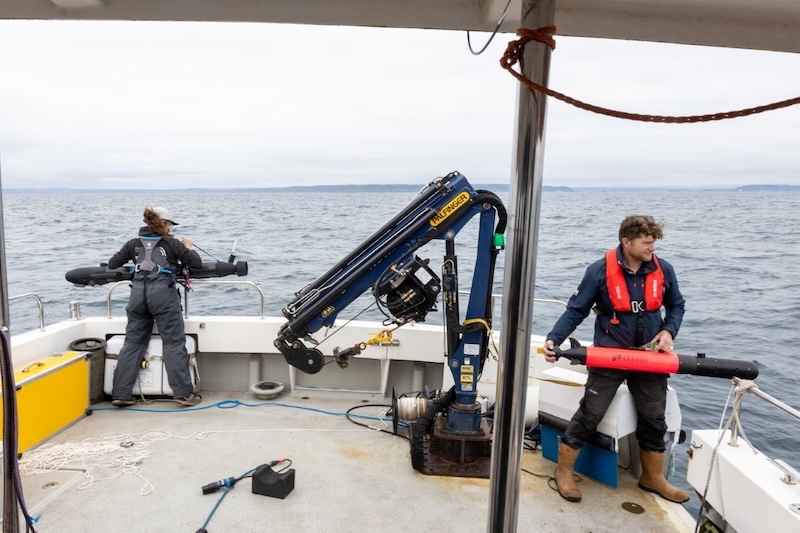
The UK marine technology sector has taken a significant step forward with the successful completion of the first major test of a new underwater trials site designed to accelerate marine autonomy and ocean sensing. The Smart Sound Connect Subsurface (SSCS) project, part of the broader Smart Sound Plymouth initiative, recently conducted a live, multi-marine surface and subsea robotic platform demonstration that showcased the future of ocean monitoring and autonomous operations.
Led by the University of Plymouth in collaboration with Plymouth Marine Laboratory (PML), the SSCS project brought together platforms from several specialized marine technology companies—including ACUA Ocean, ecoSUB Robotics, Seaber, and Sonardyne. These platforms operated both above and below the surface in an all-day collaborative demonstration that highlighted the project’s capabilities to businesses, scientific institutions, defense representatives, and national organizations.
The three-year, £1.2 million SSCS project enhances Smart Sound Plymouth, already recognized as the UK’s premier marine autonomy testbed. It integrates a seabed node array that delivers absolute positioning and communications through passive Ultra-Short BaseLine (USBL) technology. This infrastructure, delivered by Sonardyne, extends the capabilities of the Western Channel Observatory and creates a highly characterized environment for testing underwater systems.
According to Professor James Fishwick, head of innovation for Smart Sound Plymouth at PML, the project represents a major leap forward for marine technology in the region. “Smart Sound Plymouth is going from strength to strength,” he said. “The addition of the subsurface network enables even greater integration between platforms and supports our state-of-the-art testing capabilities for autonomous vehicles and advanced technologies.”
Dr. Lilian Lieber, a senior research fellow at the University of Plymouth, emphasized the project’s role in transforming ocean data into actionable intelligence. “SSCS provides a unique opportunity to test new ocean observing technologies,” she explained. “Its value lies in turning prototypes and field-tested technologies into trusted data streams, accelerating ocean observing towards autonomous sensing and near-real-time insight.”
During the demonstration, the University of Plymouth’s Seaber autonomous underwater vehicle (AUV) and an ecoSUB AUV navigated simultaneously using only the seabed node array. At the surface, a PIONEER uncrewed surface vessel (USV) from ACUA Ocean tracked and controlled an AUV from ecoSUB, using a Sonardyne Ranger 2 Gyro USBL positioning system. The USV also wirelessly harvested data from a permanently deployed Sonardyne Origin 600 acoustic Doppler current profiler (ADCP), transmitting real-time data to shore through the L4 oceanographic monitoring station.
Additional technology highlights included Marine AI’s navigation capabilities, which allowed systems to continue operating even when GNSS signals were lost, thanks to Sonardyne’s Sprint-Nav technology. The demonstrations were streamed live to guests located both in the UK and internationally, who observed the proceedings from PML’s onshore remote operations centre in Plymouth.
Geraint West, business development advisor at Sonardyne, noted the broader significance of the achievement. “This ability to test and accelerate marine autonomous system innovation in a known environment with the type of infrastructure we now have in the SSCS is a real boost not just for Plymouth,” he said. “The demonstration had interest from around the UK and internationally, with visitors from North America and Asia and from a wide range of stakeholders, military, commercial, science and industry.”
John Hunnibell, chief product officer at ACUA Ocean, highlighted the practical applications of the technology. “This demonstration provided an excellent opportunity to demonstrate the persistent mission utility and seagoing characteristics of our USV Pioneer as a ‘mothership’ for nested robotics, data harvesting and data transfer at sea,” he said.
Iain Vincent, director and general manager at ecoSUB Robotics, praised the collaborative environment fostered by Smart Sound. “Smart Sound and the SSCS environment has already been an extremely useful resource for ecoSUB Robotics,” he said. “It provided the perfect place to test this technology, with easy access to open water, vessels and subsea nodes, and an outgoing and helpful community who support activity.”
With these successful trials behind it, the Smart Sound Connect Subsurface team is now looking to expand its reach by seeking additional research and development partners. The project encourages anyone interested in testing new subsea vehicle operations, underwater data telemetry, or other uses of the new infrastructure to contact Aaron Barrett, Lecturer in Autonomy at the University of Plymouth.
[Original Article Source: Robotics & Automation News – “Smart Sound Connect Subsurface completes major test with multi-marine robotic demonstration”](https://roboticsandautomationnews.com/2026/07/21/smart-sound-connect-sub-surface-completes-major-test-with-multi-marine-robotic-demonstration/)
