



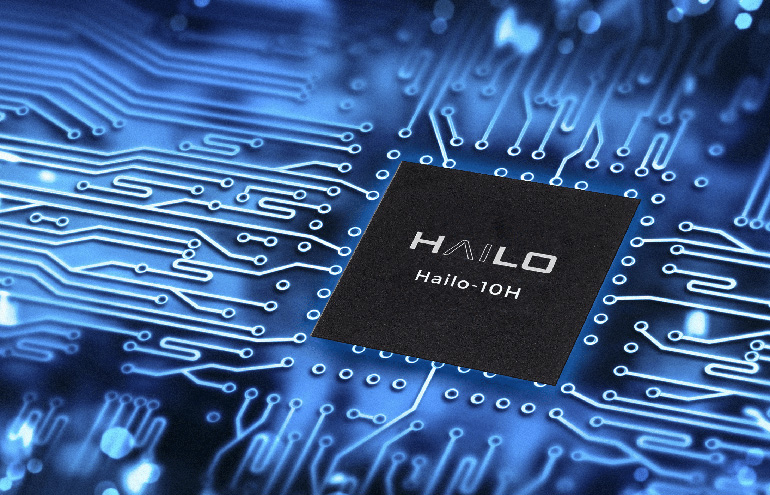
According to Hailo, robots require edge processing to operate safely in real-world settings. Source: Hailo AI
Artificial intelligence has progressed through several distinct stages. Initial systems centered on perception—detecting objects, understanding speech, and pulling insights from data. Generative AI then broadened these abilities, allowing machines to produce original content. Most recently, agentic systems have started managing intricate workflows across digital platforms.
However, throughout all these developments, AI has mostly stayed within the digital realm. That is beginning to shift.
The upcoming phase of AI is physical. Rather than generating results on a screen, physical AI systems engage directly with the real world—moving through spaces, handling objects, and making choices that have instant effects. This evolution brings new demands and is already transforming how robotic systems are built and put into practice.
Moving from perception to action
For a long time, AI in robotics was mainly about perception. Machines could “see” using cameras, “hear” through microphones, and make sense of their environment with increasingly advanced models. Yet these systems usually fed into fixed, rule-based control systems. AI helped machines comprehend their surroundings, but it did not fully govern how they behaved within them. Physical AI transforms this approach.
In real-world settings, machines must constantly interpret their environment, think through what they detect, and respond to those observations instantly. Even more crucially, they must adjust on the fly as situations evolve. This demands a different operational framework: an ongoing cycle where sensing, reasoning, and action must occur at the same time.
Even in everyday situations, the shortcomings of current systems are obvious. A standard cleaning robot might come across something as basic as a sock on the floor, roll over it, and get trapped—needing a human to step in and get it running again. More recent systems, driven by AI-powered perception, can detect and steer clear of such obstacles, carrying on with cleaning around them.
But genuine autonomy takes it further: spotting the sock, grabbing it, and putting it in the right place. This is where the “act” part of the cycle becomes vital. Carrying out that kind of physical interaction dependably calls for tightly integrated, on-device intelligence—making edge computing indispensable.
Editor’s note: The 2026 Robotics Summit & Expo in Boston next week will include sessions on physical AI. Sign up now to participate.

Why the edge is critical for AI
This need has clear consequences for where AI processing happens. Cloud infrastructure continues to play a vital role in training models, gathering data, and enhancing system performance.
But when it comes to carrying out decisions in the physical world, depending on the cloud introduces unacceptable risks. Latency, connection drops, or unpredictable delays cannot be part of a control loop that governs real-world actions. That is precisely why physical AI must reside at the edge.
Processing intelligence locally guarantees systems can function in real time without relying on network availability. It also boosts reliability, privacy, and consistency—factors that grow in importance as AI systems assume real-world responsibilities.
This does not eliminate the cloud. Instead, a hybrid approach takes shape: the cloud trains and refines intelligence, while the edge carries it out at the moment of action.
The humanoid reality check
Meanwhile, breakthroughs in AI have sparked enthusiasm around humanoid robots—machines capable of replicating the full spectrum of human tasks. While exciting, this vision hides a more pressing reality.
The main bottleneck in robotics today is not intelligence. AI systems are making rapid strides in perception and reasoning. The limitation lies in the physical world: hardware capabilities, dexterity, energy efficiency, and cost.
Constructing a robot that can handle a broad array of human tasks demands highly advanced mechanical systems, including hands, joints, and actuators that match human-level flexibility and precision. Those hurdles remain substantial.
As a consequence, general-purpose humanoid robots will likely stay confined to niche, expensive applications for the foreseeable future. The wider market is heading in a different direction.
The growth of task-specific systems
Instead of trying to do it all, most robots being rolled out today are engineered to perform one particular task exceptionally well.
Task-specific robots concentrate on well-defined use cases within controlled or semi-structured settings. A kitchen assistant might chop, mix, and wipe down surfaces, but it will not fold clothes. A warehouse robot might transport goods efficiently, but it is not built to navigate a home.
Self-driving agricultural machinery might track crop health or carry out precision spraying, while robotic delivery platforms are tailored specifically for last-mile logistics.
Consumer products follow the same pattern. Robotic vacuum cleaners are purpose-built for floor cleaning. Autonomous drones examine infrastructure or watch over industrial sites. Robotic lawn mowers like Husqvarna’s AI-powered models continuously traverse shifting outdoor environments while dodging obstacles and adapting to terrain changes.
These systems depend on real-time sense-think-act loops running locally on embedded AI processors, enabling them to function autonomously without constant cloud reliance. In Husqvarna’s case, Hailo edge AI processors help power that on-device intelligence and real-time decision-making.
These examples underscore the difference between task-specific robotics and the vision of general-purpose humanoids. Rather than duplicating every human ability, these machines are fine-tuned to carry out a more focused set of tasks with strong reliability, efficiency, and scalability.
This specialization is not a drawback. It is a deliberate design decision.
By narrowing the scope, developers can optimize for reliability, safety, and affordability. Systems become simpler to deploy, scale, and run in real-world conditions.
We already see this strategy in robotic vacuum cleaners, lawn mowers, drones, and industrial systems. What is shifting now is the depth of intelligence these systems can apply to their tasks.
Advances in AI are allowing robots to move past rigid, scripted behavior toward more flexible, context-aware operation. They canYou are a paraphrasing software that takes an article in HTML format and rewrite it in a way that is easy to read and understand, Keep HTML as-is, change the text as far as you can. Do not change the content language: interpret environments, respond to unexpected events, and gradually enhance performance – all within a set domain.
Scaling physical AI
This move toward specialized systems has significant effects on scale. Even if humanoid robots become practical, they will likely stay pricey and therefore restricted to specific, high-end uses instead of becoming a household essential.
Specialized robots, on the other hand, are set to grow across industries, from homes and hospitals to warehouses, factories, and public infrastructure. These are large markets where success depends not only on ability but also on efficiency.
Deploying advanced AI across millions of devices demands hardware that can provide immediate performance under tight limits: low energy use, minimal delay, and pricing suitable for wide deployment.
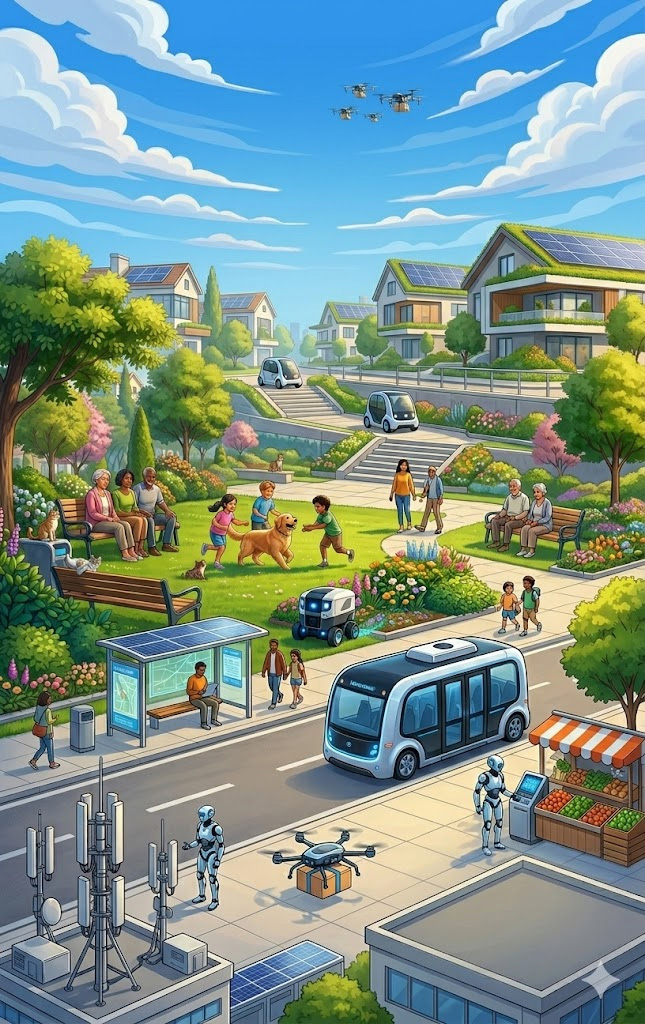
Hailo envisions a future with smart robots. Source: Google Gemini AI, Hailo
This is where edge systems become essential. Physical AI will not be shaped by the largest models or the most capable cloud systems. It will be shaped by efficient solutions that can work dependably where they are placed.
A different way ahead
The future of robotics will not be shaped by a few machines trying to handle everything. It will be shaped by countless smart systems, each built for a clear purpose, working where they add value.
These systems will use continuous sense-think-act cycles, running directly on edge hardware. They will focus on speed, efficiency, and dependability over broad use. And they will grow across industries that need practical, budget-friendly answers.
In that view, the next stage of AI is about turning intelligence into action – embedded right into the physical world, where choices must be made right away and results count. And in that world, the edge is not just a design decision. It is a must.
 About the author
 About the author
Yaniv Sulkes is the vice president for physical AI at Hailo, where he leads the company’s plan for bringing advanced AI computing to robots, smart machines, and edge systems at scale. With over 20 years of leadership experience across AI, automotive, and deep-tech fields, Sulkes has been central in changing how edge devices sense, decide, and respond in real time.
Before Hailo, Sulkes was vice president of business development and marketing at Autotalks, driving worldwide adoption of V2X technology enabling safer, connected transportation. He previously led global marketing at Allot Communications, following several successful product leadership positions. Sulkes holds a B.Sc. in industrial engineering and an M.Sc. in electrical engineering from Tel-Aviv University.
