



**Robots on Wall Street: Non-Traditional Paths to Public Markets for Robotics Companies**
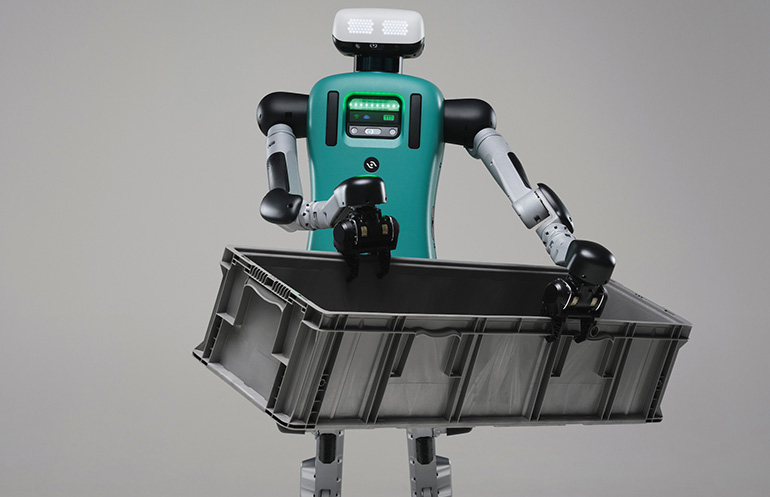
In a landmark transaction signaling a shift in how robotics companies access public markets, Agility Robotics recently announced a merger with Churchill Capital Corp XI, a special purpose acquisition company (SPAC), valuing the humanoid robotics firm at $2.5 billion pre-money. This move underscores a broader trend: robotics and automation firms are increasingly bypassing the traditional IPO route in favor of de-SPAC transactions and reverse mergers. Driven by capital intensity, regulatory hurdles, and competitive IPO markets, these alternative paths offer a viable, and sometimes preferable, route to public listing.
### **The Agility-SpinCo Transaction: A Playbook De-SPAC**
The Agility deal, structured as a de-SPAC transaction, is poised to generate approximately $620 million in gross proceeds, combining a $200 million private investment in public equity (PIPE) led by strategic partner Foxconn with public funds from the SPAC. Churchill XI, launched in late 2025, raised $420 million with the explicit purpose of pursuing a future merger—bringing committed capital to the table. This timeline, however, stretches into 2026, contingent on shareholder and SEC approvals.
Agility’s backers read like a who’s who of tech and robotics: NVIDIA, Amazon, SoftBank Vision Fund 2, and Schaeffler. The transaction follows a well-trodden path established during the 2021 SPAC boom, which saw companies like Sarcos and Symbotic pursue similar routes.
### **Serve Robotics: The Reverse Merger Alternative**
Nearly three years before Agility’s move, Serve Robotics took a different tack. In July 2023, the autonomous sidewalk delivery robot company completed a reverse merger with Patricia Acquisition Corp., a dormant “shell” corporation. Unlike Churchill XI, Patricia served merely as a public shell, enabling Serve to become public without raising capital at the merger. Concurrently, Serve closed a $30 million financing round led by existing investors Uber, NVIDIA, and Wavemaker Partners, converting convertible notes and issuing warrants.
*An interesting footnote: Uber recently sold its stake in Serve, citing divergent strategic priorities.*
### **Key Similarities and Structural Differences**
Both transactions share a common DNA:
* **Bypassing the IPO:** Both companies sidestepped the traditional Initial Public Offering.
* **Pre-Revenue Status:** Both were pre-profit, with Serve being largely pre-revenue.
* **Strategic Financing:** Each transaction was anchored by a PIPE to fund the merger and provide liquidity.
However, the structural distinctions are significant:
* **The SPAC vs. Shell:** Churchill XI was an active acquisition vehicle with raised capital, whereas Patricia was a bare-bones public shell.
* **Regulatory Burden:** Agility’s de-SPAC required a full SEC review of a Form S-4 and shareholder proxy battle. Serve’s reverse merger involved a simpler SEC registration for its PIPE resale, avoiding the proxy process.
* **Liquidity Timelines:** A critical difference emerged post-close. Serve’s “shell” status triggered Nasdaq’s seasoning rules, delaying its uplist to nearly a year. It finally listed in April 2024 only after securing a $40 million underwritten public offering, a delay that postponed investor liquidity. Agility, leveraging a robust SPAC with public shareholders, will avoid this waiting period.
### **Is This the Future for Robotics? Weighing the Pros and Cons**
The rise of non-IPO paths is not an accident. Several market forces make de-SPACs and reverse mergers attractive:
1. **Capital Efficiency:** Robotics is capital-intensive. These paths provide quick access to public markets without the lengthy roadshow of an IPO.
2. **IPO Market Dynamics:** The IPO landscape is dominated by mega-deals (SpaceX, OpenAI), crowding out smaller issuers.
3. **Negotiated Valuations:** PIPEs allow for private negotiation of valuation, avoiding the volatility of public market demand during a listing.
However, this path is not without substantial risks:
* **PIPE as a Double-Edged Sword:** Securing committed PIPE financing is the primary hurdle. In a tight market, investors demand stronger protections and economics, potentially diluting founders.
* **The “Fallen Angel” Problem:** Companies that previously operated as “non-shells” may lose their listing eligibility, adding complexity.
* **Mixed Track Record:** Many de-SPAC companies from the 2021 boom have underperformed, breeding investor skepticism.
* **Regulatory Scrutiny:** The SEC has tightened rules around de-SPACs, eroding some of their historical advantages.
For robotics firms, the choice ultimately hinges on their stage, capital needs, and strategic goals. Mature companies with revenue may find traditional IPOs viable, while early-stage, capital-seeking innovators will likely continue to favor the speed and flexibility of SPACs and reverse mergers.
### **Conclusion**
Agility’s SPAC merger and Serve’s reverse milestone illustrate that the roadmap to becoming a public company is no longer linear. For the robotics sector, these non-traditional paths have evolved from niche alternatives to mainstream strategies, offering a pragmatic solution to the challenges of the public markets. While success is never guaranteed, the ability to execute post-publicly—Agility with its flagship Digit robot and Serve with its expanding delivery network—will be the ultimate determinant of whether these transactions validate a lasting new paradigm for robotics IPOs.
***
### **FAQ Section**
**Q1: What is a SPAC, and how does a de-SPAC transaction work?**
A SPAC (Special Purpose Acquisition Company) is a publicly traded shell company created solely to raise capital through an IPO for the purpose of acquiring a private company. A de-SPAC transaction occurs when a private company (like Agility) merges with an existing SPAC. The private company’s leadership typically takes control of the combined entity, and the public listing of the SPAC becomes the listing for the private company.
**Q2: What is a reverse merger, and how is it different from a de-SPAC?**
A reverse merger is when a private company acquires a public “shell” company, usually one with no assets or business. The key difference from a de-SPAC is that the shell is often dormant, without a pre-raised war chest. The private company’s shareholders typically swap shares for the shell’s public shares, making the private company the public entity. Serve Robotics’s transaction is a prime example.
**Q3: Why are robotics companies choosing these paths over a traditional IPO?**
Robotics companies often face challenges that make traditional IPOs difficult: they are capital-intensive, may lack a long financial track record, and operate in a market where IPO attention is dominated by tech giants. De-SPACs and reverse mergers offer faster timelines, access to committed capital (PIPE), and potentially more negotiated control over valuation.
**Q4: What are the main risks associated with SPAC and reverse merger transactions?**
The primary risks include:
* **PIPE Risk:** Failure to secure or over-reliance on PIPE financing, which can come with onerous terms.
* **Redemption Risk:** In de-SPACs, existing shareholders can redeem shares for cash before closing, reducing the capital available.
* **Liquidity Delays:** As seen with Serve, exchange “seasoning” rules can delay a company’s ability to list on major exchanges like Nasdaq.
* **Post-Performance Scrutiny:** Companies that go public via these routes face the same market pressures to perform as traditional IPOs, with a sometimes-skeptical investor base.
**Q5: What happens after a company completes a de-SPAC or reverse merger?**
After the merger, the formerly private company becomes a public entity. It must then comply with ongoing public company reporting requirements, file periodic financials with the SEC, and manage the expectations of its new public shareholders. The success of the transaction is ultimately judged by the company’s ability to execute its business plan and generate returns for its investors.
***
### **Conclusion**
The journeys of Agility and Serve Robotics illuminate a transformative shift in the public markets. No longer is the traditional IPO the sole avenue for robotics companies seeking public status. De-SPAC transactions and reverse mergers have emerged as powerful, pragmatic alternatives, tailored to the unique needs of capital-intensive, innovation-driven firms. While these paths introduce their own set of complexities and risks, they provide a crucial gateway to public markets for a new generation of technology companies, reshaping the landscape of corporate finance in the process. The coming years will reveal whether these structures mature into a lasting, respected pathway for building public companies.
