



# How Connected Devices Expand Your Digital Exposure — And What You Can Do About It
## The Quiet Growth of Your Online Identity
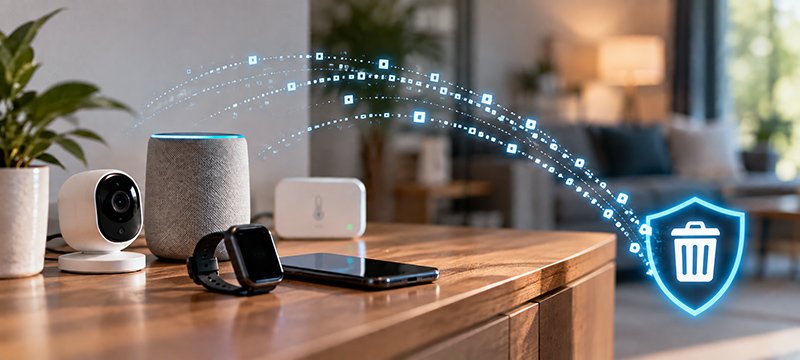
Every day, the devices around you gather information about your habits, your movements, and your preferences. The phone in your pocket logs where you go. The watch on your wrist measures your sleep and heart rate. Doorbells with cameras record every visitor. Even your refrigerator and thermostat quietly note when you’re home and how you use energy.
None of this feels unusual in a world where convenience often comes at the cost of personal data. But here’s what many people don’t realize: this information doesn’t stay within the device or the app that collected it. It flows outward — to cloud servers, to analytics platforms, and to companies whose entire business model is compiling and selling consumer profiles. Over time, your digital shadow expands far beyond what you’d expect, and the people who profit from it rarely make that easy to see.
Understanding where your information lives is the first step toward protecting it. Tools designed to scan for exposed records and manage opt-out processes across dozens of broker websites can save users from having to navigate each site’s removal procedures individually.
## Inside the World of Information Brokers
Information brokers are organizations that specialize in collecting, organizing, and selling personal data. They pull details from public records, social media profiles, financial transactions, and — increasingly — from the sensors and connectivity built into everyday devices. The result is a vast, detailed dossier on millions of people that gets traded and resold constantly.
A single smart thermostat can generate dozens of data points in a week. A connected vehicle tracks your routes, driving style, and schedule around the clock. A fitness watch sends health readings that insurers and marketing firms find valuable. All of this flows into broker databases that may contain your name, address, purchasing habits, health indicators, and daily routines.
The broker landscape changes rapidly. New firms enter the market regularly, buying datasets from existing networks and expanding the web of information circulation. This means your data may already exist in dozens of locations, and the list keeps growing.
## The Data Collection Landscape by Device
Connected technology touches nearly every area of modern life, and each category carries its own data-collection profile. The table below outlines common device types, what they gather, and the risks involved.
| Device Type | Data Collected | Collection Frequency | Primary Recipients | Risk Level |
|—|—|—|—|—|
| Smartphones | Location, contacts, app usage, photos | Continuous | Operating system providers, third-party apps | High |
| Smartwatches | Heart rate, sleep patterns, GPS location | Every minute | Fitness platforms, health insurers | High |
| Home Security Cameras | Video footage, motion timestamps, entry events | Continuous | Cloud storage, intermediary brokers | Critical |
| Voice Assistants | Audio recordings, voice commands, contact lists | On trigger | Technology companies, advertisers | High |
| Connected Vehicles | GPS location, speed, driving behavior | Continuous | Manufacturers, insurance providers | Critical |
| Fitness Trackers | Exercise history, biometric data, sleep cycles | Hourly | Health applications, broker networks | High |
| Smart Thermostats | Temperature preferences, occupancy patterns, daily schedules | Every 5 minutes | Utility providers, broker services | Medium |
| Smart Appliances | Usage frequency, timing, preference patterns | Daily | Equipment manufacturers, data resellers | Medium |
## Why DIY Removal Efforts Fall Short
Many people attempt to remove their information manually — contacting each broker individually and filling out opt-out forms. While this approach sounds straightforward, it quickly becomes overwhelming. Broker websites use different interfaces, different verification steps, and different response timelines. Some process requests in days; others take weeks or never reply at all.
Identity monitoring services add another layer but typically alert you after damage has already occurred. Combining monitoring with proactive removal offers a stronger position, yet gaps remain. Automated removal solutions handle the outreach work on your behalf, submit requests to multiple brokers simultaneously, and follow up when responses are delayed.
The core challenge is sustainability. Even after successful removal, active devices keep generating fresh data that brokers pick up again. Removal is not a one-time event — it’s an ongoing practice.
## A Framework for Taking Control
Regaining control of your personal information requires a structured, repeatable approach. Here’s how to build one:
1. **Take stock.** Make a complete list of every connected device in your home, including phones, wearables, cameras, speakers, and appliances. For each one, note what data it collects and where that data is transmitted.
2. **Search the brokers.** Use search tools or manual queries to find which information broker sites display your name, address, phone number, or other personal details. Document what you find.
3. **Learn the removal paths.** Each broker has its own process. Some provide an online opt-out portal; others require an email to a privacy team. Record the exact steps for each site.
4. **Submit requests systematically.** Work through your list methodically. Send initial opt-out requests and keep a log of every submission, including the date and method used.
5. **Track responses.** Note which brokers confirm removal and which go silent. Follow up with non-responsive brokers after 30 days.
6. **Set a review cycle.** Information has a way of returning. Check quarterly to see if your records have reappeared, and repeat removal steps as needed.
7. **Adjust device behavior.** Go into the settings of each IoT device and reduce data sharing where possible. Turn off location tracking, limit personalized advertising, and review manufacturer privacy agreements carefully.
## Picking the Right Removal Support
Not all data-removal services are created equal. When evaluating options, consider what each one covers, how it handles follow-ups, and what its privacy and security practices look like. Some services focus on large, well-known brokers. Others cast a wider net, targeting smaller and less obvious sites as well.
Cost varies depending on the breadth of coverage and whether ongoing monitoring is included. Services that submit follow-up requests automatically tend to produce better long-term results, because broker databases refresh constantly with new incoming data.
The most worthwhile services combine thorough broker outreach with clear reporting so you know exactly what’s been done and what still needs attention. If a breach has already exposed your details, look for options that also include dark-web monitoring alongside standard broker removal.
## The Security Risks Behind the Data Flow
The data-collection problem isn’t just about brokers — it’s also about how insecure many connected devices actually are. A surprising number of smart home products transmit information over unencrypted connections, making it easy for anyone on the same network to intercept. Many devices ship with default passwords that users never change, and manufacturers frequently abandon software support within a year or two of purchase.
A compromised smart speaker or security camera can become a gateway into the rest of your home network. From there, attackers may reach phones, laptops, and financial accounts. Password reuse across devices makes this risk even more severe — a single breach on one service can cascade into full identity exposure.
## Frequently Asked Questions
**Can a single smart device put my entire home network at risk?**
Yes. If one device lacks proper security, it can serve as an entry point for attackers trying to reach other devices on the same network. Weak or reused passwords make this far more likely.
**Do removal services handle information found on dark-web marketplaces?**
Standard removal services focus on broker and people-finder websites. Dark-web monitoring is a separate service and is best layered on top for full protection.
**How frequently do IoT devices send new data to brokers?**
It depends on the device. Some transmit continuously, while others send data only periodically or when triggered by user activity. Regardless of the frequency, information is always flowing to some third party while the device remains active.
**Is it practical to unplug every connected device after a cleanup?**
Most people can’t realistically go fully offline. A better strategy is to evaluate which devices are essential, strip away unnecessary data-sharing permissions, and replace outdated hardware with privacy-conscious alternatives when the time comes.
**What’s the best approach if a broker ignores my removal request?**
Send a polite but firm reminder after 30 days. Keep records of all communication. If the broker continues to ignore you, reference relevant privacy regulations such as state-level consumer data laws in your follow-up messages. Persistence pays off over time.
## Conclusion
Living with connected devices in a modern home isn’t something anyone needs to abandon. What does require attention is the invisible flow of personal data that these devices enable. From the moment a new smart gadget joins your household, it begins contributing to the growing database of brokers, advertisers, and resellers who profit from your information.
The most effective strategy combines regular audits of your online presence with deliberate device-management habits. Remove what’s already out there, limit what continues to be generated, and make removal follow-ups part of a quarterly routine. Pairing these habits with the right support — whether through automated removal tools, dark-web monitoring, or simply a well-organized spreadsheet — puts you back in the driver’s seat of your own digital footprint.
Data privacy isn’t about perfection. It’s about consistent effort, informed choices, and the willingness to revisit the process as new devices and new risks enter your life.
Thank you for reading
