



# New Video Intelligence Model Launched to Power Physical AI with Egocentric Understanding
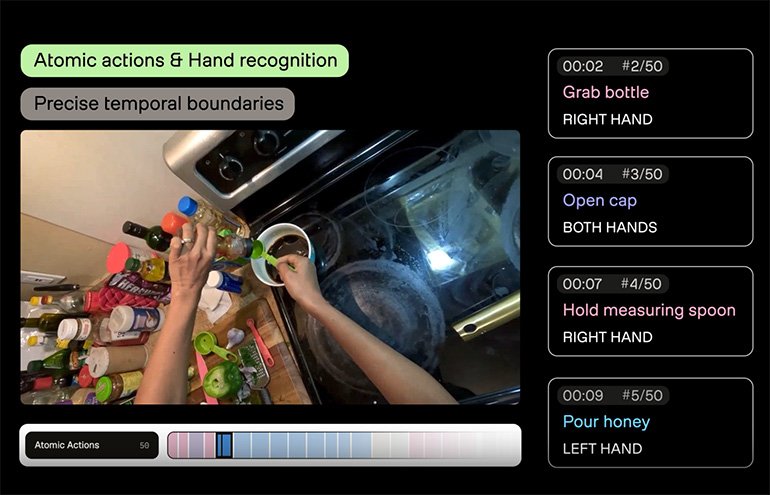
The challenge of turning massive volumes of raw video footage into structured, machine-readable training data has long been a bottleneck for teams building physical AI systems. A newly released AI model aims to address this gap by adding sophisticated video understanding capabilities specifically designed for egocentric perspectives — footage captured from the point of view of the person performing a task.
## Why Egocentric Video Matters for Robotics
The model, built on a full-stack video intelligence platform, represents an expansion into the physical AI domain. Unlike traditional broadcast, cinematic, or instructional video, egocentric footage captures the real nuances of human behavior: hand movements, object interactions, shifts in grip, recovery from errors, and environmental context — all from the operator’s own vantage point.
This type of data is also far more scalable to collect than teleoperation feeds, making it a practical foundation for training robots, drones, and autonomous vehicles to perceive, reason, and act in complex real-world settings.
## Five Core Workflows for Video Analysis
The new release supports five key workflows that help teams process and extract value from video at scale:
1. **Action Segmentation and Labeling** – Automatically generates time-stamped labels for actions, steps, objects, and hand-object interactions, mapped to custom domain taxonomies.
2. **Dense Caption Labeling** – Produces rich natural language descriptions of spatial relationships, scene context, and interactions to train language-conditioned robot policies.
3. **Quality Scoring** – Evaluates video clips for action clarity, framing, and stability, allowing teams to filter out low-quality footage before human review.
4. **Search and Curation** – Uses natural-language queries to surface rare events, edge cases, long-tail scenarios, and duplicate clips across large video repositories.
5. **Consent and Compliance Flagging** – Detects faces, bystanders, and sensitive onscreen or paper-based data to maintain privacy before footage enters development pipelines.
## Enhanced Capabilities Over Previous Versions
The model builds on earlier generations of the platform, which were already used by enterprises managing extensive video libraries. Improvements in the new release include better entity recognition for consistent tracking of hands, objects, and tools across multiple clips, as well as faster and more cost-efficient processing for high-volume workloads.
The system also supports Time-Based Metadata, which lets users define a custom schema and receive timestamped, structured metadata from video content — particularly valuable for egocentric clips where individuals often narrate their actions aloud.
Additionally, the model can process both video and still images, and it does not require proprietary cameras or specialized hardware, making it accessible for a wide range of use cases.
## Applications Across Industries
Early collaborations are focused on robotics labs and data teams working on dexterity and manipulation tasks such as packaging, assembly, and cleaning. The technology is also being explored for specialized industrial applications, including semiconductor quality control. The broader goal is to help teams make large-scale human behavioral video useful for training physical AI systems, reducing the need to start from scratch with each new dataset.
The model’s creators emphasize that it provides a video understanding layer — identifying actions, segmenting them in time, understanding hand movements, and tracking environmental changes — without attempting to replace a robot’s own tactile or actuator-level sensors. Instead, it enriches the data available to engineers who combine video insights with other sensor modalities to build precise trajectories and learning policies.
—
## Frequently Asked Questions (FAQ)
**Q: What is egocentric video, and why is it useful for physical AI?**
A: Egocentric video is recorded from the first-person perspective of the person performing a task. It captures detailed information about hand movements, object interactions, and environmental context that traditional third-person cameras often miss, making it highly valuable for training robots and autonomous systems.
**Q: Does the model require special cameras or hardware?**
A: No. The system is designed to work with standard video capture setups. What matters most is the ability to record actions and interactions from the operator’s point of view, regardless of the specific equipment used.
**Q: Can the model process still images in addition to video?**
A: Yes. The model supports analysis of both video content and still images, giving teams flexibility in the types of data they work with.
**Q: What kinds of tasks is this technology best suited for?**
A: It is well-suited for tasks involving dexterity and manipulation — such as packaging, assembly, cleaning, and quality control — as well as any scenario where understanding human behavior from a first-person perspective can improve robot training.
**Q: How does the consent and compliance workflow work?**
A: The model automatically detects and flags faces, bystanders, and sensitive onscreen or paper-based information within video content, helping teams maintain privacy and regulatory compliance before footage is used in development pipelines.
**Q: Is this model part of a larger platform?**
A: Yes. It sits within a full-stack video intelligence platform that combines multiple models and capabilities designed to help teams access, understand, and act on their video content at scale.
—
## Conclusion
The release of this new video intelligence model marks a significant step forward in bridging the gap between raw real-world footage and actionable training data for physical AI. By focusing on egocentric perspectives, the technology captures the fine-grained human behaviors — grip adjustments, error recovery, object manipulation — that have historically been difficult to translate into formats machines can learn from. With its five specialized workflows, improved entity recognition, and support for both video and still imagery, the model offers a practical and scalable solution for robotics teams looking to accelerate development without requiring proprietary hardware. As physical AI continues to grow, tools that transform human experience into structured, reviewable knowledge will be essential to building systems that can safely and effectively operate in the real world.
Thank you for reading
