



# The Intersection of Physical AI and Robotics: Shaping the Future of Security
The fusion of robotic systems and artificial intelligence represents a pivotal shift in modern technology. Where traditional machinery served as the “body,” AI provides the “brain,” transforming rigid equipment into smart, adaptive agents designed to enhance productivity and operational efficiency. This synergy is particularly transformative for the physical security sector, where recent advancements in physical AI offer unprecedented capabilities. In the current investment climate, over twenty-three billion dollars has been channeled into organizations focused on refining this human-machine collaboration, primarily to better protect people and property. As critical industry infrastructure—such as data centers and manufacturing plants—faces increasingly complex risks, the adaptive and scalable potential of physical AI offers a crucial path forward.
## Understanding Modern Physical Security Challenges
To effectively protect assets, organizations must first understand the evolving threat landscape. Today’s leading security risks generally fit into three overarching categories: cyber-physical convergence, legacy system constraints, and global volatility.
As cybersecurity and physical protection become increasingly intertwined, organizations face a new breed of threats. Interconnected security ecosystems—comprising cameras, access controls, and sensors—can be compromised if malicious actors breach a central digital platform, leaving physical assets exposed to theft and disruption. A stark illustration of this occurred when a major automotive manufacturer suffered a devastating cyber-attack. Stolen credentials and social engineering tactics, attributed to state-sponsored actors, infiltrated the company’s IT infrastructure, completely halting physical production and costing the national economy an estimated two-point-five billion dollars.
This incident underscored how legacy technologies leave personnel relying on reactive measures rather than prevention. Operating older hardware and software simply cannot suffice in a security environment that becomes more vulnerable amid growing geopolitical and socioeconomic tensions.
## How Robotics Can Mitigate Risk
Adapting to a rapidly changing physical security climate is the central challenge for organizations across all critical industries. The adaptive potential of physical AI and robotics offers a powerful solution.
At a prominent robotics conference in Asia during late 2025, developers highlighted strategies centered on the responsible deployment of these technologies. One company showcased a quadrupedal robot designed as a next-generation security asset to address the core challenges of protecting vital infrastructure.
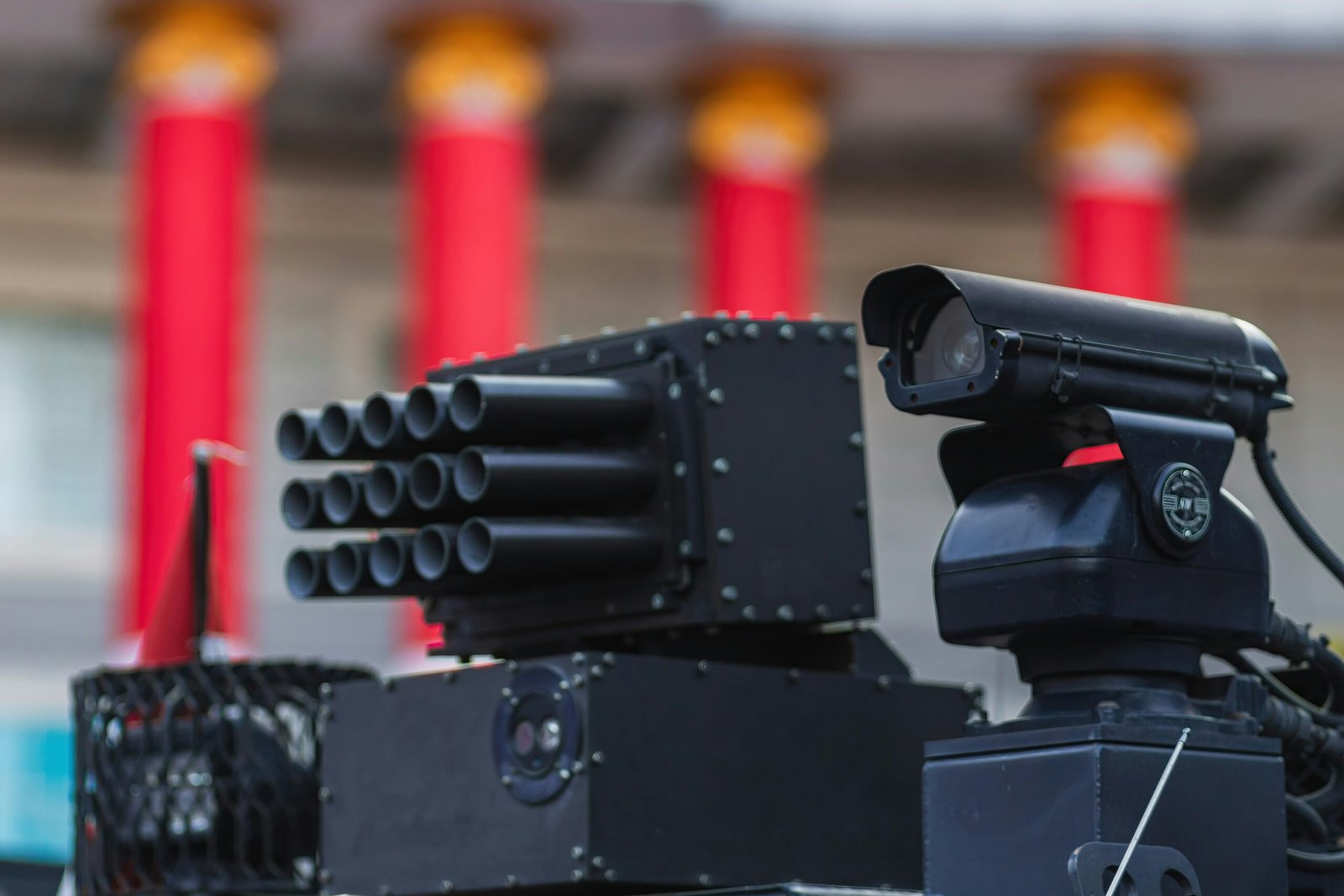
This robotic system features integrated smart sensors that observe patrolled areas, utilizing physical AI to register, process, and act on anomalies and unusual activity in real time. By combining the mobility of robotics with AI reasoning models, the system enables a scalable, proactive security approach, continuously learning and improving against complex threats. This makes it an invaluable asset for enterprise security and emergency response scenarios, bridging the gap between traditional observation and active intervention.
## Real-World Applications and Future Integration
The capabilities demonstrated by these systems illustrate the broader potential of physical AI and robotics in solving security challenges. When considering the three primary risk categories, these technologies offer adaptable solutions.
In the realm of cyber-physical convergence, smart sensors and advanced optics can identify operational anomalies and detect potential breaches early. Robotic platforms can also integrate with legacy technologies to create a more comprehensive, layered security posture.
Furthermore, the integration of large language models and generative AI for data analytics allows these systems to continuously learn and scale against evolving threats. By processing high volumes of video, access control, and sensor data, these platforms help security teams surface hidden patterns that might otherwise go unnoticed, prompting faster operational responses.
The rapid development of physical AI is already accelerating deployment. These technologies are no longer just theoretical; they are actively operating in various hospitals, shopping centers, and educational campuses across the globe. With their scalable potential, robotics and physical AI—paired with other physical security technologies—will play a fundamental role in creating a proactive security strategy, serving as a frontline layer that actively reduces gaps and minimizes vulnerabilities through enhanced detection and response capabilities.
—
## Frequently Asked Questions (FAQ)
**What is physical AI in the context of security?**
Physical AI refers to artificial intelligence models specifically designed for physical, embodied machines like robots. In security, it allows devices to perceive their environment, make autonomous decisions, and take actions—such as detecting anomalies or alerting human personnel—without constant direct human control.
**How do robots help with legacy security systems?**
Robotic platforms equipped with physical AI can integrate with existing legacy technologies. By acting as mobile sensor hubs and intelligent data processors, they can bridge the gaps of older, static systems, providing dynamic surveillance and proactive threat detection rather than just passive recording.
**Are autonomous security robots already in use today?**
Yes, these technologies are already actively deployed in various real-world environments, including hospitals, shopping malls, and educational campuses worldwide. They serve as a frontline layer in modern security operations, handling routine patrols and anomaly detection.
**Why is cyber-physical convergence a major security risk?**
Cyber-physical convergence means that physical security systems—like cameras and access controls—are digitally connected. If a malicious actor breaches the central digital platform, they can potentially disable physical protections, leading to large-scale theft, property damage, or operational disruption.
**How does AI help process security data?**
By utilizing large language models and generative AI for data analytics, robotic systems can process massive volumes of video, access logs, and sensor feeds. They identify patterns and anomalies that might require human review or a faster operational response, significantly reducing the time between detection and action.
—
## Conclusion
The integration of robotics and physical AI marks a paradigm shift in how organizations approach the protection of critical infrastructure. Moving beyond traditional, reactive security measures, these technologies offer a proactive, scalable, and intelligent defense against the multifaceted challenges of the modern threat landscape. By leveraging smart sensors, AI reasoning, and robotic mobility, organizations can safeguard their assets more effectively, even amid rising geopolitical volatility and evolving cyber threats. As investment continues to pour into this sector and deployment expands into everyday environments, physical AI and robotics will undeniably become the cornerstone of resilient, future-ready security strategies.
Thank you for reading
