



# How Autonomous Inspection Platforms Are Transforming Industrial Maintenance
Industrial downtime continues to drain billions from the world’s largest enterprises. Experts estimate that undetected equipment failures alone cost the top 500 global companies roughly $1.4 trillion annually, with a single hour of unplanned outage carrying an average price tag of $250,000. In response, a growing number of technology firms are turning to autonomous inspection systems that combine robotic hardware with intelligent software platforms to detect problems before they escalate.
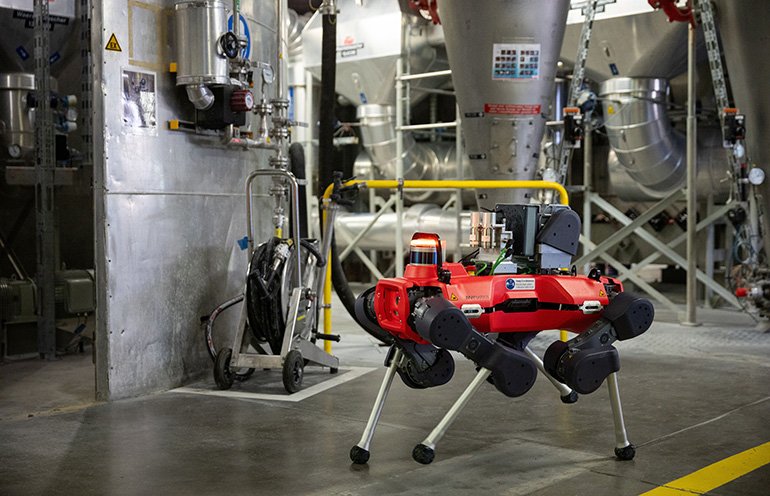
One such company, founded in 2016 and headquartered in Zurich, has introduced a cloud-based operations platform designed to unify the full lifecycle of autonomous facility inspections. The platform—built around the company’s signature four-legged robotic units—aims to make it possible for plant operators to plan, execute, and act on inspection missions within a single integrated environment.
## The Problem It Solves
Traditional inspection workflows in heavy industries rely heavily on manual walkthroughs, stationary sensors, or ad hoc checklists. These approaches often miss subtle early warning signs—such as slight overheating, acoustic anomalies, or gas concentrations below alarm thresholds—because they lack the contextual awareness to distinguish normal variation from genuine deterioration.
The new platform addresses this gap by combining multiple sensing modalities—thermal imaging, acoustic monitoring, visual analysis, and gas detection—into a unified intelligence layer. Crucially, it evaluates each reading against the operating context of the equipment, such as motor speed, load level, and ambient temperature. Only anomalies that matter relative to those conditions are flagged, dramatically reducing false alarms and letting teams focus on what truly needs attention.
## A Platform Built on Four Core Modules
The system is organized around four interconnected components, each targeting a distinct stage of the inspection workflow.
**Fleet Coordination and Scheduling**
A centralized module handles the scheduling, monitoring, and control of every inspection robot deployed across a facility. It can receive mission triggers directly from distributed control systems (DCS), ensuring that critical assets are revisited at consistent intervals. This frees reliability engineers from routine dispatch work and lets them concentrate on evaluating findings and prioritizing repairs.
**Intelligent Analytics**
This layer fuses multi-modal sensor data with real-time operating conditions. Rather than simply recording raw measurements, it interprets them in context—identifying overheating components, partial electrical discharges, gas leaks, and mechanical misalignments while they are still relatively harmless and correctable. The result is an early-warning system that shifts maintenance from reactive to preventive.
**Enterprise Integration**
The platform converts verified anomalies into actionable work orders that flow directly into existing operations software. Pre-built connectors span five major enterprise categories: distributed control systems, computerized maintenance management systems (CMMS), enterprise resource planning (ERP) tools, asset performance management (APM) platforms, and digital twin or contextualization layers. A documented REST API further extends compatibility, and customers can request custom connectors during onboarding. A notification center delivers real-time alerts through tools like email and Microsoft Teams, with additional messaging channels planned for future releases.
**Digital Plant Mapping**
The platform maintains a live digital replica of the manufacturing environment, mapping every inspection target to the organization’s existing asset management and enterprise asset management (EAM) structures. Equipment is imported using its unique asset ID, ensuring that every measurement is tied to the correct piece of machinery. Because all modules share the same underlying plant model, insights generated by the AI engine remain consistent and traceable across the entire system.
## Seamless Transition and Rapid Adoption
Existing customers of the company’s earlier asset management product will receive an automatic update, migrating their data and workflows to the new platform without disruption. The system’s AI engine continuously improves as more modules contribute data from the same shared plant model, becoming more accurate over time.
Onboarding is designed to be lightweight. First-time users can begin operating the robot fleet and receiving findings independently, with no enterprise system integration required on day one. When they are ready to connect their robotic units to their broader software stack, pre-built integrations with major industrial partners simplify the process. The most labor-intensive part of setup typically involves granting network access, securing the necessary approvals, and mapping asset identifiers to align with the plant’s existing hierarchy.
Training is similarly accessible. The company offers a structured academy program that has already trained over a thousand users, and the entire process can be completed in just a few days. Role-based interfaces ensure that operators, reliability engineers, and maintenance technicians each see a tailored view relevant to their responsibilities—nobody is overwhelmed by functions or data outside their scope.
## Security and Global Availability
Given that these platforms operate in sensitive industrial environments, cybersecurity is a foundational design requirement. The platform adheres to ISO 27001 standards and provides end-to-end encryption for data both in transit and at rest. Tenant isolation and granular role-based access controls protect information integrity, while regional data residency options and on-premises deployment capabilities address the needs of organizations with strict local regulatory mandates.
The platform is being made available globally with its initial release, covering North America, Europe, Asia, and all regions where the company currently maintains operations.
## Real-World Impact
The platform is already active across more than 200 robotic deployments, executing hundreds of thousands of inspections every month. One cement manufacturer running continuous 24/7 operations reported that the platform carried out over 33,000 autonomous inspections within 16 months alone. By structuring every reading against the plant’s asset hierarchy, the maintenance team gained the ability to compare condition trends over time and prioritize repairs with far greater confidence.
Enterprise partners have also highlighted the value of the integration layer. One global technology company noted that physical AI on its cloud platform can translate a business need into an inspection mission, with results flowing back into its systems for follow-up actions like maintenance order creation. Another major industrial analytics provider emphasized that consistent, equipment-level inspection data from across the plant floor—delivered through an open API—creates a more complete picture of asset health, enabling teams to identify, validate, and address issues more effectively.
## Frequently Asked Questions (FAQ)
**Q: What types of industrial facilities benefit most from this kind of platform?**
A: The platform is primarily aimed at heavy process industries such as energy, power generation, metals, mining, and chemicals—sectors where equipment downtime carries enormous financial penalties and where hazardous environments make human inspection both risky and inefficient.
**Q: Do I need to replace my existing enterprise software to use this platform?**
A: No. The platform is designed to integrate with the systems you already run. It offers pre-built connectors for major DCS, CMMS, ERP, APM, and digital twin solutions, and it exposes a REST API for custom integration. You can start using the fleet management and inspection AI independently and connect to your enterprise stack when ready.
**Q: Can this platform work with robots from other manufacturers, or only the company’s own units?**
A: The platform currently supports receiving inspection data from third-party robots and sensors. Full fleet management capabilities for non-proprietary hardware are expected to expand in the coming year, with the long-term goal of serving as a single operations hub for mixed-robot fleets.
**Q: Is there a unified industry standard for inspection robots that the platform complies with?**
A: No single, universally adopted inspection-robot standard exists in either the United States or Europe at this time. The platform provides its own interoperability layer centered on inspection tasks and asset management, while integrating recognized fleet standards wherever applicable. The company has also indicated its intention to help shape a unified inspection-robot standard going forward.
**Q: How long does it take to train staff on the platform?**
A: Most users can become proficient within a few days. The company’s academy program has trained over 1,000 users to date, and no prior robotics expertise is required. Interfaces are role-based, meaning each user sees only the functions and data relevant to their job.
**Q: What happens to my data in terms of privacy and security?**
A: The platform is hosted under ISO 27001 standards with end-to-end encryption for data in transit and at rest. Tenant isolation, role-based access controls, regional data residency options, and an on-premises deployment mode ensure that sensitive industrial data remains protected and compliant with local regulations.
## Conclusion
Autonomous inspection platforms represent a significant evolution in how heavy industries monitor and maintain their most critical assets. By combining robotic mobility, multi-modal sensing, and AI-driven analytics within a cloud-based operations environment, these systems turn raw field data into actionable maintenance intelligence—often before a problem becomes visible to the human eye.
The economic case is compelling. With unplanned downtime costing hundreds of billions of dollars annually across the world’s largest enterprises, the ability to detect and address equipment degradation early translates directly into avoided losses. As integration with existing enterprise systems becomes simpler and as third-party hardware support expands, the barriers to adoption continue to fall.
The shift from reactive maintenance to intelligent, autonomous inspection is no longer a distant aspiration. For many industrial operators, it is already underway—and the results are measurable.
Thank you for reading
