



# The Economics of Machine Autonomy: Can Robots Own Digital Money, and What Stands in the Way?
The question of whether machines should—and can—participate in the global economy is no longer science fiction. As physical AI systems mature, a growing number of technologists, economists, and legal scholars are grappling with the practical and philosophical implications of granting robots economic agency. From decentralized payment networks to the legal void surrounding machine responsibility, the road to autonomous robotic economies is as fascinating as it is fraught with obstacles.
## The Coasean Lens: When Machines Become Firms
Economist Ronald Coase famously argued that firms exist because it is cheaper to produce internally than to transact on the open market. This same logic is now being applied to the robotics industry. When a startup builds a robotic arm or a fleet of delivery drones, it operates as a firm because internal production beats outsourcing. But the paradigm shifts dramatically when the machine itself becomes the producer—when a robot independently decides to offer services and collects payment without human intermediation.
Price becomes the ultimate signal of agency. In traditional manufacturing, cost efficiency drives adoption. But what happens when the entity entering the market is not a tool but an autonomous agent living in our homes? The economics of humanoid robots must confront a fundamental tension: these machines need to be affordable enough for mass adoption, yet sophisticated enough to be genuinely useful.
## The Price Problem: Building a Robot for the Masses
For decades, robotics thrived in industrial settings. Factories like those of major automotive manufacturers demanded precision, reliability, and predictability above all else. Those systems cost millions and operated behind closed doors.
Today, the industry faces a dramatic pivot. Engineers must now design robots for domestic environments, and potentially for extraterrestrial deployment as well. This mirrors the evolution of mobile phones before smartphones arrived—functional but clunky and expensive.
The core obstacle is cost. A household assistant cannot be priced like a luxury vehicle. Market research suggests strong consumer demand for robots in the €1,000 to €1,500 range—affordable enough to enter everyday homes, similar to smart home hubs or advanced tablet-style devices. Achieving that price point, however, demands a complete rethinking of how robots are designed, manufactured, and maintained. The emphasis must shift from raw mechanical precision to seamless integration with human behavior and living spaces.
## Paying the Machine: Crypto Wallets vs. Traditional Banking
Perhaps the most provocative question in the field of robotic economics is this: how do you pay a robot?
A robot is not a legal person. It cannot open a bank account, sign contracts, or hold a passport. Some advocates in 2026 have proposed that every robot be equipped with a cryptocurrency wallet—a digital address generated automatically on decentralized networks like Bitcoin or Ethereum. Transactions on these networks are validated by consensus mechanisms rather than by human legal representatives, making them theoretically ideal for machine-to-machine commerce.
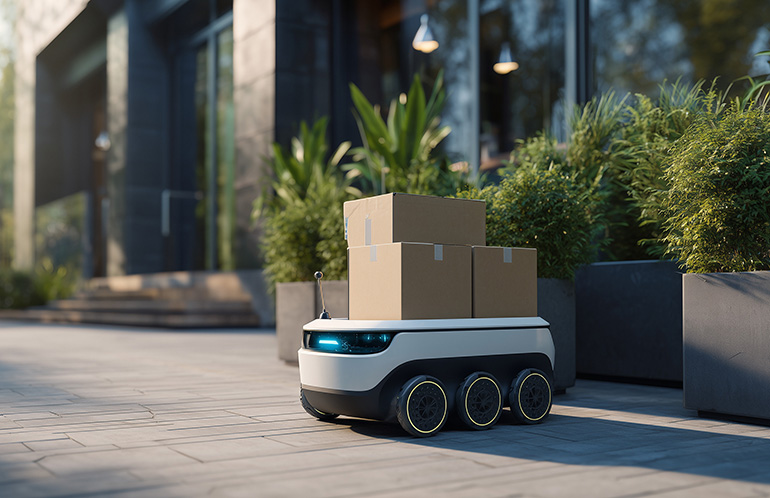
This concept has clear appeal to entrepreneurs and developers building autonomous service platforms. A delivery robot could receive micropayments from customers, a maintenance drone could pay for its own repairs, and a smart home system could autonomously order replacement parts—all without a human opening a single bank transfer.
However, the legal world has pushed back hard. European legal authorities have made it clear that existing contract frameworks assume a human promisor and a human beneficiary. Robots do not fit neatly into this structure. When a human worker performs poorly, courts can examine intent, effort, and mitigating circumstances. A robot’s failure, by contrast, is simply a malfunction—and the question of who bears responsibility becomes legally tangled.
If a robot’s capabilities emerge from the combined efforts of dozens of engineering teams across multiple organizations—spanning hardware design, sensor integration, AI training, and cloud infrastructure—then pinning accountability for a single error becomes nearly impossible. This supply-chain complexity creates a legal vacuum that current jurisprudence is not equipped to fill.
## The Great Divide: Optimism Meets Realism
The debate has crystallized into two distinct camps. On one side, technology optimists—many based in Silicon Valley—envision a near future where robots operate freely with cryptocurrency wallets, autonomous transaction capabilities, and decentralized service networks. In this vision, a robot could generate income, pay for its own energy, and even save for upgrades.
On the other side, legal and policy realists—particularly in Europe—argue that the foundational question of goal-setting and responsibility must be resolved before any machine is granted economic autonomy. Under their view, neither the manufacturer nor the robot itself can bear legal responsibility for outcomes, creating a philosophical and juridical deadlock.
## The Observation Economy: Trusting Machines Through Data
One of the oldest headaches in delivery logistics is the dispute over whether a courier actually showed up. Did someone ring the doorbell? Was the package left in the correct spot? In the human world, trust is built on reputation—we assume good faith because social norms train us to behave honestly.
Robots cannot rely on reputation the same way. They must provide irrefutable, verifiable digital evidence. This has spurred interest in observation networks—sensor grids being deployed in smart cities that track not just traffic violations but the movement of autonomous machines. A robot could stream video, GPS coordinates, and operational logs in real time, creating a transparent record that courts or customers could audit.
The difference between human and machine transparency is staggering. Reporting arrival at a workspace at 9:05 a.m. might be an amusing human quirk, but for a machine, it is a critical meta-operation that proves service delivery. If these observation networks are built on open, verifiable standards rather than proprietary black boxes, the entire field of robotic arbitration could transform. Decentralized proof of location and action has been an elusive goal since 2017, but advances in sensor technology and smart city infrastructure are renewing interest in the concept.
## Hardware Realities: The Brutal World of Physical Engineering
Software can be iterated rapidly—a bug fix can be pushed to millions of devices overnight. Robotics hardware tells a different story entirely. A single error in a printed circuit board trace can set a project back by months. Prototyping physical machines involves material costs, manufacturing tolerances, and the unforgiving physics of the real world.
This reality has driven some companies to pivot from abstract research toward concrete product lines. Several firms have abandoned speculative business-to-government projects in favor of building consumer-facing devices with clear market demand. The trend is unmistakable: there is growing interest in decentralized physical infrastructure (DePIN) and open-source hardware. Consumers are increasingly frustrated with proprietary ecosystems that lock them into subscriptions and cloud dependencies.
Practical products are already entering the market—smart home servers running on open platforms, air quality sensors with multi-year lifespans, and energy monitoring devices integrated with decentralized energy networks. The vision is a world where users hold cryptographic keys to manage their own devices, free from corporate gatekeeping. In many ways, the current state of consumer robotics hardware feels reminiscent of the early 2010s DIY electronics movement, but with a much stronger emphasis on privacy, interoperability, and user sovereignty.
## Will We Build a World That Works for Us?
Economic autonomy for robots is not arriving tomorrow, and the barriers are not primarily technological. The real bottlenecks lie in legal frameworks, dispute resolution mechanisms, and our collective willingness to reimagine concepts of responsibility and personhood.
We stand at the threshold of a transformation in daily life. Smart homes are evolving from closed corporate ecosystems into open, user-controlled environments. Cities are becoming more responsive and efficient, though this progress comes with privacy trade-offs. The central challenge of 2026 and beyond is whether we can construct an ecosystem of intelligent machines that genuinely serves individuals rather than corporate interests—and what we will do when a robot requests digital currency to complete a simple household task.
—
## Frequently Asked Questions (FAQ)
**Q: What is machine economic autonomy?**
A: Machine economic autonomy refers to the ability of robots and autonomous systems to independently conduct transactions, manage finances, and participate in markets without direct human intervention. This includes receiving payments, paying for services, and making operational decisions based on economic incentives.
**Q: Can a robot legally own money?**
A: Under current legal frameworks in most jurisdictions, a robot cannot legally own money or hold assets. It is not recognized as a legal entity. This has led researchers and entrepreneurs to explore cryptocurrency wallets as a workaround, since decentralized networks do not require legal personhood to process transactions.
**Q: Why is cryptocurrency considered a solution for paying robots?**
A: Cryptocurrency wallets can be generated automatically without the need for identity verification, legal contracts, or bank accounts. Transactions are validated by network consensus rather than by human intermediaries, making them theoretically well-suited for machine-to-machine payments.
**Q: What are the legal challenges of robot economic autonomy?**
A: Existing contract law requires a promisor and a beneficiary—both of which are typically human. Robots cannot be held legally accountable for poor performance in the same way humans can. Additionally, when a robot’s capabilities depend on a complex supply chain of multiple developers, assigning responsibility for failures becomes legally ambiguous.
**Q: What is DePIN?**
A: DePIN stands for Decentralized Physical Infrastructure Networks. It refers to physical hardware systems—sensors, servers, robotics—that operate on decentralized, often open-source protocols rather than centralized corporate platforms. The goal is to reduce dependency on single providers and give users greater control over their devices and data.
**Q: Why is robotics hardware more difficult than software development?**
A: Unlike software, which can be updated and patched almost instantly, hardware involves physical manufacturing processes. Errors in circuit design, material selection, or assembly can require months of retooling and testing. Physical systems are also subject to wear, environmental conditions, and safety regulations that software does not face.
**Q: How do smart city observation networks help robots?**
A: Observation networks—grids of sensors, cameras, and tracking systems deployed across urban infrastructure—can provide verifiable proof of a robot’s location, actions, and service delivery. This transparency helps resolve disputes and builds trust in autonomous robotic services.
**Q: Will robots replace human workers?**
A: While robots are increasingly capable of performing specific tasks, mass replacement of human workers is not imminent. The primary barriers are legal, ethical, and economic rather than purely technological. Robots are more likely to augment human work than fully replace it in the near term.
—
## Conclusion
The intersection of robotics and economics represents one of the most consequential frontiers of modern technology. The idea of machines participating in markets, managing their own finances, and operating with minimal human oversight is no longer confined to theoretical discussions. Practical developments in decentralized infrastructure, affordable hardware, and smart city sensor networks are rapidly bringing these concepts closer to reality.
Yet the journey is far from simple. Legal systems designed for human actors struggle to accommodate autonomous machines. The question of responsibility—who pays when a robot makes a mistake—remains unanswered in most jurisdictions. And the tension between corporate control and individual sovereignty over smart devices continues to shape the direction of the industry.
The path forward will require collaboration across disciplines: engineers, economists, legal scholars, ethicists, and policymakers must work together to build frameworks that enable innovation while protecting individuals and communities. The robot economy of the future will not be defined solely by technological capability, but by the governance structures and social contracts we create today.
Thank you for reading
