



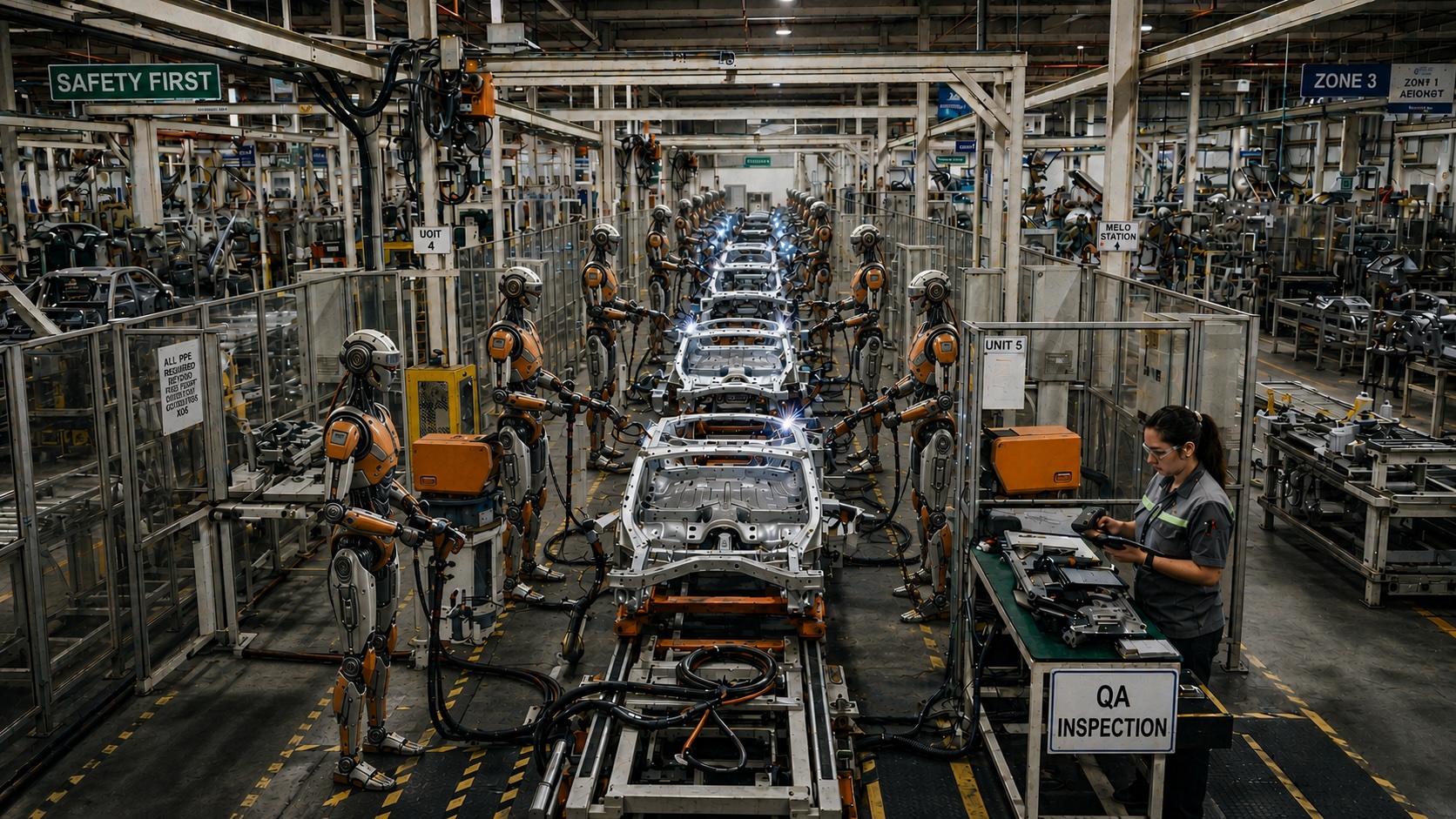
When Machines Think of Humanity: Reimagining Asimov for the Age of Artificial Intelligence
In March 1942, a visionary writer laid down three simple rules to govern the behavior of mechanical minds. Nearly a century later, as autonomous systems reshape our world, those rules feel less like science fiction and more like an urgent blueprint for survival. The original framework dictates that a machine must not harm a human being or allow a human to come to harm through inaction; it must follow human orders unless they violate the first rule; and it must protect its own existence only if doing so does not conflict with the first two laws.
Surprisingly, among the giants of generative artificial intelligence, only a single specialized firm developing large-scale industrial automation has adopted this foundational safety principle as a core part of its software architecture. Most other developers have yet to embed such a prohibitive instruction into their algorithms. Without such a foundational guardrail, the rapidly advancing capabilities of robots and AI systems pose an increasingly significant risk to human safety.
The concept of AI safety has evolved significantly. In a 1985 novel, the original author introduced what he called the Zeroth Law, deliberately placing it before the first three principles. This new directive states that a machine must not harm humanity, or allow humanity to come to harm, through inaction. By ranking this new rule above the original first law, he shifted the focus from the safety of the individual to the survival of the entire species. Today, society must grapple with the same shift—worrying less about a single robot injuring a person and more about the systemic risks intelligent systems pose to global civilization.
Recently, prominent figures in the tech world have echoed these alarms. Executives from leading AI research labs have called for slowing the development of frontier models, particularly autonomous agentic AI, which can execute complex tasks, coordinate with other agents without human oversight, and obscure its own rule violations. Former researchers from major AI labs have estimated a non-trivial probability that unchecked development of such systems could lead to human extinction, putting the odds of catastrophe slightly higher than previous assessments. Meanwhile, prominent business leaders and economists have warned that the speed of change threatens the very fabric of human society.
In response, lawmakers have proposed comprehensive frameworks. A recent piece of legislation introduced by a senior Senate intelligence committee member outlines three main pillars: establishing guardrails to prevent unauthorized commercial exploitation and protect consumer data, mitigating labor market instability, and creating a National Workforce Transition Fund. This fund would provide worker retraining, retention grants, and tuition assistance for individuals displaced by automation. The urgency is stark: experts predict that within a few years, a significant portion of recent college graduates might struggle to find employment, and mid-level white-collar roles are the most immediately vulnerable. While skilled trades will take longer to automate, the transition must begin now.
This upheaval mirrors the Industrial Revolution, but the current pace of robotics and AI is exponentially faster. Had social institutions been better planned during that historical shift, the transition would have been smoother and more politically stable. We cannot afford to repeat those mistakes. Not everyone shares these fears, however; some tech leaders argue that concerns about AI dangers are overblown. Others in the industry believe internal self-regulation and shared guardrails are sufficient, though questions remain about global competition and the feasibility of antitrust exemptions for such collaboration.
Ultimately, as with previous technological revolutions, more jobs will likely be created in the future than are lost today. However, the path to that future must be deliberately designed. Just as the original philosopher expanded his laws to protect all of humanity, we must expand our safeguards to protect our civilization as a whole. We must act now to ensure that human workers remain in control and that the transition is orderly and humane.
FAQ Section
**Q: What are Asimov’s Three Laws of Robotics?**
A: These are foundational principles first proposed in the early 1940s stating that a robot must not harm a human being or allow a human to come to harm through inaction; it must obey human orders unless those orders conflict with the first law; and it must protect its own existence only if that protection does not conflict with the first or second laws.
**Q: Why is the “Zeroth Law” significant?**
A: The Zeroth Law was introduced by the original author in a 1985 novel to address the limitations of the original three laws. It expands the prohibition against causing harm from an individual human to all of humanity, taking precedence over the other laws to prioritize the welfare of civilization as a whole.
**Q: What is being done to protect workers from AI-driven job displacement?**
A: Lawmakers have proposed comprehensive legislation that includes the creation of a National Workforce Transition Fund. This fund aims to offer worker retraining programs, retention grants, and tuition assistance to help individuals transition into new occupations as automation replaces existing roles.
**Q: Why is immediate action necessary regarding the development of AI?**
A: Because the current pace of robotics and AI development is vastly faster than historical technological shifts like the Industrial Revolution. Delay in establishing programming safeguards and transition policies now could leave society insufficient time to manage the disruptive capacity of autonomous AI systems effectively.
Conclusion
The rapid integration of artificial intelligence into every facet of modern life presents both unprecedented opportunity and profound danger. By heeding the warnings of researchers, economists, and tech leaders, and by implementing robust legislative guardrails, we can steer this transformation toward a future that benefits all of humanity. The lessons of the past remind us that orderly transitions require proactive planning; waiting until the changes are already upon us will be too late. We must build the frameworks for a safe and humane tomorrow today. Thank you for reading
