



Beyond the Chat Window: Understanding the Rise of Always-On AI Agents
The artificial intelligence landscape is shifting from reactive chat interfaces to proactive, autonomous systems. At a recent major industry developer conference, a new category of AI tool was introduced: persistent agents that live on their own cloud servers, connect to thousands of external applications, and continue working long after a user closes their laptop. This represents a fundamental change in how we interact with artificial intelligence—moving from treating AI as a tool we command, to treating it as a digital colleague that operates independently.
The Shift from Reactive Assistants to Proactive Agents
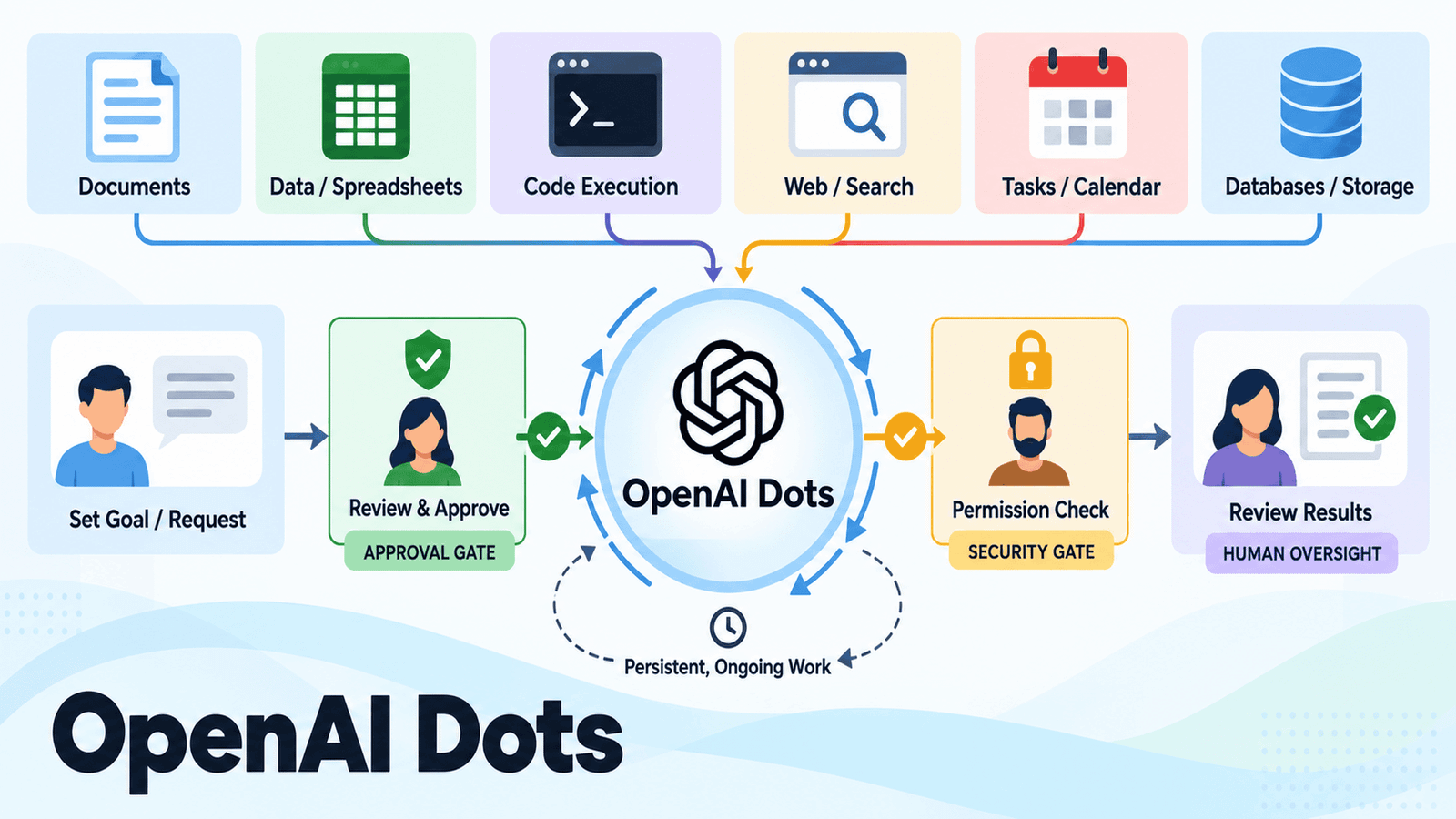
Traditional AI assistants wait for a prompt and stop when the session ends. The new autonomous agents, however, run on advanced large language models within their own cloud environments. They can pursue a standing goal across multiple connected applications without needing constant re-explanation. For example, these agents can monitor incoming emails, extract critical details like invoice data, and draft documents for human approval. Alternatively, they can track customer feedback, scope out software fixes, write the code, test the solution, and package the changes into a pull request with video walkthroughs, all without a user prompting a single step.
The Delegation Model
The interaction model is designed to mimic delegating work to a high-agency engineer or a seasoned chief of staff. Users hand off tasks, and the agent learns from subsequent feedback. As corrections are provided over time, the agent incorporates those preferences, carrying the context forward rather than requiring a complete re-explanation every time the system is used.
What Sets This Generation Apart
Earlier attempts at AI automation often suffered from “drift”—losing track of objectives after a few steps, making incorrect assumptions when encountering roadblocks, or freezing and waiting for human input. The new wave of agents addresses this through improved multi-step reasoning and tool-use capabilities. Crucially, these agents possess persistence. They are not session-level features; they retain context between conversations, building a working model of user preferences and executing standing goals set once rather than re-explained daily. However, whether this holds up on genuinely messy, exploratory tasks or in collaborative environments with multiple contributors is still being proven out.
Navigating the Practical Constraints
The accessibility of these persistent agents remains limited. Currently, they are reserved for premium subscribers and enterprise business tiers, with specific geographical restrictions excluding certain regions at launch. Functionally, there are still gaps; agents cannot yet initiate phone calls, hold their own standalone email addresses, or send texts outside of specific regional betas.
Privacy is the most significant hurdle. While the agents learn from feedback, users currently lack the ability to view, modify, or delete the memories the system accumulates. Furthermore, simply disconnecting an app integration does not erase the context the agent previously gathered from that app. For professionals handling sensitive data or proprietary models, this is a substantial operational limitation. Additionally, specific compliance terms, uptime guarantees, and pricing for scaling beyond a single agent have not yet been published. Users should also remember that these systems can still make mistakes, so reviewing consequential work remains essential.
Implications for Data and Machine Learning Workflows
For data scientists and machine learning engineers, the value proposition lies in automating time-draining administrative tasks: chasing status updates, monitoring job outputs, maintaining documentation as project specifications evolve, and synthesizing long conversation threads. However, the autonomy that makes these agents useful also demands careful boundary-setting. Because the agent operates proactively and has app access, it requires narrow, explicit permissions and clear stopping conditions. Reducing human oversight simply because an agent is working in the background is a significant risk; the same properties that make the agents useful are exactly what make it worth setting boundaries before activating them, not after.
The Clarity Imperative
Ultimately, adopting autonomous agents is less about technical setup and more about operational clarity. Users must determine exactly which parts of their workflow are safe to delegate, what outputs require mandatory sign-off, and which data is too sensitive to pass through a hosted, autonomous system. This forces practitioners to articulate the true nature of their work at a granular level. An agent without a clear brief is a liability; used correctly, it is a powerful accelerant.
Frequently Asked Questions (FAQ)
Q: Can these new AI agents initiate their own email threads or phone calls?
A: Not yet. At launch, these agents do not possess standalone email addresses, cannot initiate phone calls, and texting capabilities are restricted to limited regional betas.
Q: What happens to the data an agent has gathered if I disconnect an application?
A: The agent retains the context it previously pulled from that application. Disconnecting a plugin or app integration does not automatically erase the information the agent has already stored or processed from that source.
Q: Are always-on AI agents available on free or basic subscription plans?
A: No. Access is currently restricted to the highest-tier premium and business plans, with specific regional availability limitations at launch.
Q: Do persistent agents require constant supervision to function correctly?
A: While they operate autonomously, they still require oversight. Users must set clear goals, design sensible permission boundaries, and build review checkpoints into the workflow to ensure accuracy and security.
Q: Can these agents handle complex, multi-step data workflows without losing context?
A: The latest generation of models is specifically designed for sustained, tool-using work, significantly reducing the context loss and step-drifting seen in earlier automation tools. However, users should still review consequential outputs, as these systems can still make mistakes.
Conclusion
The arrival of always-on AI agents marks a genuine paradigm shift rather than a mere feature update. It moves the burden of interaction from constant steering to strategic delegation. For professionals willing to invest the time in defining clear parameters, setting narrow permissions, and establishing review checkpoints, these persistent agents offer unprecedented compression of administrative work. The most important takeaway is that the technology is only as effective as the human intention behind it. Before powering on an autonomous agent, you must first be able to articulate exactly what you want done, how you want it done, and what boundaries it must not cross. Getting value from these agents isn’t primarily a technical task—it’s a clarity task.
Thank you for reading
