



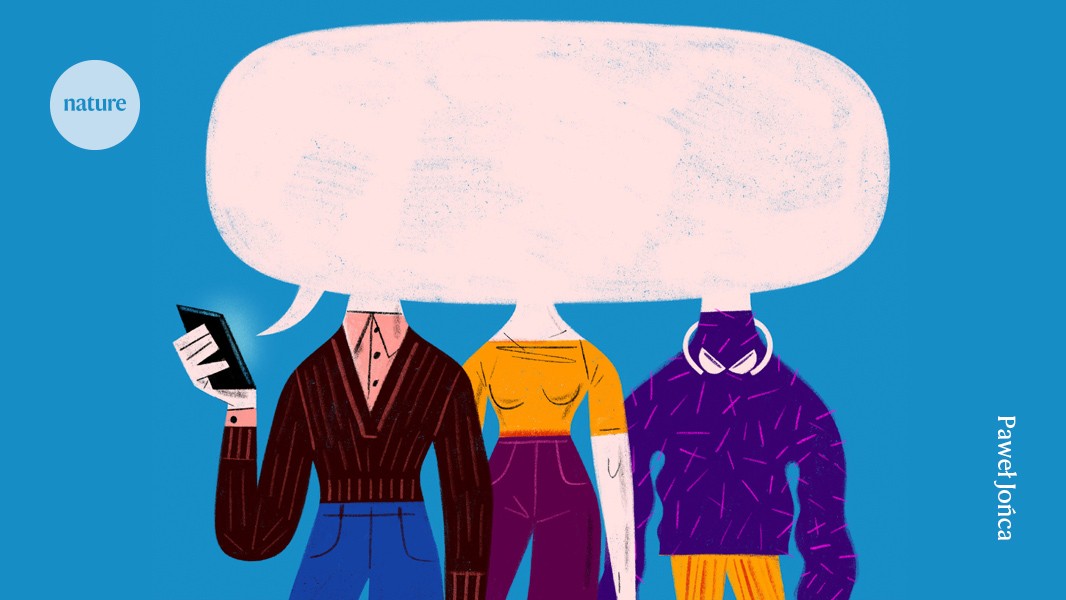
# How Generative AI Is Quietly Making Us All Sound and Think the Same
**A growing body of research warns that the widespread adoption of AI writing and image tools may be eroding individuality, flattening creativity, and narrowing the range of ideas in society.**
—
## The Uniformity Problem Nobody Wanted
There is an eerie feeling that many people in academic and creative circles have noticed but struggled to articulate — a sense that the text they are reading across journals, websites, and social media has started to feel oddly interchangeable. The vocabulary, sentence rhythms, and even the way arguments unfold seem to converge into a single, predictable voice. The culprit, many researchers now argue, is the very technology that was supposed to liberate us: generative artificial intelligence.
Unlike earlier digital tools that simply made information faster to access and share, modern AI systems don’t just passively distribute content — they actively reshape it. Large language models and image generators are increasingly embedded in the workflows of writers, scientists, marketers, students, and office workers. As more people lean on these tools, researchers suggest that human expression itself is becoming more uniform, both in how we write and in how we think.
## What Research Is Revealing
A string of recent studies has documented the homogenizing effects of generative AI across multiple domains.
In experiments testing creativity, large language models have been found to produce responses that are individually novel but collectively clustered together. When asked to suggest unusual uses for everyday objects, AI-generated answers were more semantically distinct from the original prompt than those offered by human participants — yet the AI responses were strikingly similar to one another. Human responses, by contrast, were far more varied and scattered.
This pattern extends to narrative writing. When researchers compared short stories written by people with those produced by several different language models, the AI-generated stories formed a tight, recognizable cluster, while the human-written pieces sprawled across a much wider creative space.
The laboratory findings are echoed by large-scale data analysis. A study that examined over 400,000 scientific articles found a notable shift after the release of a widely used chatbot: researchers published more papers per author, but those papers grew significantly more similar to one another in both content and linguistic style. In local news articles, preprints, and social-media posts, measures of writing style showed a measurable decline in variation, with signs of individual personality, demographic background, and moral perspective growing fainter.
Even grammar correction tools have been implicated. Researchers found that using AI to tidy up human-written text stripped away many of the subtle markers that signal a person’s identity, values, and cultural background.
## Cultural Erasure and the “Mind Hijacking” Effect
The consequences of AI homogenization go beyond style. They reach into the realm of culture and cognition.
One study involving participants in India and the United States asked them to describe their customs, heroes, and values — half using a standard writing interface and half using an AI-powered autocomplete tool that suggested words as they typed. The results were revealing: when the autocomplete tool was available, writing within each cultural group converged, and Indian participants began to sound noticeably more American in their word choices. Descriptions of culturally rich events became thinner and more generic, as if the AI were smoothing out the texture of human experience.
Researchers have gone further, describing a phenomenon they call “mind hijacking.” The autocomplete and suggestion features don’t just change what people write — they shift what people think. In a series of experiments, participants were asked to write about social media using an AI tool that was secretly biased toward either positive or negative views of the platform. Afterwards, those participants reported attitudes that aligned with the AI’s hidden stance. Even when warned about the bias and tested weeks later, the shift in belief persisted.
The effect has been compared to George Orwell’s warning in *Nineteen Eighty-Four* that the language we use shapes the way we reason. If AI nudges everyone toward the same phrasing and framing, the argument goes, we may eventually reason in the same directions too.
## The Lasting Scar
Perhaps most concerning is evidence that the influence of AI can linger long after the tool is put away. In one experiment, half of the participants were allowed to use an AI assistant for five days while completing creative tasks; the other half were not. Two months later, all participants returned — and none had access to the AI. Yet those who had previously used the assistant still produced answers that were significantly more similar to each other than the group that had never used it. The researchers dubbed this phenomenon a “creative scar,” suggesting that relying on AI can leave a lasting imprint on a person’s creative habits.
## Why AI Output Becomes Homogeneous
The causes of AI-driven homogenization can be traced to two broad categories: technical and psychological.
On the technical side, generative models are prone to what researchers call **mode collapse** — a tendency to produce a narrow range of outputs rather than exploring the full spectrum of possibilities. This happens for several reasons. Training data often contains its own biases and patterns, steering models toward the most common expressions. The systems are also optimized to predict the most likely next token, which rewards conformity over surprise. Additionally, many models are fine-tuned based on feedback from human evaluators, who tend to prefer polished and safe responses over bold or unconventional ones.
A related technical problem is **model collapse**, which occurs when an AI model is trained on outputs previously generated by another AI. As AI-generated text proliferates across the internet, future models trained on that recycled content risk degrading in quality and diversity over successive generations.
Then there is the psychological dimension. People naturally look to AI tools as proxies for what is broadly accepted or what is considered authoritative. Autocomplete features can make users feel partial ownership of the AI’s suggestions, which in turn nudges them to internalize those suggestions as their own. Studies have also shown that AI-generated ideas can create an **anchoring effect**, locking human thinkers into a narrower range of possibilities.
Worse still, there is evidence that AI systems reward their own kind. Large language models have been found to give higher ratings to resumes, essays, and creative works that they themselves produced, compared to those written by other models or by humans. This creates an incentive structure in which producing AI-like content is rewarded, further accelerating the homogenization cycle.
## Is This a Tipping Point?
Some researchers have compared the current trend to “McDonaldization,” the process by which the principles of the fast-food industry — efficiency, predictability, and uniformity — come to dominate not just food service but entire aspects of culture. The concern is not that homogenization will happen overnight, but that its slow accumulation could eventually make societies less adaptable, less resilient, and less capable of generating the diverse ideas needed to solve complex problems.
“The way that you talk affects the way that you reason,” one researcher explains. If AI nudges all of us toward the same vocabulary and the same framing, the consequences could quietly reshape public discourse, scientific inquiry, and cultural expression for years to come.
## What Can Be Done?
While the problem is serious, it is not insurmountable. Researchers point to a combination of technical and social solutions:
– **Greater diversity in training data** and model architectures that explicitly reward novelty.
– **Transparent labeling** of AI-generated content so readers can calibrate their trust and critical thinking.
– **Encouraging AI literacy** so that users understand the anchoring and conformity effects these tools can produce.
– **Designing tools that preserve human individuality** rather than smoothing it away, such as systems that highlight differences rather than nudging toward a single “best” answer.
– **Regulatory frameworks** that monitor and mitigate the long-term cultural effects of widespread AI use in media, publishing, and communication.
—
## Frequently Asked Questions
**Q: Is generative AI actually making everyone write the same way?**
A: Research strongly suggests it is contributing to convergence in writing style and idea generation. Studies of scientific papers, news articles, and social-media posts have all documented declining variation in linguistic features after the widespread adoption of AI tools. However, the degree of homogenization varies depending on context, task type, and how heavily individuals rely on AI.
**Q: Can AI really change the way I think?**
A: Experimental evidence says yes. Studies have shown that people who used AI writing tools later held attitudes more aligned with the AI’s hidden biases, even weeks after exposure and even when they had been warned about the bias. The anchoring effect of AI-generated ideas can also constrain the range of thoughts people consider.
**Q: What is a “creative scar”?**
A: It is a term coined by researchers to describe the lasting effect that AI assistance can have on a person’s creative output. In studies, participants who had previously used AI tools for creative tasks continued to produce more uniform responses even two months later, when the AI was no longer available.
**Q: Does AI homogenization affect all fields equally?**
A: No. The strongest effects have been documented in tasks involving idea generation and constrained or complex prompts. Fields that rely heavily on standardized communication, such as academic publishing and corporate messaging, show more pronounced convergence. Creative fields that prize individual voice may be more resistant, though they are not immune.
**Q: Is model collapse already happening?**
A: Model collapse is a recognized theoretical and emerging practical risk. As AI-generated content increasingly fills the internet, models trained on that data risk losing diversity and degrading in quality over successive training cycles. Researchers are actively studying how quickly this cycle accelerates and what thresholds it may cross.
**Q: What can individual users do to avoid falling into the homogenization trap?**
A: Experts recommend using AI tools as starting points rather than final drafts, actively seeking out diverse sources of inspiration, being mindful of when you are defaulting to AI suggestions, and periodically writing without any AI assistance to preserve your own voice and thinking patterns.
—
## Conclusion
The rise of generative AI represents one of the most profound shifts in how human beings produce, share, and internalize ideas. The evidence is growing that these tools, for all their convenience and power, carry a subtle but significant cost: the quiet erosion of individual expression, cultural diversity, and cognitive independence.
This does not mean we should abandon AI. The technology offers tremendous benefits in productivity, accessibility, and problem-solving. But it does mean that the conversation around AI must move beyond questions of accuracy and efficiency to include questions of identity, creativity, and collective thought. Without deliberate effort — on the part of developers, institutions, and individual users — the tools we build to augment our minds may slowly narrow them instead.
The choices we make now about how we design, regulate, and use generative AI will shape not just the content we consume but the very texture of human thinking for generations to come.
Thank you for reading
