



**Navigating the Challenges of Deploying Clinical AI: Why External Validation Falls Short**
The promise of artificial intelligence (AI) in healthcare is immense, offering the potential to revolutionize diagnosis, prognosis, and patient care. However, a significant barrier to the safe and effective implementation of these models lies in their deployment across different clinical settings. A recent perspective article in *Nature Medicine* underscores a critical flaw in the current approach: the inadequacy of external validation for AI models. The authors argue compellingly that “external validation” should be replaced with a framework of recurring, local validation to ensure AI tools remain reliable and accurate over time.
**The Problem with “External Validation”**
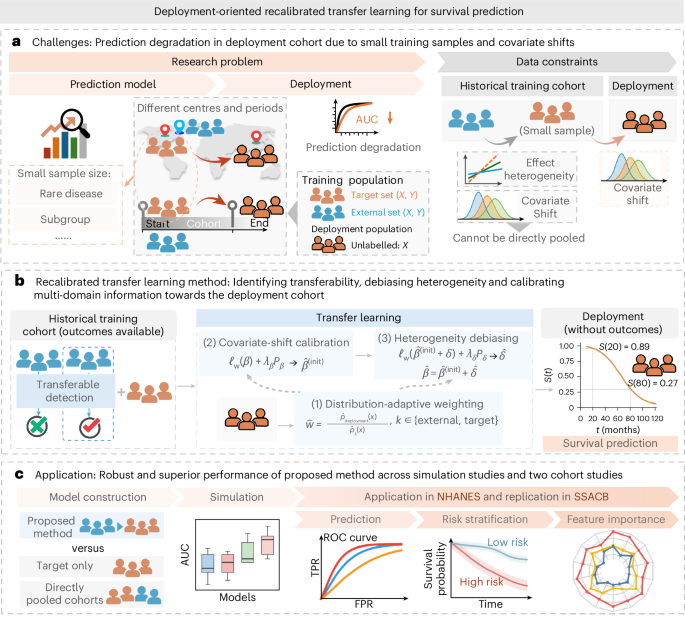
Traditional external validation involves testing a pre-trained AI model on a new, independent dataset from a different institution or patient population. While this is a crucial initial step in model development, the article, citing Youssef et al. (2023), highlights that it is often insufficient for real-world deployment. Clinical data is dynamic; patient demographics, disease prevalence, treatment protocols, and recording practices evolve. An AI model trained on data from one hospital in 2020 may perform poorly in the same hospital in 2024, let alone in a different city or country.
This problem is exacerbated by “covariate shift,” where the statistical properties of input features change between the development and deployment environments, and “concept drift,” where the underlying relationship between the input data and the target outcome changes over time. For instance, a model developed pre-pandemic might struggle to accurately predict outcomes for patients during and after the COVID-19 crisis, a susceptibility documented by Kagerbauer et al. (2024).
**The Case for Recurring Local Validation**
Instead of a one-time external check, the authors advocate for a continuous, local validation strategy. This approach treats AI model deployment as an ongoing process of monitoring and maintenance, not a one-time installation. The core idea is that the specific institution where the model will be used is the only place where it can be properly validated.
This involves:
1. **Continuous Monitoring:** Track the model’s performance metrics (e.g., accuracy, precision, recall, calibration) in real-time as it is used on new patients.
2. **Local Data Integration:** Use the institution’s own data to periodically retrain or fine-tune the model, ensuring it adapts to local practices and patient populations.
3. **Recalibration:** As highlighted by Booth et al. (2020), models—especially those for prognosis—need temporal recalibration to account for improvements in care that affect baseline survival rates over time.
4. **Robust Feedback Loops:** Establish clear channels for clinicians to flag model errors or inconsistencies, creating a virtuous cycle of improvement.
This strategy is supported by the work of Steingrimsson et al. (2023) and Steingrimsson (2023), who provide statistical frameworks for extending prediction models to new populations, particularly for time-to-event outcomes, which are common in clinical settings.
**Broader Implications and Complementary Strategies**
The call for local validation is part of a larger conversation about the trustworthiness of clinical AI. It emphasizes that high performance in a controlled research setting does not guarantee safety and efficacy in the messy, real-world clinical environment. Other critical strategies complement this approach:
* **Transfer Learning and Domain Adaptation:** Techniques like those explored by Lu et al. (2026) and Pan et al. (2026) aim to adapt models to new data distributions, which is a key component of the local validation process.
* **Causal Inference:** Moving beyond correlations to understand the causal effects of interventions is vital for building models that are robust to changes in practice, as discussed by Han (2025).
* **Rigorous Initial Development:** Models must be developed with rigorous methodology, such as proper handling of missing data (White et al., 2011) and appropriate sample size calculations (Riley et al., 2020), to provide a solid foundation.
**Conclusion**
The message from the literature is clear: deploying AI in healthcare is not a “set and forget” endeavor. The concept of external validation as a final gatekeeper is outdated. To realize the life-saving potential of AI, we must adopt a more dynamic and vigilant approach. By implementing recurring, local validation, healthcare institutions can ensure that AI tools remain accurate, equitable, and effective, adapting seamlessly to the ever-changing landscape of medicine. This shift is not just a technical necessity but a fundamental requirement for building trust and ensuring patient safety in the age of artificial intelligence.
**FAQ**
**Q1: What is the main problem with using external validation for clinical AI models?**
**A1:** External validation tests a model on data from a different source, but it does not account for how the model will perform over time in its actual deployment setting. Clinical data changes due to factors like evolving patient populations, new treatments, and shifts in recording practices, causing model performance to degrade.
**Q2: What is “concept drift” and why does it affect clinical AI?**
**A2:** Concept drift is the phenomenon where the statistical relationship between input data (e.g., patient measurements) and the target outcome (e.g., disease risk) changes over time. For example, a model trained before a major pandemic may become inaccurate during or after the event because the patient population and disease patterns have shifted.
**Q3: What is “recurring local validation”?**
**A3:** It is a framework where an AI model is continuously monitored and validated using data from the specific institution where it is deployed. This involves regular performance checks, model retraining with new local data, and temporal recalibration to ensure the model adapts to changing clinical practices and patient demographics.
**Q4: Why can’t we just retrain models on new data as it comes in?**
**A4:** While retraining is part of the solution, it must be done systematically. Models need to be monitored for performance drift, and the local validation framework provides a structured approach that includes feedback from clinicians and recalibration for temporal changes in outcomes, not just simple retraining.
**Q5: What are some complementary strategies to improving AI robustness besides local validation?**
**A5:** Complementary strategies include using transfer learning to adapt pre-trained models, employing causal inference methods to build more generalizable relationships, and ensuring rigorous development practices, such as proper handling of missing data and adequate sample sizes during the initial model creation.
**Conclusion**
The transition of AI from research labs to hospital bedsides requires a fundamental change in how we ensure their reliability. Moving away from the passive concept of external validation and toward an active, ongoing process of local validation is essential. This proactive strategy of continuous monitoring, adaptation, and recalibration is the cornerstone for building trustworthy, effective, and safe AI-powered healthcare.
