



**The Wi-Fi 7 Revolution is Here: Why Your Next Router Should Be 802.11be**
By Maria Diaz, ZDNET
*Follow ZDNET: Add us as a preferred source on Google.*
**ZDNET’s key takeaways**
* Wi-Fi 7 is finally becoming popular.
* With that trend, overall internet speeds are picking up.
* You can now buy Wi-Fi 7 routers for reasonable prices.
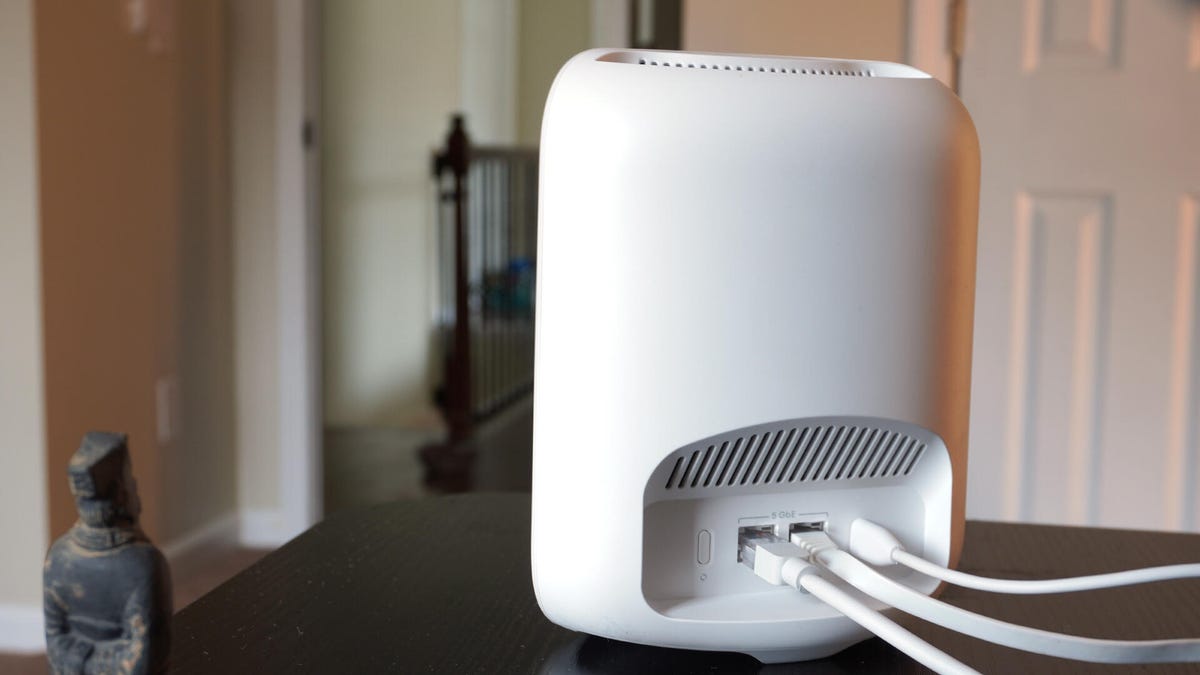
I love Wi-Fi 7. It’s fast enough to keep up with my AT&T Fiber 2 Gbps internet connection, and when deployed with my Netgear Orbi 970 mesh network, it can cover my 5,000-square-foot home/office even with its thick plaster walls. However, in the two years since Wi-Fi 7’s commercial launch, not many people joined me. For all Wi-Fi 7’s virtues, Wi-Fi 7 gear was also relatively uncommon and expensive. Now, things are finally changing.
**Also: We tested 15 Wi-Fi 7 routers in our lab – this one had the best coverage**
According to Ookla’s latest Speedtest data, Wi-Fi 7 traffic in the US quadrupled year over year between Q1 2025 and Q2 2026. In practice, that means 7.2% of Wi-Fi routers today are deployed with Wi-Fi 7. That proportion is a sharp jump from just 1.8% in Q1 2025 and “below 1%” during 2024, when operators were only starting to seed the market with Wi-Fi 7 gateways.
**Who’s moving to Wi-Fi 7 and why**
The growth is being driven by ISP‑supplied equipment rather than people like me who buy their own routers. That said, Wi-Fi 7 routers, such as the Tenda BE5100 mesh Wi-Fi system, TP-Link’s Deco 7 Pro, and Asus RT‑BE86U, have gotten cheaper. In particular, cable internet providers are leading the way.
Charter’s Spectrum brand is now the single largest Wi‑Fi 7 network in the world by Speedtest sample volume, accounting for nearly a quarter (24.9%) of all US Wi‑Fi 7 in Q1 2026. Comcast’s Xfinity network ranks second globally, with 12.4%, underscoring how aggressively cable operators are bundling Wi‑Fi 7 gateways into their broadband tiers.
**Also: The best Wi-Fi routers of 2026: Expert tested and reviewed**
Cable internet providers like Spectrum and Xfinity are driving mass adoption.
Fiber internet providers such as CenturyLink and Frontier have already converted a significant slice of their base. Ookla’s data shows CenturyLink at 14.7% and Frontier at 14.3% Wi‑Fi 7 share. Those proportions are roughly double the national average.
Ookla’s analysis highlights a split: “Fiber drives penetration, cable drives scale.” Regional and national fiber ISPs tend to show the highest proportion of customers upgraded to Wi‑Fi. At the same time, cable’s much larger subscriber base translates into the majority of actual Wi‑Fi 7 traffic.
Behind the scenes, Data Over Cable Service Interface Specification (DOCSIS) spectrum‑split upgrades and new Wi‑Fi 7 gateways are also improving upstream performance. For example, Ookla notes that Xfinity’s median Wi‑Fi 7 upload speeds more than doubled year‑over‑year to 108.8 Mbps, reflecting both access‑network and in‑home Wi‑Fi upgrades.
**6 GHz is becoming popular**
Wi‑Fi 7’s growth is also tightly coupled to the long‑running push into the 6 GHz band. Ookla reports that US 6 GHz Wi‑Fi usage jumped 62% year‑over‑year, and now accounts for 13.8% of all American Wi‑Fi Speedtest samples.
**Also: Should you upgrade to Wi-Fi 7? Here’s my verdict**
That spectrum shift enables many of Wi‑Fi 7’s headline gains: higher throughput, lower latency, and more resilience in dense environments. Across all fixed broadband providers and Wi‑Fi generations, median US download speeds in Q1 2026 reached 316.3 Mbps, up 76% compared with 2022, while median upload speeds tripled to 68.3 Mbps.
Ookla links at least part of this shift to the rapid adoption of Wi‑Fi 7 and Wi‑Fi 6E equipment in customer premises. Ookla’s research shows both routers and client devices, smartphones and laptops, are finally shipping with 6 GHz support at scale.
**Wi-Fi 7 support for PCs and phones**
For example, almost all Apple iPhone 16 models and newer, except the budget e models, support Wi-Fi 7. On the Android side of life, Google was the first smartphone vendor to support Wi-Fi 7, starting with the Pixel 8 line. Samsung started supporting Wi-Fi 7 with the S23 Ultra, and now almost all newer models come with it.
Most new high‑end Windows laptops and some 2026 MacBooks now ship with Wi‑Fi 7; it’s becoming standard on premium and AI PC platforms, with midrange models starting to follow. How can you tell? Look for “Wi‑Fi 7” or “802.11be” in the tech specs; WI-Fi 7 often appears as “Wi‑Fi 6E/7 (802.11ax/be)” in the wireless specifications.
**Also: Slow home internet? Here are 3 things I always check first**
As for Linux, modern kernels and drivers can run Wi‑Fi 7 if your device has the right chipset and a newer stack. But full “all features, no drama” support is not universal yet. Darn it. Still, you’re OK if your PC has one of the following Wi‑Fi 7 chipsets, MediaTek MT7925 or Intel’s BE‑series, and your distribution uses the 6.10 or newer Linux kernel.
For all the eye‑catching growth metrics, Wi‑Fi 7 is still in its early adoption phase. A 7.2% national share means more than nine out of ten US Wi‑Fi users are still on Wi‑Fi 6/6E or earlier generations, and many client devices in homes and offices cannot yet take full advantage of Wi‑Fi 7’s capabilities.
Still, the trajectory is clear. After a slow start in 2024, ISPs are now treating Wi‑Fi 7 gateways as standard issue. At higher tiers, 6 GHz usage is exploding, and performance gains are visible in real‑world speed tests. In short, Wi‑Fi 7’s transition from spec sheet to default home router is no longer hypothetical; it is underway. If high Wi-Fi speed is important to you, it’s time to make the switch. You’ll be glad you did.
—
## FAQ
**Q: What is Wi-Fi 7, and how is it different from Wi-Fi 6?**
A: Wi-Fi 7, also known as 802.11be, is the latest generation of Wi-Fi technology. It offers significantly faster speeds, lower latency, and better performance in congested environments compared to Wi-Fi 6 (802.11ax). Key features include support for wider 320 MHz channels, higher-order modulation (4096-QAM), and multi-link operation, which allows devices to connect simultaneously over both the 2.4 GHz and 5 GHz bands for better efficiency.
**Q: Do I need a new router to get Wi-Fi 7 speeds?**
A: Yes, to experience Wi-Fi 7 speeds in your home, you will need a Wi-Fi 7-enabled router. However, you will also need your internet plan to support high speeds, and your devices (phones, laptops, etc.) must also support Wi-Fi 7 to take full advantage of the new technology.
**Q: Are Wi-Fi 7 routers expensive?**
A: Initially, Wi-Fi 7 routers were premium-priced products. However, as adoption has increased, prices have come down significantly. Models like the Tenda BE5100 and TP-Link Deco 7 Pro are now available at competitive prices, making Wi-Fi 7 more accessible to the average consumer.
**Q: Which internet providers offer Wi-Fi 7?**
A: Major cable providers like Spectrum (Charter) and Xfinity (Comcast) are leading the charge in Wi-Fi 7 adoption, often including Wi-Fi 7 gateways in their service plans. Fiber providers like CenturyLink and Frontier also have a high percentage of Wi-Fi 7 coverage.
**Q: What devices support Wi-Fi 7?**
A: Most modern high-end smartphones (like the iPhone 16 series, Samsung Galaxy S23 series, and Google Pixel 8), laptops (especially premium Windows laptops and 2026 MacBooks), and newer smart home devices support Wi-Fi 7. Always check the device specifications for “Wi-Fi 7,” “802.11be,” or “Wi-Fi 6E/7.”
—
## Conclusion
The Wi-Fi 7 revolution is no longer a distant promise; it is a present-day reality. Driven by aggressive adoption from cable and fiber internet providers, coupled with decreasing hardware costs, Wi-Fi 7 is transitioning from a niche high-end technology to a standard home networking feature. With its ability to deliver multi-gigabit speeds, lower latency, and greater resilience, Wi-Fi 7 is poised to become the new baseline for home connectivity. For users seeking the best internet experience, upgrading to a Wi-Fi 7 router—and ensuring their devices are compatible—is a step well worth taking. The future of home networking is here, and it’s faster than ever.
