



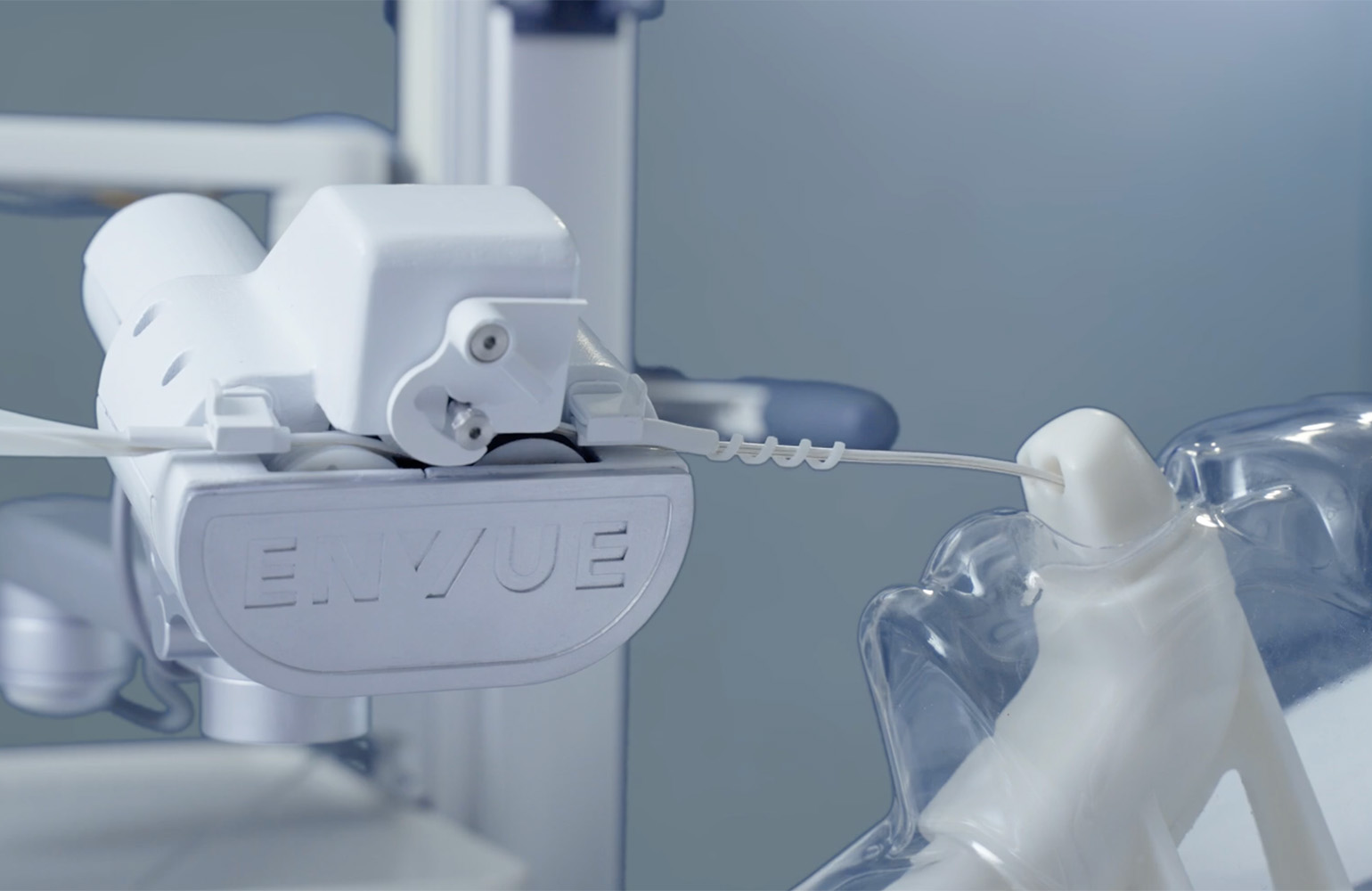
**ENvue Drive: A Robotic Leap Forward in Feeding Tube Placement**
In a significant development for medical robotics, ENvue Medical Inc. has introduced **ENvue Drive**, a robotic-assisted tool designed to automate the placement of feeding tubes. This innovation represents a major step forward in addressing a common, yet high-risk, clinical procedure.
**A Safer Solution for a Common Procedure**
Every year, over one million feeding tubes are inserted in the United States. While often life-saving, the procedure carries a notable risk; approximately 3% to 5% of tubes are mis-placed, entering the lungs instead of the digestive tract. This can lead to severe complications, including lung collapse. Traditionally, these procedures are performed “blindly,” relying on the clinician’s experience and tactile feedback.
ENvue Drive is built to change that. The system leverages the company’s existing electromagnetic navigation platform, which provides real-time guidance. The key advancement is the integration of a robotic arm that assists in inserting the tube, combined with an AI navigation software called Ask Oscar. A high-speed sensor at the tip of the tube provides live positioning data, creating a “GPS-like” system for the procedure. This allows clinicians to see the exact location of the tube on screen, with a refresh rate of about 40 times per second, ensuring immediate visual feedback.
**Human Oversight is Paramount**
A critical design principle for ENvue Drive is that it is an assistant, not an autonomous operator. The system is designed to handle difficult mechanics, but the clinician remains firmly in control. It provides steering directions and alerts if the tube deviates, but the final decision always rests with the human expert. This collaborative approach aims to reduce the physical and cognitive burden on nurses and dietitians, especially during lengthy or challenging procedures.
**Looking to the Future**
ENvue’s long-term vision extends beyond feeding tubes. The company sees its technology as a foundation for automating other complex bedside procedures, such as vascular access for central catheters. With its core technology already FDA-cleared, ENvue Medical is positioned to continue pushing the boundaries of robotic-assisted care, aiming to make critical procedures safer and more efficient for both clinicians and patients.
***
### FAQ Section
**Q: What is ENvue Drive?**
A: ENvue Drive is a robotic-assisted tool developed by ENvue Medical for the automatic placement of feeding tubes. It is built on a navigation platform that uses real-time electromagnetic guidance and artificial intelligence to assist clinicians during the procedure.
**Q: What problem does ENvue Drive solve?**
A: The system is designed to make feeding tube placement safer. A significant risk of the traditional procedure is misplacement, which can lead to life-threatening complications like lung damage. ENvue Drive uses technology to improve accuracy and provide better visibility for clinicians.
**Q: Who can perform the procedure with ENvue Drive?**
A: The system is intended to assist a variety of medical professionals, including nurses and dietitians, who perform feeding tube insertions as prescribed by a doctor.
**Q: Does the robot perform the procedure on its own?**
A: No. ENvue Drive is a collaborative tool. The robotic arm assists with the insertion, but a clinician supervises and controls the entire process, making the final decisions.
**Q: Is the system currently approved for use?**
A: Yes, the core technology behind ENvue Drive is 510(k) FDA-cleared, meaning it is cleared for marketing and use in the United States. The company plans to pursue additional clearances for the full robotic system in the future.
***
### Conclusion
ENvue Drive is more than a new medical device; it is a practical solution to a persistent problem in healthcare. By merging robotics with real-time navigation, it empowers clinicians to perform a delicate procedure with greater confidence and precision. While the robot handles the mechanics, the human expert retains full authority, ensuring a safe and effective outcome for the patient. This technology marks a significant leap in making bedside procedures safer and more reliable.
