



**Innovations and Breakthroughs at the 2024 Automate Show**
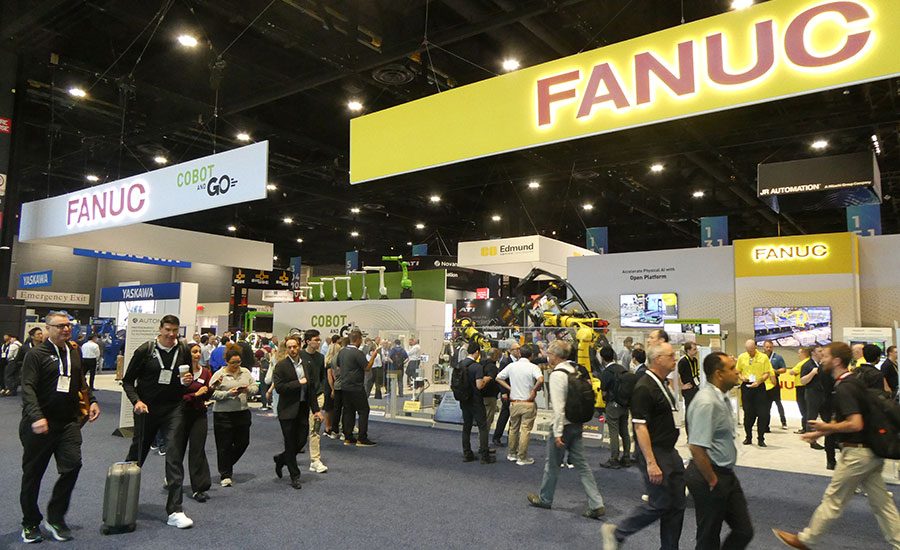
The 2024 Automate show in Chicago was a landmark event for the robotics and automation industry, showcasing the rapid advancements in technology that are shaping the future of manufacturing. With 1,230 exhibitors and over 50,000 attendees, the event highlighted cutting-edge developments in robotics, automation, artificial intelligence (AI), machine vision, and motion control. A major focus of the show was humanoid robotics, with dedicated pavilions and groundbreaking new products taking center stage.
From innovative startups to industry giants, companies unveiled transformative technologies designed to make automation more accessible, efficient, and adaptable. Whether through new hardware, software, or AI-driven solutions, the show demonstrated how robotics is evolving to meet the challenges of modern industrial applications. Below are some of the most notable innovations and developments that emerged from the event.
—
### Humanoid Robotics Takes Center Stage
The Humanoid Robot Pavilion, sponsored by NVIDIA, was one of the standout attractions of the event, offering attendees an up-close look at the latest humanoid robots and the technologies enabling them. These robots are no longer confined to labs or demos—they are becoming practical tools capable of working in real-world environments.
A highlight of the event was the **Automate Startup Challenge**, where 10 early-stage robotics and automation companies pitched their innovations to a panel of expert judges. The winner, **Mbodi**, impressed the audience with its natural-language teaching platform that enables operators to train robots using simple commands or physical demonstrations. This cloud-to-edge platform integrates AI, vision, and motion control, allowing robots to execute tasks like “place three bottles in a tray” with precision and adaptability. Once trained, these skills sync across an entire fleet of robots, streamlining operations for industries of all kinds.
—
### Award-Winning Products Redefining Automation
The event also celebrated groundbreaking products across various categories, demonstrating the breadth of innovation in the field:
– **Automation Systems:** CeiliX’s **InfinityCrane and SkyRunner system** impressed judges with its ability to enable omnidirectional movement in industrial spaces. This modular overhead material handling system features ceiling rails and autonomous vehicles that can transport loads up to 1 ton, adapting seamlessly to any layout.
– **Vision, AI, and Software:** Standard Bots’ **Flux AI software** stood out in this category by allowing robots to learn tasks through demonstration rather than complex coding. Using deep learning and machine vision, the software enables robots to adapt to real-world variations, making it ideal for tasks like welding or polishing.
– **Components, Hardware, and Enabling Technologies:** Synapticon’s **Actilink-JD actuator** earned recognition for its compact, all-in-one design, combining a high-torque motor, planetary gearbox, and servo controller. Designed for humanoid robots, this actuator delivers precise motion control while integrating safety features like controlled falling and active damping for safe human-robot collaboration.
—
### Collaborative Robots and Physical AI
Collaborative robots (cobots) were a major theme of the event, with several companies unveiling systems designed to make automation more accessible:
– **Epson** made its North American debut of the **AX6 six-axis cobot**, featuring a lightweight carbon-fiber design, a 6-kilogram payload, and high precision. Integrated safety features and user-friendly programming make it ideal for a variety of applications.
– **FANUC America Corp.** showcased pre-engineered cobot systems through its “Cobot and Go” exhibit, demonstrating how manufacturers can implement automation quickly using standardized solutions.
– **ABB Robotics** introduced its **Physical AI Toolchain**, enabling robots to learn from simulated and real-world data for improved speed and accuracy.
– **Teradyne Robotics** emphasized the power of physical AI with systems like the **MiR1200 Pallet Jack**, designed for dynamic and unstructured environments. Its PolyScope X software platform and imitation learning tools, such as the UR AI Trainer, are pushing the boundaries of robot programming and adaptability.
—
### New Products and Capabilities
Beyond humanoid and collaborative robots, the show featured an array of innovative products:
– Robotic systems capable of palletizing, welding, painting, and machine tending.
– Advanced vision systems that enable defect detection and automated quality control.
– AI-powered tools that allow operators to program and deploy robots using voice commands or physical demonstrations.
—
### Conclusion
The 2024 Automate show underscored the immense progress being made in robotics and automation. By combining AI, machine vision, and advanced hardware, exhibitors are creating solutions that are more flexible, efficient, and accessible than ever before. From humanoid robots learning new tasks in real-time to collaborative systems transforming factory floors, the innovations on display signal a new era for industrial automation. As these technologies continue to evolve, they promise to unlock unprecedented opportunities for manufacturers worldwide.
—
### Frequently Asked Questions (FAQ)
**1. What was the Automate Startup Challenge?**
The Automate Startup Challenge was a competition featuring 10 early-stage robotics and automation companies. Startups pitched their innovations to a panel of judges for a chance to win $10,000. The winner, Mbodi, demonstrated a platform for teaching robots through natural language and physical demonstrations.
**2. What is the InfinityCrane and SkyRunner system?**
Developed by CeiliX, this overhead material handling system enables omnidirectional movement in industrial spaces. It consists of modular ceiling rails and autonomous vehicles that can transport loads up to 1 ton, adapting to any room layout.
**3. What makes Flux AI software unique?**
Flux AI software, created by Standard Bots, allows robots to learn tasks through demonstration rather than complex coding. It uses AI and machine vision to adapt to real-world variations, making it ideal for tasks like welding or polishing.
**4. What is the Actilink-JD actuator used for?**
Designed for humanoid robots, the Actilink-JD actuator combines a high-torque motor, planetary gearbox, and servo controller into a single joint. It enables precise motion control while integrating safety features for human-robot collaboration.
**5. What is the UR AI Trainer?**
The UR AI Trainer, developed by Teradyne Robotics with Scale AI, allows users to physically guide robots through tasks like smartphone packaging. It captures high-fidelity, force-aware data to train AI models for real-world deployment.
**6. Where can I learn more about the technologies showcased at Automate 2024?**
For more details on specific products and companies, visit the websites of the respective exhibitors, such as [ABB Robotics](www.abb.com), [FANUC America](www.fanucamerica.com), and [Teradyne Robotics](www.teradyne.com/robotics).
