



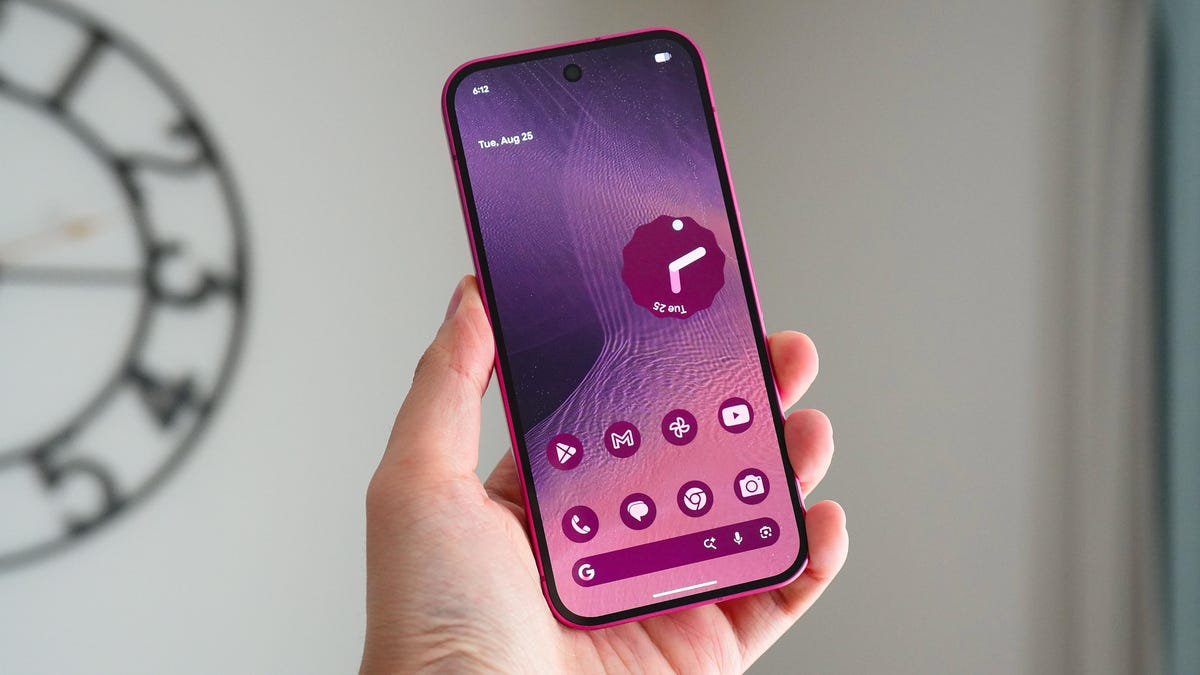
# Google Pixel 11 Review: A Refined Base Model That Still Has Some Bite
The smartphone market is flooded with devices that shout for your attention, but the Google Pixel 11 takes a different approach. It whispers — and somehow, it still gets heard. After spending considerable time with this device, I can confidently say that Google’s latest base-model flagship walks a delicate line between modest upgrades and meaningful refinements that make it stand out in a crowded field.
## First Impressions: The Quiet Charmer
Unboxing the Pixel 11 is where the magic begins. The Hibiscus colorway, a warm magenta hue, catches the light beautifully and gives the phone an undeniably charming personality. Google has a long history of treating its standard Pixel with playful color options, but this year’s shade feels particularly well-received — it’s bold without being overwhelming.
Despite its compact footprint, the Pixel 11 feels polished and premium. The blend of glossy glass on the back and matte-treated side rails creates a tactile experience that’s surprisingly enjoyable. The glossy finish has an interesting quality: it becomes more grippy as the day goes on and your fingers naturally produce oils and moisture. This makes it remarkably easy to use one-handed, to the point where a protective case might feel like overkill for some users.
## Design Evolution: Sleeker Than Ever
One of the most noticeable changes this year is the dramatically slimmed-down camera bar. Google has reduced it to nearly half the size of the previous generation, giving the phone a sleeker, more unified profile. This is no small feat, especially since the company upgraded the main sensor to improve light-gathering capabilities. The smaller camera bar also means that if you do choose to use a case, the entire module fits neatly beneath the protective layer — no more unsightly exposed lens poking out from the edge.
The display remains a 6.3-inch AMOLED panel with a nearly symmetrical design, including balanced bezels and a bottom-firing speaker that delivers clear, consistent audio. It’s a familiar formula, but one that Google has perfected over the years.
## The HiLight Feature: A Small Glow with Big Potential
Nestled within the camera bar is Google’s new HiLight LED indicator. This small but clever feature pulses in different colors to notify you of incoming calls from favorited contacts or when you’re actively chatting with Google’s Gemini AI assistant. It’s a thoughtful addition that adds a layer of personality to the device.
However, the feature currently has some limitations. Being restricted to calls and Gemini conversations means it doesn’t extend to incoming text messages or timer alerts, which would have made it far more useful in day-to-day scenarios. Hopefully, future software updates will expand its functionality.
## What You’re Trading Away: The Non-Pro Limitations
Choosing the base Pixel 11 over its Pro siblings means accepting certain trade-offs, and it’s important to be upfront about them.
– **Display brightness** peaks at 3,000 nits, compared to the Pro models’ 3,600 nits, and the refresh rate only goes as low as 60Hz and as high as 120Hz — missing the Pro’s ability to drop down to 1Hz for power savings.
– **Camera hardware** falls short of the Pro line across all three lenses: the main sensor is 48MP versus the Pro’s 50MP, and the telephoto lens drops from 48MP to a modest 10.8MP.
– **Storage and memory** max out at 12GB of RAM and 512GB of storage, while the Pro models offer up to 16GB of RAM and a staggering 1TB of internal space.
– **Wired charging** is capped at 30W, compared to the Pro’s faster 45W rating.
For the price hike — the Pixel 11 now starts at $899 for 256GB, up from $799 on the previous generation — these compromises are harder to swallow than they might have been in years past.
## Where AI Truly Makes a Difference
Here’s where the Pixel 11 surprises. While the hardware may not match the Pro models, the AI and software experience is remarkably consistent across the entire lineup. The Tensor G6 processor and Android 17 software ensure that day-to-day performance feels smooth and responsive.
Google’s Gemini-powered features feel like the true star of the show on this device. The new Rambler feature for dictating text messages works seamlessly, allowing you to compose messages hands-free while driving or multitasking. It’s become one of those small conveniences that, once you start using it, you wonder how you ever lived without it.
The Magic Capture feature is another gem. It intelligently snaps still frames while you’re recording video, acting like a built-in photographer’s assistant. It takes the anxiety out of capturing the perfect moment, ensuring you come away with plenty of usable shots even in fast-paced situations.
Image processing has also seen incremental improvements. The new main sensor captures and processes photos faster, particularly in low-light conditions. The output tends to be more natural and realistic compared to the punchy, saturated look that Samsung phones often favor — a preference that ultimately comes down to individual taste.
Gaming performance is where the Pixel 11 shows its age slightly. Certain graphics-intensive titles like “Genshin Impact” don’t support all settings on the base model, and the 12GB of RAM raises questions about long-term durability as apps and games continue to grow more demanding.
## The Verdict: Who Should Buy It?
The Pixel 11 is in an interesting position in 2026. It’s no longer the easy value pick it used to be, especially with the price increase and the shrinking gap between base and Pro features. The global memory chip shortage hasn’t helped either, making it harder to justify spending $899 on a phone that shares most of its software experience with cheaper older models.
However, if you can snag a solid trade-in deal, take advantage of a sign-in promotion, or wait for a holiday price drop, the Pixel 11 remains the safest and most well-rounded choice among Google’s four 2026 launches. Its combination of a gorgeous design, strong AI features, and reliable performance makes it a phone you can genuinely enjoy without breaking the bank.
—
## Frequently Asked Questions
**How much does the Pixel 11 cost?**
The Pixel 11 starts at $899 for the 256GB storage configuration, which is a $100 increase from the previous year’s baseline price of $799.
**What colors are available for the Pixel 11?**
The new Hibiscus colorway is the standout option, featuring a warm magenta tone. Google may also offer additional color choices depending on regional availability.
**Does the Pixel 11 support wireless charging?**
Yes, the Pixel 11 supports Qi2 wireless charging at up to 25W, which is a convenient and welcome addition to the base model.
**How is the camera on the Pixel 11 compared to the Pro models?**
The camera system on the base Pixel 11 is notably inferior to the Pro models. The main sensor is 48MP (versus 50MP on the Pro), and the telephoto lens is significantly weaker at 10.8MP compared to the Pro’s 48MP. That said, Google’s AI-enhanced processing helps bridge some of the gap.
**Can the Pixel 11 handle heavy gaming?**
The Tensor G6 chip handles everyday tasks with ease, but graphically demanding games like “Genshin Impact” may not support all settings on the base model. The 12GB of RAM is adequate for now, but long-term gaming performance remains to be seen.
**Is the Pixel 11 waterproof?**
While official IP ratings may vary, Google’s Pixel phones generally feature a degree of water and dust resistance suitable for everyday use, though it’s always wise to avoid unnecessary exposure to moisture.
—
## Conclusion
The Google Pixel 11 is a phone of compromises and quiet strengths. It doesn’t revolutionize the category, but it refines what Google does best — delivering a clean, AI-enhanced software experience in a beautifully compact package. For those who prioritize software over raw hardware, or who find the right deal at the right time, it’s a compelling choice that proves you don’t need the Pro model to have a great phone. Just be mindful of the price-to-upgrade ratio, and you might find it’s exactly the device you didn’t know you needed.
Thank you for reading
