



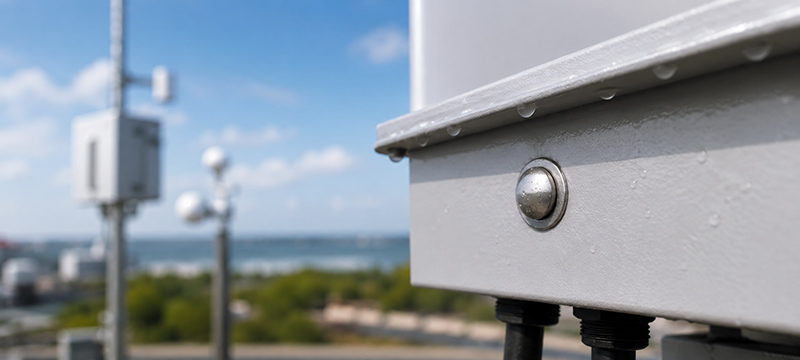
Managing corrosion is critical because rivets in connected industrial gear, outdoor IoT setups, smart utility networks, and edge devices are frequently subjected to rain, washdown water, salty air, or chemical residues for extended periods. In such settings, fastener deterioration can compromise not just structural soundness but also the lasting dependability of attached sensors, housings, and communication modules. Even small rust spots can cause discoloration, joint loosening, and reduced operational lifespan well before major components fail. Stainless steel performs exceptionally well due to its metallurgical properties. Its alloy composition generates a protective surface layer, its internal grain structure remains consistent, and its exterior can regenerate after minor scratches when oxygen is available.
The Role of Chromium
Operating conditions often determine whether a rivet remains sound or starts discoloring surrounding material following prolonged exposure to moisture, salt spray, or repeated cleaning cycles. This is especially important for outdoor IoT installations like smart metering systems, industrial gateways, traffic monitoring equipment, and remote environmental sensors, where access for maintenance may be restricted and continuous operation over many years is expected. For these reasons, engineers frequently specify stainless steel rivets in locations where oxygen can sustain a thin chromium-oxide film. Once established, this protective barrier slows active corrosion, minimizes material loss, and enables the fastener to recover after slight wear during normal use.
The Passive Layer
This surface film is invisible to the naked eye, yet its impact is significant. Oxygen interacts with chromium at the exterior to form chromium oxide, which guards the metal beneath against water, salts, and many airborne pollutants. If abrasion strips away part of this coating, fresh oxide can regenerate as long as oxygen is still present. This self-restoring capability gives stainless steel a distinct advantage over uncoated carbon steel in damp environments. In IoT systems mounted on rooftops, utility poles, industrial facilities, or transportation networks, this self-repairing defense helps preserve housing stability and fastening dependability despite years of environmental stress.
Alloy Composition
Chromium delivers the primary protection, but the specific grade chemistry remains important. Nickel helps sustain a uniform crystal lattice, which enhances toughness and corrosion resistance across diverse operating conditions. Molybtenum can boost defense in chloride-rich settings, such as coastal atmospheres or chemical cleaning baths. Different IoT deployment scenarios may call for different stainless steel grades. Coastal smart city systems, connected maritime hardware, or industrial automation equipment exposed to cleaning agents can present more severe corrosion challenges than indoor electronic enclosures. Since exposure varies by location, alloy selection should reflect the actual service environment rather than relying on a generic material classification.
Reduced Iron Reactivity
Regular steel corrodes easily because exposed iron rapidly combines with oxygen and moisture. Stainless steel alters this tendency by limiting direct iron reactivity at the surface and by preserving its oxide shield. Lower reactivity means slower development of red rust. Within a joint, this distinction is significant because a single corroding fastener can diminish clamping pressure, discolor nearby panels, and increase the need for repairs. Avoiding corrosion at fastening points also helps lower the risk of enclosure leaks, contamination, and gradual degradation of embedded electronics or sensor modules.
Importance of Surface Finish
Surface quality also plays a key role in long-term durability. Polished, debris-free exteriors offer fewer sites for dirt, salts, and workshop residues to accumulate, which helps the passive layer remain unbroken. Rough handling can press foreign particles into the surface, which may later cause staining. Iron particles transferred from tools or storage racks can produce the same issue. Careful manufacturing, proper segregation, and thorough cleaning preserve the alloy’s inherent resistance before installation even begins. For producers of connected devices and industrial IoT equipment, contamination management during assembly and installation is especially vital because fastener corrosion can eventually undermine enclosure seals and environmental protection ratings.
Joint Configuration
A corrosion-resistant fastener still relies on thoughtful joint design. Narrow gaps can trap moisture, cleaning agents, or salt deposits while restricting oxygen flow around the rivet body. Without sufficient oxygen, passive film regeneration becomes less effective in that localized zone. Drainage channels, appropriate spacing, and compatible neighboring materials help mitigate this concern. Effective drainage and ventilation design are particularly crucial in outdoor connected systems where sealed enclosures may house sensors, radios, batteries, or edge-computing electronics that are vulnerable to moisture buildup. Sound design works with the metal’s chemistry rather than against it.
Galvanic Corrosion Concerns
Contact between dissimilar metals can trigger galvanic corrosion when moisture creates a bridge between them. In such cases, one metal acts as the anode and deteriorates more rapidly than it would independently. Stainless rivets generally perform best when mated with appropriate adjacent metals and realistic exposure expectations. This concern is growing more relevant in smart infrastructure projects where stainless fasteners may be paired with aluminum sensor housings, communication antennas, or solar-powered monitoring devices. Insulating washers, protective coatings, or matched alloys can minimize galvanic current in marine hardware, rooftop installations, and exterior cladding assemblies.
Effects of Heat and Mechanical Stress
Production processes also affect corrosion susceptibility. Excessive cold working, improper thermal management, or overly aggressive installation force can alter the local microstructure and generate stressed zones near the rivet head or shank. These stressed regions can become early initiation points for corrosion in demanding service conditions. Sound manufacturing practices, appropriate grade selection, and controlled installation force help maintain corrosion resistance once the rivet is put into service.
Why Industries Choose Stainless Steel
Many purchasers accept a higher upfront material cost because corrosion-related failures typically end up costing more than the fastener itself. Stainless rivets tend to retain their strength, appearance, and dimensional fit, whereas coated carbon steel may degrade more quickly. That extended service life can reduce discoloration, maintenance effort, and replacement frequency. In wet, hygienic, outdoor, or industrial IoT contexts, these practical benefits often justify the initial investment.
In large-scale IoT rollouts, ongoing maintenance expenses frequently surpass the original hardware cost over the installation’s lifetime. Specifying corrosion-resistant fastening components can therefore help lower field service demands, extend maintenance intervals, and enhance operational continuity for connected systems placed in remote or hard-to-reach sites.
Conclusion
Stainless steel rivets resist corrosion because multiple protective mechanisms function in concert rather than in isolation. Chromium creates a passive oxide barrier; supplementary alloying elements can enhance performance in more aggressive environments, and clean surfaces help that protection stay intact. Joint design and metal compatibility also shape real-world performance in the field. For industrial IoT infrastructure, connected equipment, and outdoor electronic systems, the outcome is a fastener that can remain stable, clean, and structurally reliable under challenging environmental conditions.
