



Here is the paraphrased version of the article:
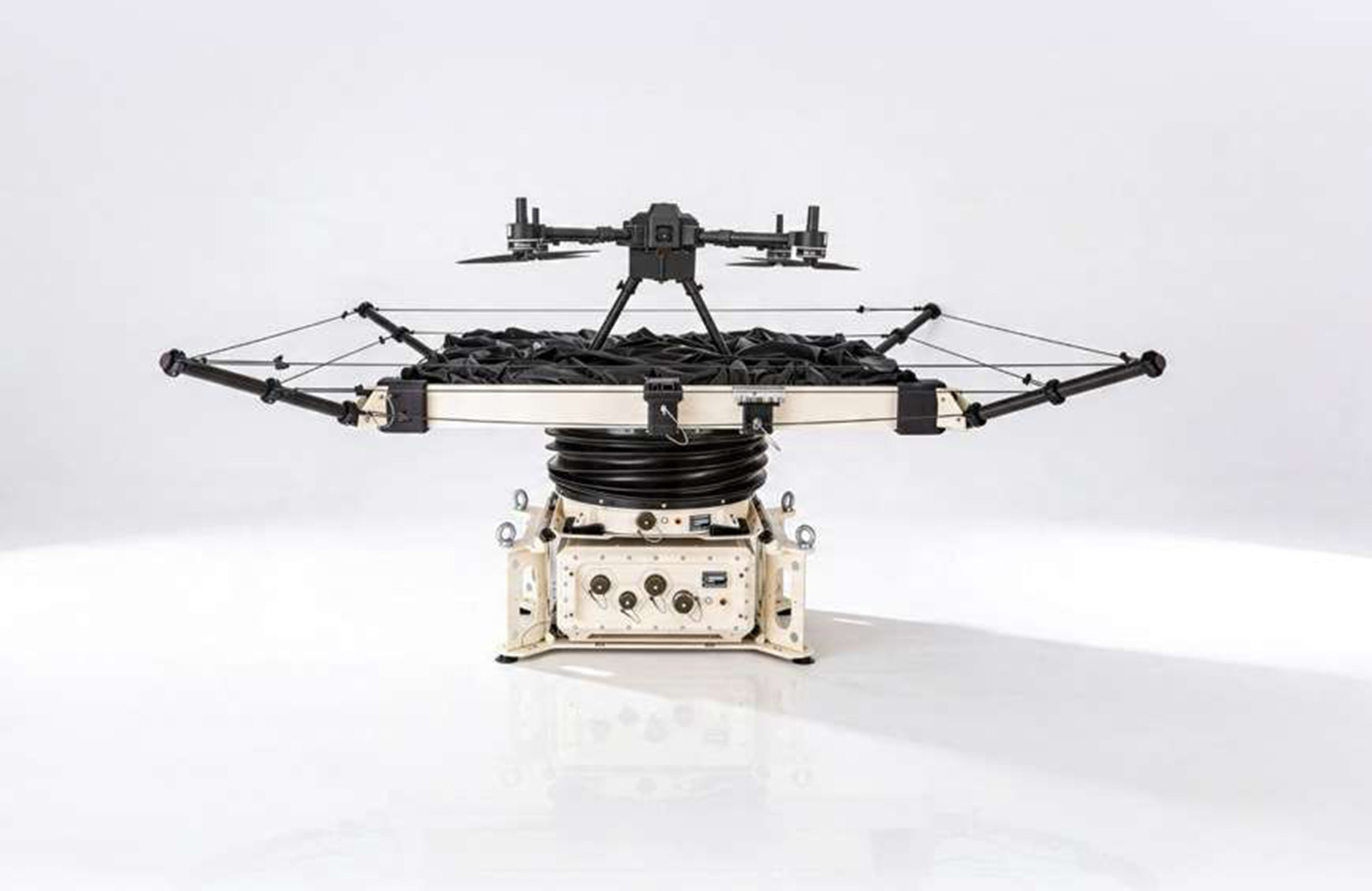
WaiV Robotics’ drone landing system features stabilized landing infrastructure, impact absorption, and a distinctive locking mechanism. | Source: WaiV Robotics
WaiV Robotics has unveiled a completely automated landing and takeoff platform. The company engineered it to facilitate dependable vertical takeoff and landing (VTOL) drone operations even in rough ocean conditions.
Supported by $7.5 million in seed funding, the system allows uncrewed aerial vehicles (UAVs) to function from ships as small as 10 m (32.8 ft.) in length and decks of any dimension. It achieves this without requiring any hardware or software changes to the drone itself.
According to WaiV Robotics, the company’s patent-pending catch-lock-release landing mechanism, paired with AI-powered predictive algorithms, makes safe and accurate drone recovery possible even when vessels are moving on the open ocean.
The platform accommodates UAVs weighing up to 15 kg (33 lb.), with future plans to support smaller aircraft as light as 3 kg (6.6 lb.) and larger carriers ranging from 100 to 300 kg (220.4 to 661.3 lb.).
Landing drones on the ocean presents significant hurdles
Johnny Carni, founder and CEO of WaiV Robotics Ltd., shared with The Robot Report that landing drones at sea involves several major technical obstacles. The first involves bringing the drone down slowly and safely while a ship is in motion.
“You have a ship’s deck rolling on the ocean — it’s moving, drifting, and filled with unpredictable motions,” he explained. “The waves don’t follow a smooth, predictable pattern.”
The second challenge involves making contact with the ship’s surface. The deck may be coated with slippery salt water, and the drone must not slide or roll off the landing area.
“When drones approach a landing, they typically descend very softly,” Carni noted. “That gentle approach doesn’t work well in a maritime setting, because during that slow descent, the boat is shifting, and that movement can generate an impact that flips the drone over. So you need a different landing strategy.”
However, a firmer landing could cause the drone to bounce — something WaiV aims to avoid. “We need to stop that bounce-back and prevent any sliding,” Carni said. “And once the drone has touched down, we need to keep it in place, because it could land and then the boat moves, causing it to roll off due to those motions.”
“From our standpoint, the key requirement was that once the drone lands, you lock the system in place,” he continued. “And when someone is ready to launch again, they simply press a button to remotely unlock it. The lock releases, and the drone can take off.”
London-based WaiV also employs a gyro-stabilized landing pad to maintain a level surface for the drone.
WaiV’s goal is to be compatible with all drone manufacturers
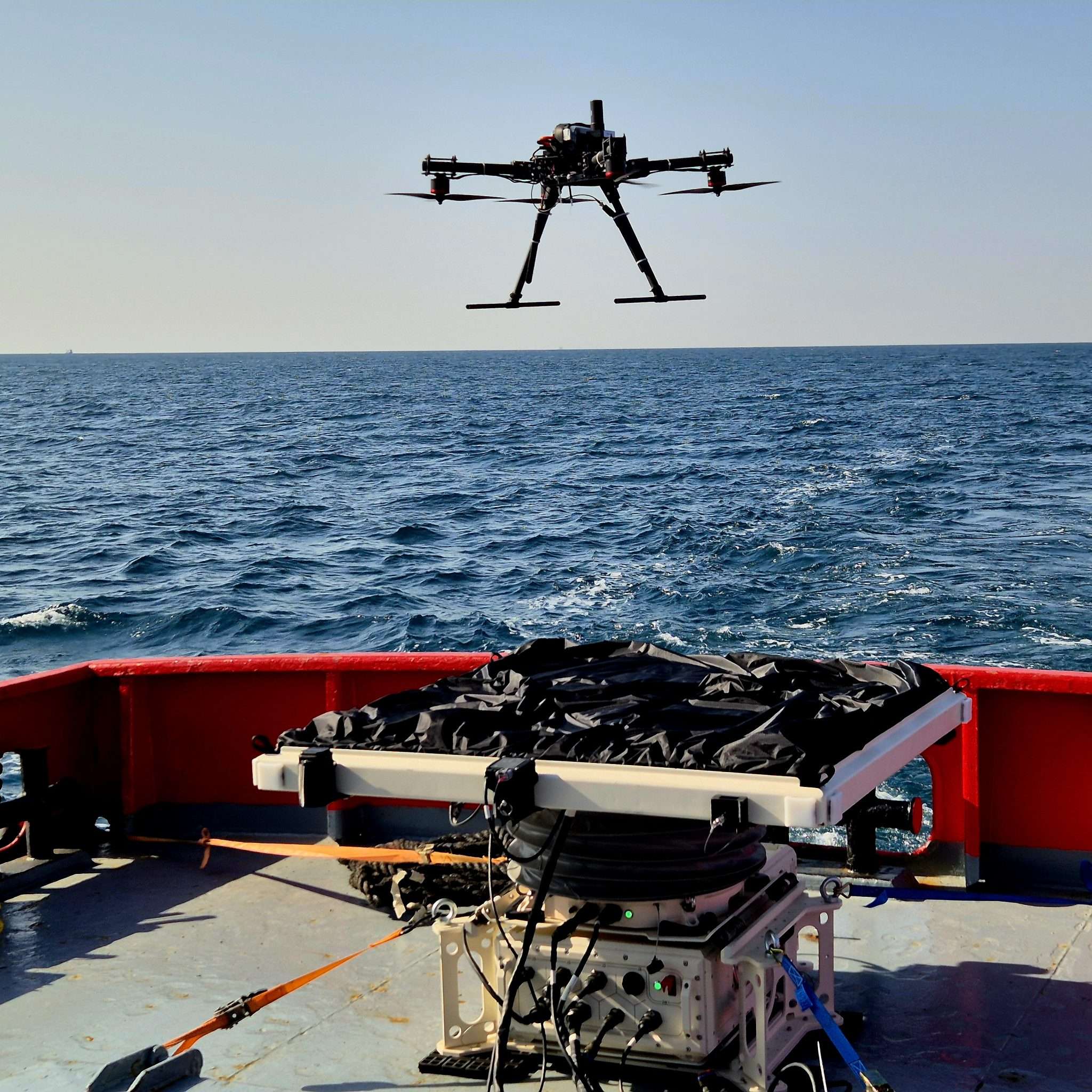
WaiV’s landing platform functions autonomously without human intervention in challenging sea conditions. | Source: WaiV Robotics
WaiV Robotics stated its goal is to be compatible with any drone from any manufacturer.
“Our approach is to leave the drone untouched,” Carni said. “We built this component that mounts on the boat’s deck, and we don’t attach anything to the drone — no hardware or software modifications.”
Adding extra components to a drone could drain its battery faster and degrade its performance. Carni emphasized that WaiV wants drones to operate at their full capability. Extra components could also introduce cybersecurity complications, which WaiV seeks to avoid.
“We have this deck-mounted system equipped with various sensors that track the drone,” Carni explained. “It uses radar or an electro-optical system to determine the drone’s precise position relative to the landing pad. It doesn’t matter where the drone is globally — the system provides the relative positioning between the two.”
Rather than modifying the drone’s software, WaiV leverages the drone’s existing communication link with its remote controller.
“We link our system to the drone’s remote control unit — the same one the pilot operates,” Carni said. “We essentially act like a pilot, but instead of manually moving joysticks, the software replicates those same stick movements.”
When it’s time for WaiV’s software to assume control, the drone operator can press a button to transfer command. The human operator can always override WaiV’s operations if necessary.
The company reported it can interface with the vast majority of drones on the market. It supports the leading drone control computers, and if a manufacturer uses a proprietary system, WaiV will collaborate to establish the connection.
AI empowers drones to manage unpredictable ocean environments
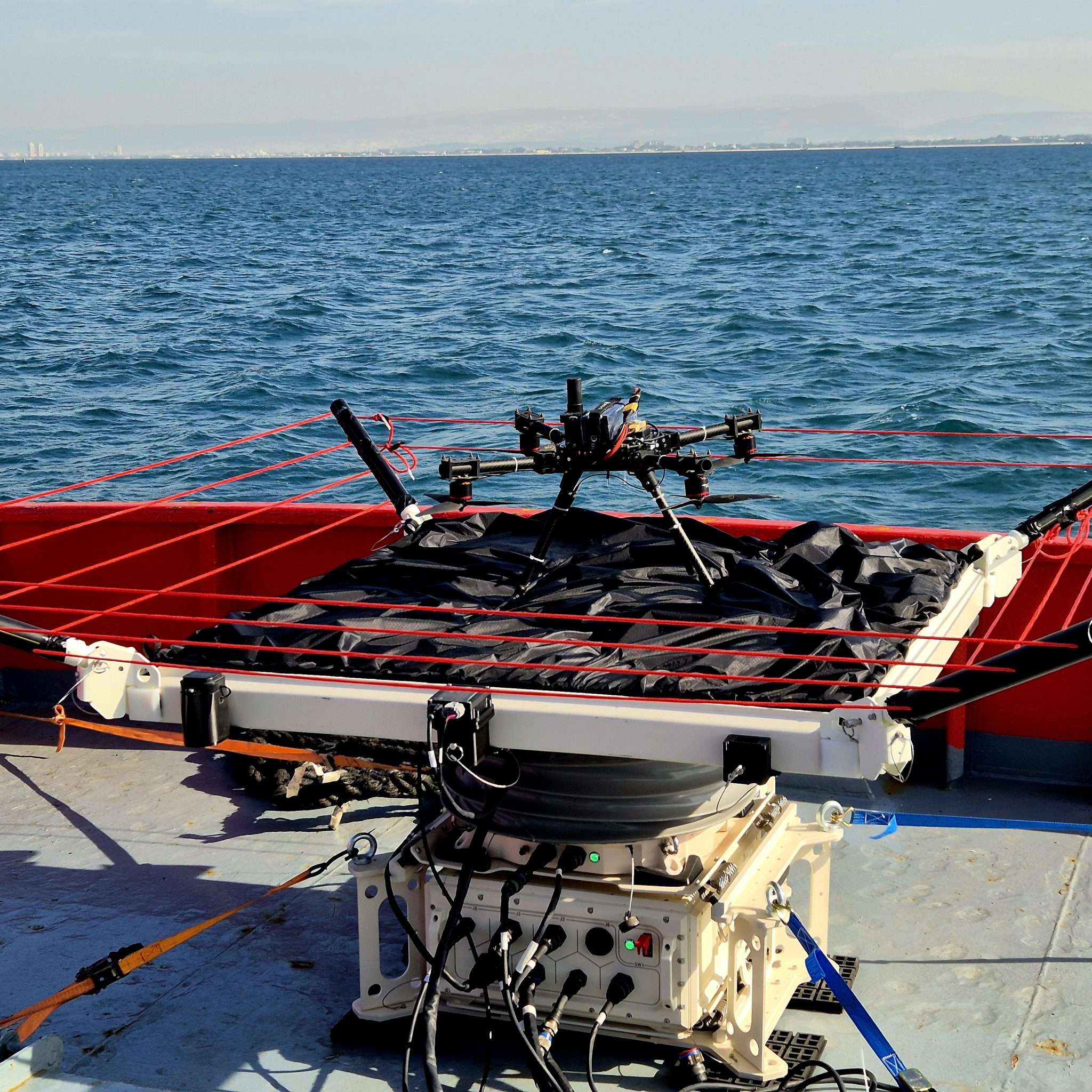
WaiV built its platform to work with all kinds of VTOL UAVs—multicopters, fixed-wing aircraft, and helicopters—no matter who makes them. | Source: WaiV Robotics
WaiV developed AI-powered algorithms that steer drones during takeoff and landing. “Every time we guide a drone toward the landing pad, it’s a brand-new scenario because the waves are always changing,” Carni explained.
Carni noted that the team relied heavily on simulation for much of its training, enabling the company to experiment with a broad range of physical variables, from different ship types to varying ocean conditions.
“After that, you validate the simulation throughout the development process by conducting simple sea trials,” he said.
WaiV ran tests with multiple drone models to observe how each one responds differently. “Each drone behaves a bit differently based on its weight, power output, and degree of uncertainty,” Carni pointed out.
He stressed that building precise simulations is critical if the team wants dependable outcomes.
“You have to ensure your simulation is solid, that you’re feeding it the right data, and that it performs the way you intend,” Carni said. “And no matter what, you always need to test it in real-world conditions.”
WaiV is aiming at a broad set of applications
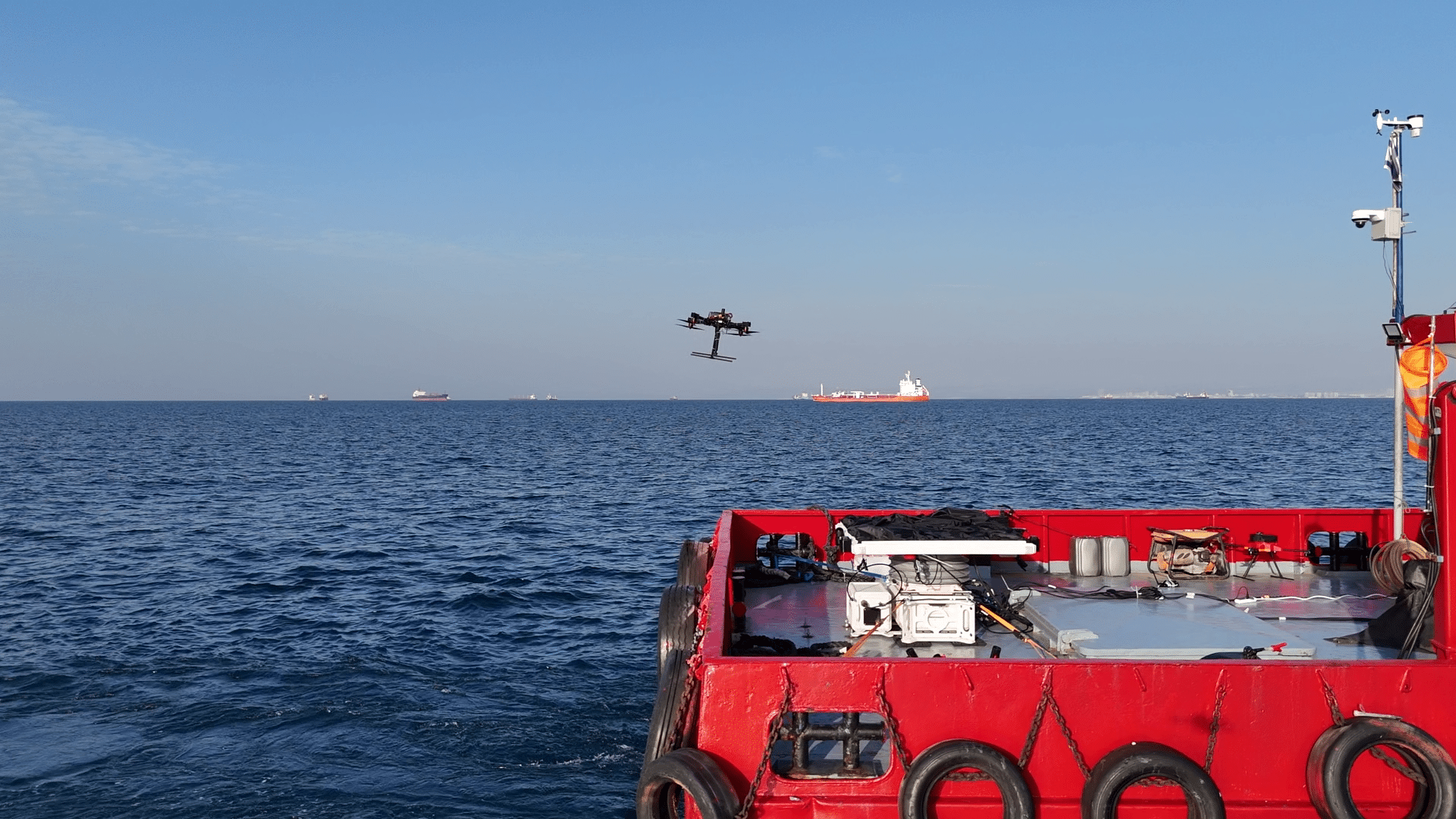
WaiV believes its technology can make UAVs a practical choice for offshore fleets that have historically struggled with deployment limitations. | Source: WaiV Robotics
WaiV Robotics said its solution can serve any sector that needs to launch or recover drones from small to medium-sized vessels, spanning commercial, government, and defense applications.
“Inspection is a massive industry, and drones are already being used for inspections,” Carni said. In the energy sector, assets like oil rigs and wind farms can be located far out at sea. These sites are distant enough that drones need to launch from a nearby vessel to have sufficient battery life to complete the inspection.
Carni also mentioned that drones are frequently used in the fishing industry to spot schools of fish—another scenario that could benefit from launching off smaller boats on the open water.
The technology could also support search-and-rescue missions, oceanographic research, port authority or coast guard operations, and even small-package delivery between ships.
Currently, WaiV has been collaborating directly with end users, but Carni expects that many customers will eventually want a bundled solution that includes both the drone and the landing system. This shift could lead the company to partner directly with drone manufacturers.
The company is also focusing on mid-size drones but could expand its systems to accommodate both heavier and lighter models, he added.

