



# Closing the Gap: Reimagining Vulnerability Defense in an Era of Accelerated Exploitation
## Introduction
For years, the cybersecurity industry operated on a relatively predictable cycle. A flaw would be discovered, teams would evaluate how exposed their systems were, patches would be tested and rolled out, and the risk would be closed before adversaries could capitalize on it at scale. This workflow served organizations well for a long time, but the world it was built for no longer exists.
Modern enterprises now run thousands of interconnected workloads across hybrid and multicloud infrastructures. Revenue-critical applications drive customer experiences and power essential business functions that simply cannot be paused every time a security update becomes available. Meanwhile, vulnerabilities are being discovered, shared, and weaponized faster than at any point in history.
This creates a pressing reality: the time it takes defenders to safely fix a flaw is no longer keeping pace with the speed at which attackers can exploit it. The cybersecurity community needs a fundamental rethink of how it handles security during the dangerous window between initial disclosure and final remediation.
## The Shrinking Timeline Between Discovery and Attack
The traditional approach to vulnerability management assumed that defenders could move faster than attackers. In many cases, they could. Once a flaw was disclosed, security teams had the breathing room to analyze the issue, map affected systems, test corrective updates, schedule deployment, and roll out fixes before exploitation became widespread.
That window is evaporating.
Modern attack operations now function at the scale of the entire internet. Vulnerability details, proof-of-concept demonstrations, threat intelligence reports, and exploitation techniques spread across global networks in a matter of hours. A flaw announced at dawn can be the subject of active scanning and targeted attacks by the afternoon.
Yet the operational demands placed on enterprise security teams have not changed. Organizations still need to:
– Assess the nature and business impact of each vulnerability
– Locate affected systems across sprawling, complex environments
– Review software dependencies and compatibility requirements
– Validate fixes in isolated testing environments
– Coordinate deployment around business schedules
– Watch for unintended side effects and operational disruptions
None of these steps reflect inefficiency. They represent necessary precautions for environments where downtime carries significant financial and operational consequences. The problem is straightforward yet severe: defensive procedures still demand days or weeks, while offensive operations are now measured in hours.
This mismatch produces one of the most precarious periods in modern cybersecurity—the gap between the moment a flaw is known and the moment it is actually fixed.
## How Artificial Intelligence Is Widening the Asymmetry
Artificial intelligence is transforming how organizations streamline operations, accelerate software development, and strengthen their security postures. However, these same technological advances are also reshaping the economics of offensive cyber operations.
Historically, converting a newly disclosed vulnerability into a functional attack demanded significant manual effort and deep technical knowledge. Both security researchers and malicious actors needed to parse documentation, understand exploitation conditions, examine vulnerable software, and craft attack strategies from the ground up.
Many of those steps can now be dramatically accelerated. AI-powered tools are capable of analyzing vulnerability reports, mapping probable attack routes, assessing technical dependencies, and condensing complex technical documentation into actionable summaries far faster than human-led processes ever could.
As these capabilities grow more accessible and widespread, the interval between public disclosure and active exploitation continues to shrink. This creates a structural imbalance: defenders bear the burden of securing vast, heterogeneous environments that may contain thousands of servers, applications, databases, containerized workloads, and network devices. Attackers, on the other hand, only need to find a single viable path through the defenses.
This growing asymmetry forces organizations to confront a critical question that many have only recently begun asking in earnest: *What can we do to protect ourselves before a patch reaches production?*
## The Limitations of Conventional Security Approaches
The security industry has poured enormous resources into enhancing visibility. Today’s organizations have access to more vulnerability data, threat intelligence feeds, analytical tools, and detection capabilities than ever before. Modern security platforms can rapidly identify which systems are exposed, rank risks by severity, and alert defenders to emerging threats in near real-time.
These capabilities are indispensable. But knowledge of a risk does not, by itself, neutralize that risk. Many organizations find themselves in the frustrating position of knowing precisely which systems are vulnerable yet being unable to immediately apply fixes.
Consider these common scenarios:
– A customer-facing application that handles millions of transactions daily requires extensive validation before any update can go live, because even a brief outage could result in significant revenue loss.
– An industrial control system depends on legacy software that cannot be taken offline during active production cycles without halting manufacturing operations.
– A regulated environment subject to compliance frameworks requires additional layers of testing, documentation, and formal approval before any configuration change can be implemented.
In each of these cases, the core challenge is not a lack of awareness. The challenge lies in reducing exposure while the formal remediation process is still underway.
Visibility tools, detection systems, and prioritization frameworks help organizations understand the problem. What they typically do not provide is an immediate mechanism for containing the risk while a permanent fix is still being developed and tested. As exploitation timelines grow shorter, the industry needs a complementary strategy—one centered on actively reducing exposure rather than merely measuring and reporting it.
## The Network as the Fastest Layer of Defense
When individual workloads cannot immediately defend themselves, another layer of the infrastructure must step in to provide protection. Increasingly, organizations are turning to the network as that layer.
Network-based protections operate around workloads rather than inside them. This distinction is especially meaningful during periods of elevated risk. The network inherently understands communication patterns, connectivity requirements, trust relationships, and traffic flows. It occupies a strategic position that allows organizations to influence how systems interact with one another without requiring changes to the applications running on those systems.
This opens the door to reducing exploitability while formal remediation efforts continue. Network-enforced controls can help by:
– Limiting access to vulnerable systems and restricting unnecessary connectivity
– Constraining the pathways through which an attacker might move laterally
– Isolating high-risk assets within segmented zones
– Narrowing the scope of potential damage if an exploit is attempted
– Adjusting protections dynamically as new threat information emerges
– Responding to emerging risks far faster than traditional patch cycles permit
Perhaps the most compelling advantage is speed. Network-level controls can frequently be deployed significantly faster than enterprise software patches can be thoroughly tested, validated, and rolled out across complex environments.
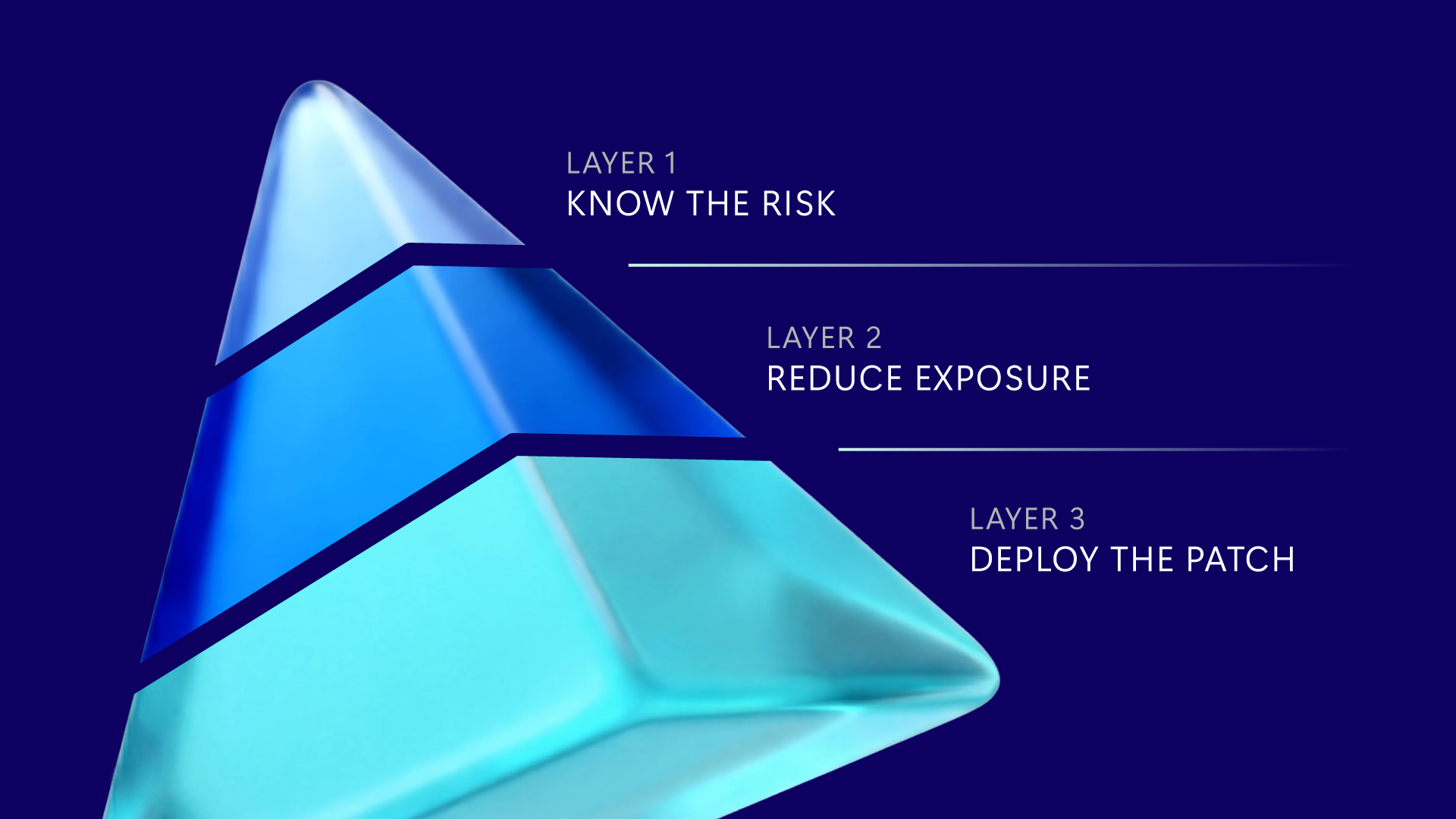
The goal here is not to replace or skip patching. The goal is to establish a robust layer of protection during the interval between vulnerability discovery and patch deployment.
As AI continues to compress the timeline between disclosure and exploitation, organizations need a defensive mechanism that can activate immediately—without waiting for every individual workload to receive a patch, every application to be reconfigured, or every endpoint agent to process a new threat indicator.
The network is uniquely suited to fill this role. It already sits in the path of all communication, provides visibility across diverse and heterogeneous workloads, and can enforce protections uniformly across expansive cloud environments without requiring any modifications to the underlying applications. Moreover, network controls are evolving beyond simple IP address filtering, port blocking, and signature-based detection. They are increasingly capable of context-aware, adaptive enforcement that targets the specific behaviors an exploit depends on while preserving legitimate business traffic.
Take the example of a denial-of-service vulnerability in a widely used protocol. The safest temporary measure might be to disable that protocol entirely until patched—but doing so could severely impact application performance and user experience. A more refined, network-aware response could instead place bounds on the exploitable behavior: capping concurrent connections, tightening request validation rules, or rate-limiting patterns associated with abuse—all while keeping the service fully operational for legitimate users.
This is why the network is evolving into something far more than a passive connectivity layer. It is becoming a programmable, pervasive enforcement fabric that provides organizations with the single most valuable resource during a zero-day incident: the time needed to patch safely and thoroughly.
## Adaptive Security: The Next Frontier
The future of cybersecurity will not be built on static policies or purely manual response workflows. Modern IT environments are far too large, dynamic, and interdependent for such approaches to remain effective.
Organizations are increasingly demanding security systems that can perceive risk, evaluate context, and adjust protections as conditions evolve. This represents a broader shift toward what is known as adaptive security.
Adaptive security frameworks aim to move past static, rule-based approaches toward a continuously improving model of risk management. Rather than applying the same response to every vulnerability, these systems seek to understand the specific conditions that render a flaw exploitable and determine the most effective, targeted way to reduce exposure. At a conceptual level, these systems must address three essential challenges.
**Understanding the vulnerability.** The system must ingest and interpret information from security advisories, vulnerability disclosures, threat intelligence feeds, exploit research, and other relevant sources to build a coherent picture of how a particular threat operates and what it targets.
**Correlating that understanding with the actual environment.** A vulnerability only translates into a real, material risk when specific systems, configurations, communication paths, and exposure conditions are present in the organization’s environment. Mapping this context accurately is essential to distinguishing between theoretical risk and immediate danger.
**Translating insight into enforceable action.** Intelligence that remains unapplied has limited protective value. The ultimate objective is to reduce exposure through controls that can be implemented rapidly, consistently, and across large-scale environments.
Artificial intelligence is expected to play a transformative role throughout this process, serving not only as an analytical engine but as an enabling technology that helps security systems navigate complex relationships, surface relevant insights, and make informed decisions at speeds that would be impossible through manual effort alone.
## The Path Forward
The cybersecurity industry has devoted decades to improving vulnerability management, patch deployment, and security operations. Those investments remain absolutely essential and will continue to form the foundation of every organization’s security strategy. But the landscape is shifting beneath our feet.
Attackers are accelerating. Infrastructures are growing in complexity. AI is compressing timelines across the entire threat ecosystem. In this new reality, relying on patching as the sole line of defense is no longer sufficient.
The organizations that will thrive in the years ahead are those that learn to reduce risk during the critical interval between vulnerability disclosure and permanent remediation. Success will come from integrating strong patch management practices with compensating controls that are capable of responding at machine speed.
The fundamental reality is that new vulnerabilities will continue to emerge—that is an unavoidable truth. The question that matters is not whether flaws will appear, but how effectively organizations can shield themselves while working to eliminate those flaws permanently.
As the window for safe remediation continues to narrow, the industry must embrace new approaches that supplement traditional remediation strategies, reduce exposure with minimal delay, and help defenders reclaim the resource that has become increasingly scarce in modern cybersecurity: time itself.
—
## Frequently Asked Questions
**Q: What is meant by the “patch window” in cybersecurity?**
A: The patch window refers to the period of time between when a vulnerability is publicly disclosed and when a fix is fully deployed and validated in a production environment. During this window, systems remain exposed to potential exploitation.
**Q: Why is the patch window shrinking?**
A: Several factors contribute to this trend. Exploitation techniques are being developed and shared faster than ever, often aided by AI-driven tools that accelerate analysis of vulnerability details. At the same time, the complexity and scale of enterprise environments mean that patch testing, validation, and deployment still require significant time and coordination.
**Q: What are compensating controls?**
A: Compensating controls are protective measures that serve as an alternative or supplement to a primary security control when the primary control cannot be applied immediately. In the context of vulnerability management, these are measures—such as network-level restrictions or segmentation—that reduce exposure while a formal patch is still being developed and tested.
**Q: Why is the network considered the fastest control plane?**
A: Unlike endpoint-based controls that require agents to be updated or software to be modified on individual devices, network-level protections operate independently of the applications and workloads they safeguard. This means they can be adjusted, deployed, and refined rapidly—often in minutes—without requiring changes to the underlying systems.
**Q: Does adaptive security replace the need for patching?**
A: No. Adaptive security is designed to complement patching, not replace it. It provides a mechanism for reducing risk during the gap between vulnerability discovery and patch deployment, ensuring that organizations are not left unprotected while formal remediation is underway.
**Q: How does AI affect both offense and defense in cybersecurity?**
A: AI is a dual-use technology in cybersecurity. Defenders use it to analyze threats faster, correlate data across complex environments, and automate response actions. Attackers use it to accelerate vulnerability research, identify exploit paths, and scale operations. This dual effect means that both sides are moving faster, but the asymmetry between defender and attacker complexity remains a significant challenge.
**Q: What types of vulnerabilities benefit most from network-based compensating controls?**
A: Network-based controls are particularly valuable for vulnerabilities that enable remote exploitation, lateral movement, or denial of service—especially when those vulnerabilities affect protocols or services that are difficult to immediately disable due to business requirements.
—
## Conclusion
The era of having days or weeks to respond to a newly disclosed vulnerability is fading. Organizations that recognize this shift and adapt their strategies accordingly will be far better positioned to withstand the accelerating pace of modern cyber threats.
Closing the gap between disclosure and remediation requires a multi-layered approach that combines traditional patch management with rapid, intelligent compensating controls—particularly those leveraging the network as a flexible and responsive enforcement layer. Adaptive security frameworks that can understand vulnerabilities in context, correlate them with real-world environments, and translate intelligence into immediate action will become increasingly central to every organization’s defensive posture.
The goal is not perfection or the elimination of all risk in real time. The goal is resilience—ensuring that even as vulnerabilities are discovered and exploited at unprecedented speed, organizations have meaningful protections in place to buy themselves the time needed to apply definitive fixes safely and without unnecessary exposure.
Thank you for reading
