



# Why Robots That Look Impressive Often Fail in Real Work
A robot that can perform a task once is a laboratory curiosity. A robot that can perform that same task thousands of times, in unpredictable conditions, without human intervention—that is a commercial product. The gap between these two realities is where the robotics industry is currently struggling, and it is a gap that no amount of flashy demonstrations can close.
The core issue is deceptively simple: real-world work is a sequence, not a single event. When every individual action in that sequence carries even a small chance of failure, the probability of completing the entire sequence without error shrinks dramatically. This statistical reality is reshaping how investors, engineers, and operators evaluate robotic systems—and it is driving a fundamental shift in what “dexterity” really means.
## The Reliability Multiplier Effect
Consider a robot tasked with assembling a product that requires 100 discrete physical steps. If each step succeeds 99% of the time, the chance that the entire assembly completes on the first attempt is just over one-third. This is not a hardware limitation—it is a mathematics problem born from compounding failure rates. Push individual action reliability to 99.9%, and the workflow completion rate jumps above 90%. At 99.99%, it reaches near certainty.
This compounding effect means that a robot appearing nearly flawless in a controlled demo may still fall far short of autonomous production readiness. The difference between 99% reliability and 99.99% reliability—the difference between two nines and four nines—can determine whether a robot earns a permanent place on a factory floor or sits unused after the demonstration ends.
Reliability is not about eliminating every possible failure. It is about building systems that detect, adapt, and recover quickly enough that the cumulative impact of small errors never derails the entire operation.
## Dexterity Lives in the Full System
The most common misconception in robotics is that dexterity lives in the end effector—the gripper, the hand, the manipulator. In reality, dexterity is an emergent property of an entire closed loop. Vision systems, contact sensors, force feedback, pressure monitoring, grasp planning, movement execution, and error correction all work together—or they fail together.
Touch sensing, for example, can tell a robot that an object is sliding from its grip, that contact force is uneven, or that a component has settled into the correct position. But adding touch to every robot for every task would be wasteful and unnecessary. The engineering challenge is selecting the right combination of sensing and control for a specific workflow—enough information to act and recover, but not so much complexity that the system becomes fragile and expensive.
The customer does not pay for degrees of freedom. The customer pays for completed work. A robot with fewer joints but excellent recovery capabilities will outperform a highly articulated robot that fails silently midway through a task.
## Deployment as a Development Tool
One of the most important shifts in modern robotics is recognizing that real-world deployment is not the final step after development—it is an integral part of the development process itself. Controlled laboratory environments cannot replicate the variability of actual working conditions: shifting lighting, worn components, unexpected object shapes, fluctuating temperatures, and noisy sensor data.
Every deployment generates data about failures, near-misses, and unexpected edge cases. These incidents reveal weaknesses in software logic, sensor calibration, mechanical design, and control algorithms. When engineers address those weaknesses and redeploy, the system becomes incrementally more capable and more trustworthy. This iterative cycle—deploy, observe, learn, improve—has become as important to robotic progress as any single technological breakthrough.
A failure discovered during production is not a setback. It is an investment in future reliability.
## The Right Form Follows the Function
The industry’s fascination with humanoid robots has generated impressive-looking machines, but appearance alone does not guarantee workplace value. The most effective physical form for a given task depends entirely on the demands of that task and the environment in which it operates.
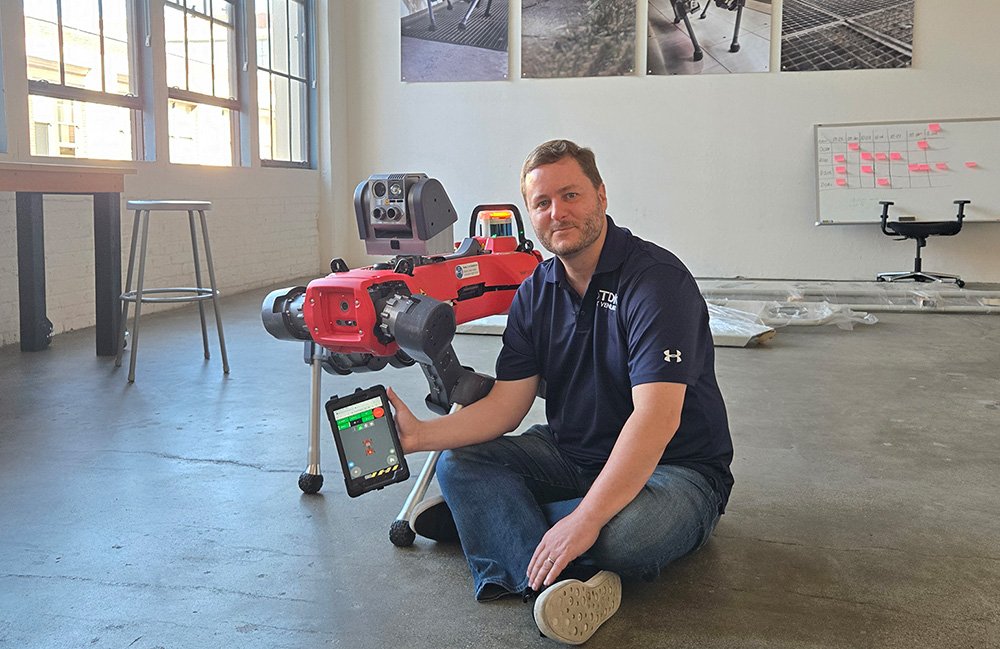
A robot designed for navigating cluttered industrial warehouses benefits from a quadruped structure that handles stairs and uneven terrain. A robot tasked with last-mile delivery thrives on a compact, wheeled chassis optimized for sidewalks and curbs. A logistics humanoid that connects directly to task-specific tools may outperform a general-purpose human hand for its intended workflow.
The principle is straightforward: start with the job, then design the body and the system around it. Maximum dexterity is not the goal—minimum sufficient dexterity for reliable job completion is. This design philosophy is already proving successful across diverse commercial deployments, from warehouse automation to facility inspection to package delivery.
## What Truly Matters in Physical AI Progress
The robotics community has made remarkable progress in what machines can do in controlled settings. The next frontier is not teaching robots new tricks. It is building the systemic reliability that transforms those tricks into trustworthy, repeatable work.
Progress should be measured by workflow completion rates, not by individual action success. Investors and operators should ask how often a robot finishes a full job without human intervention, how quickly it recovers from errors, and how its performance holds up as components wear and environments shift. These unglamorous questions—about uptime, maintenance cycles, cost per completed task, and diagnostic speed—matter far more at commercial scale than any single laboratory benchmark.
The era of impressive one-off demonstrations is giving way to an era of sustained, reliable physical capability. The companies and systems that thrive will be the ones that earn trust through consistent performance, not through the novelty of a single flawless motion.
## Frequently Asked Questions
**Q: Why is a 99% success rate not the same as 99% automation?**
A: Because automation involves completing a full sequence of actions, not just one. When a workflow requires many steps, each with a 99% success rate, the probability that all steps succeed drops significantly. Automation is measured by end-to-end workflow completion, not isolated action accuracy.
**Q: What does “minimum sufficient dexterity” mean in practice?**
A: It means designing a robot with only the capabilities needed to reliably complete its specific job—no more, no less. A delivery robot does not need a five-fingered hand; it needs wheels, navigation sensors, and a secure cargo compartment. Excess dexterity adds cost, complexity, and potential failure points without adding value.
**Q: How does deployment improve robotic systems?**
A: Real-world operation exposes failures and edge cases that laboratory testing cannot replicate. Each failure generates data that engineers use to refine software, sensing, control, and hardware. Over successive deployment cycles, the system becomes more reliable and more cost-effective.
**Q: Why is touch sensing important even when vision seems sufficient?**
A: Vision can tell a robot where an object is and what it looks like. Touch tells the robot whether it is slipping, whether contact force is appropriate, whether a part is properly seated, or whether a surface has changed. For many tasks, this additional layer of feedback is what enables reliable recovery from errors.
**Q: What should buyers of robotic systems prioritize over impressive specs?**
A: Buyers should prioritize workflow completion rates, recovery capabilities, maintenance intervals, cost per completed task, and performance stability over time. A robot that completes 95% of full workflows autonomously is more valuable than one that performs a single action flawlessly but cannot sustain that performance through a full workday.
**Q: Are humanoid robots the future of robotics?**
A: Humanoid robots have an important role in environments designed for human bodies. However, many commercial applications are better served by purpose-built forms—wheels, legs, tracks, or specialized end effectors—that are optimized for the specific task and environment rather than designed to look human.
## Conclusion
The future of robotic dexterity is not about building the most capable robot in a laboratory. It is about building systems that earn the trust of operators, customers, and businesses by delivering consistent, recoverable, and measurable results in the real world. Reliability at scale—measured in nines, not percentages—is what separates a proof of concept from a productive asset. The companies that understand this will define the next generation of physical AI, not the ones with the flashiest demo.
Thank you for reading.
