



# How Autonomous Fleets Are Transforming the Future of American Farming
The American agricultural sector faces an unprecedented convergence of challenges. A dwindling labor pool, unpredictable climate patterns, and escalating operational costs are reshaping the landscape of food production. Yet, the farms that have thrived for generations share a common trait: adaptability. From the replacement of draft animals with motorized equipment to the adoption of satellite-guided planting, each era brought tools that redefined what was possible.
Today, the next leap is here — and it is no longer theoretical. Across hundreds of thousands of acres in South Florida, autonomous tractors are already in the field, working the land in ways that would have been unimaginable just a decade ago.
## The Scale of a New Agricultural Reality
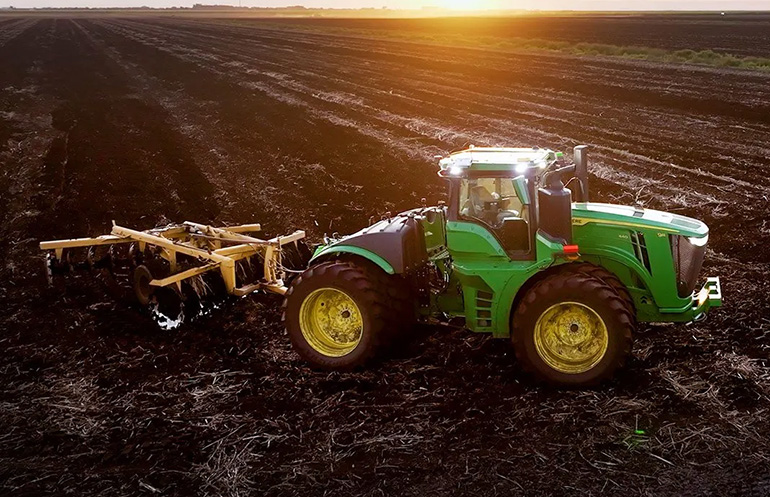
In what marks a historic milestone for the industry, the largest autonomous vehicle fleet ever deployed in American sugarcane farming is now operational across a vast agricultural footprint in the Sunshine State. This initiative, spanning multiple counties and encompassing land preparation and cultivation activities, is not a limited trial or a marketing exercise. It is a live, production-level deployment designed to deliver measurable outcomes on real farmland under real conditions.
The project brings together a South Florida-based sugar farming and processing company with deep roots in the region’s agricultural heritage and an equipment partner that understands the logistical demands of large-scale farming operations. Together, they are putting autonomous technology to work on one of the most operationally complex agricultural terrains in the country.
## The Technology Behind the Revolution
At the core of this transformation is an industrial fleet orchestration platform designed to manage dozens of vehicles simultaneously across enormous areas. The system is built to be equipment-agnostic, meaning it can be integrated onto existing tractor platforms without requiring a full replacement of machinery. This compatibility allows farms to retain investments in familiar equipment while upgrading their capabilities.
By interfacing with drive-by-wire systems already present in modern tractors, the technology effectively converts conventional machines into autonomous work vehicles. This approach drastically reduces the barrier to adoption, enabling farms to move from traditional operations to autonomous fleets without lengthy retooling periods.
The platform has been refined through more than a quarter-century of industrial deployment across mining, construction, logistics, and other demanding sectors. The lessons learned in those environments — particularly around reliability, safety, and real-time coordination — have directly informed the agricultural application.
## Addressing the Human Equation
Perhaps the most common concern raised by farmers considering autonomous technology is the impact on their workforce. The truth is that labor shortages, not technological curiosity, are driving much of the urgency behind adoption. When extreme weather events strike — such as the deep freezes that have caused billions of dollars in agricultural losses in recent years — the ability to respond quickly and continuously is the difference between a recoverable setback and a catastrophic loss.
Autonomous systems do not eliminate the need for skilled people. They change what that skilled work looks like. Rather than spending long hours in the most physically demanding seats of heavy machinery, operators transition into supervisory roles, monitoring and directing fleets from a centralized position. This shift reduces exposure to hazardous conditions and the cumulative physical strain that has historically shortened careers in agriculture.
The operators who have spent years understanding the soil, the equipment, and the rhythms of the land remain indispensable. Autonomy gives them the ability to extend their expertise across more ground, more hours, and more missions than ever before.
## From Sugarcane to a Broader Harvest
While the initial deployment focuses on land preparation for sugarcane cultivation, the long-term vision extends well beyond a single crop. Plans are already underway to expand the technology to sweet corn and green beans, demonstrating the platform’s versatility across different types of farming operations.
Over the coming years, the autonomous fleet will scale to cover the full 255,000-acre span of the farm’s holdings. The infrastructure, orchestration software, and safety systems that underpin the current deployment are designed to be replicated across new fields, new crops, and even new regions. The South Florida operation serves as a proof of viability that can be translated to farms across the country and around the world.
## A Toolkit Built for the Next Generation
Agriculture has always been a field defined by constraint — the limits of labor, the unpredictability of nature, and the sheer physical demands of working the land. What has never changed is the ingenuity of the people who work in it.
The next generation of farmers will need tools that amplify human knowledge rather than replace it. Autonomous fleet technology offers exactly that: a way to protect the expertise accumulated over generations while ensuring it can be applied more broadly, more consistently, and more safely than ever before. The goal is not to build a farm without people. It is to build a farm where people can thrive.
—
## Frequently Asked Questions (FAQ)
**Q: Is autonomous tractor technology just a pilot program, or is it actively in use?**
A: The technology is fully operational. The deployment in South Florida is a production-level implementation working across hundreds of thousands of acres, not a limited pilot or proof of concept.
**Q: Can autonomous systems be added to tractors that farms already own?**
A: Yes. The fleet orchestration platform is manufacturer-agnostic and integrates with existing drive-by-wire systems on modern tractors. This means farms do not need to replace their current equipment to begin using autonomous capabilities.
**Q: What happens to farm workers when autonomous tractors are introduced?**
A: Rather than eliminating jobs, the technology transforms them. Tractor operators are retrained and retained in higher-skill supervisory roles where they manage autonomous fleets. This reduces physical risk and career strain while preserving institutional knowledge.
**Q: How does autonomy help during extreme weather events?**
A: Weather cannot be controlled, but autonomy removes the labor bottleneck that turns a weather event into an economic crisis. When a freeze or other emergency strikes, autonomous tractors can operate continuously regardless of crew availability or time of day.
**Q: Is this technology only useful for sugarcane farming?**
A: No. While the current deployment focuses on sugarcane, the platform is being expanded to crops like sweet corn and green beans. The underlying orchestration and safety systems are designed to be transferable across crop types, geographies, and farm sizes.
**Q: How long has this type of autonomous technology been in development?**
A: The core platform has been deployed in industrial environments for over 25 years, across sectors such as mining, construction, and logistics. Agricultural applications are a direct extension of that mature technology base.
**Q: What is the ultimate goal of large-scale autonomous farming?**
A: The goal is to make farming more viable for the next generation by extending human expertise, improving consistency, reducing physical risk, and ensuring that food production can keep pace with growing national demand.
—
## Conclusion
The transformation of American agriculture through autonomous technology is no longer on the horizon — it is in the soil. The deployment across South Florida’s sugarcane fields demonstrates that autonomous fleets can operate at the scale and complexity that real-world farming demands. By pairing proven orchestration platforms with the knowledge of experienced operators and equipment partners, this initiative is setting a precedent that other agricultural operations can follow.
The challenges ahead remain significant — from expanding into new crop types to scaling across even larger footprints — but the foundation is already in place. The farms that embrace these tools today are positioning themselves to feed the nation tomorrow, with safer workplaces and more resilient operations.
The next chapter of American agriculture is being written now, one autonomous field at a time.
Thank you for reading
