



# How Agricultural Drone Companies Are Adapting to a Shifting Regulatory Landscape
**The push for domestic manufacturing in robotics has placed agricultural drone developers at the center of a rapidly evolving policy debate — and one Texas-based company says it was ready long before the rules changed.**
When regulators in Washington began tightening restrictions on foreign-made robotics imports, it sent ripples through industries that had long relied on global supply chains. Among those affected were makers of unmanned aerial vehicles used in crop management and precision agriculture. One company, however, positioned itself well ahead of the curve by prioritizing American-built components years before such considerations became a legal requirement.
## A Vision Rooted in Self-Reliance
Founded in 2015 in Richmond, Texas, the company behind Hylio agricultural drones set out with a clear mission: reduce dependence on overseas manufacturing. At the time, China dominated the consumer and commercial drone parts market, leaving domestic innovators with few alternatives. The company’s leadership recognized this vulnerability early and made a deliberate choice to source and manufacture as many components as possible within the United States.
“When you’re building hardware from scratch, you have to think about where every piece comes from,” a company representative explained. “If we couldn’t make it ourselves, the next step was finding partners in allied nations or domestic suppliers who could deliver the quality we needed.”
That philosophy, built into the company’s DNA over a decade ago, now aligns closely with federal efforts to establish a fully independent drone supply chain on U.S. soil. While competitors scrambled to adapt to new import restrictions, Hylio’s operations remained largely unaffected.
## Precision Spraying Through Digital Technology
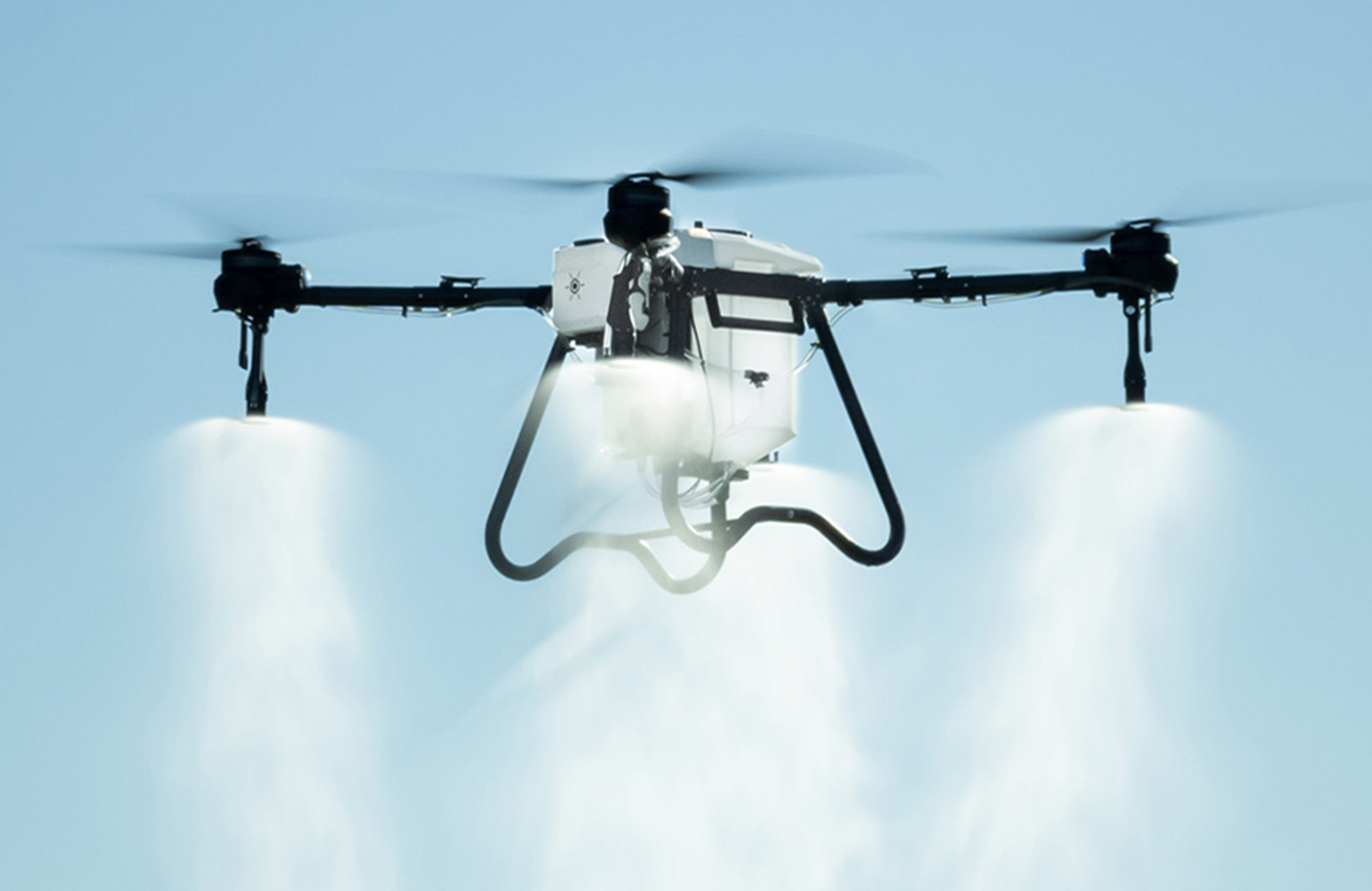
Hylio’s product lineup includes a range of fixed-wing and multirotor drones designed for agricultural spraying applications. Each system incorporates digital flowmeters that measure and dispense liquid chemicals — such as fertilizers, pesticides, and herbicides — at exact dosages. This level of precision allows operators to treat specific areas of a field without wasting inputs or oversaturating crops.
The technology is particularly significant in an industry where input costs have risen sharply while commodity prices have struggled to keep pace.
## The Financial Squeeze on Modern Agriculture
American farmers are facing a compound crisis. Over recent years, prices for staple crops including grain, soybeans, and wheat have fallen dramatically — in some cases declining by more than half. Meanwhile, the cost of essential farming inputs like fertilizers, pesticides, and herbicides has climbed steeply, driven by global supply chain disruptions stemming from geopolitical conflicts, pandemic-era logistics bottlenecks, and international trade tensions.
Farmers are caught between shrinking revenue and rising expenses. For many, the math simply doesn’t add up.
Agricultural drone proponents argue that precision application technology offers a path forward. By targeting only the areas of a field that need treatment, rather than blanketing entire plots, farmers can stretch limited budgets further and achieve equal or better crop yields with fewer chemicals.
## Navigating a Complex Web of Regulations
Operating a commercial drone in agriculture today requires users to comply with a patchwork of federal and local rules. Depending on the operation, pilots may need authorization from multiple agencies, including those overseeing aviation and radio frequency communications. The regulatory environment continues to shift, and staying current can be a full-time job.
Industry leaders encourage prospective drone operators to engage openly with their equipment providers before making a purchase. Key questions should include where the drone and its components are manufactured, which licenses are required for specific operations, and whether the provider offers resources to guide customers through the permitting process.
Experienced users who have transitioned from traditional crop dusting via helicopter or fixed-wing aircraft tend to adapt more quickly. Their familiarity with safety protocols, standard operating procedures, and disciplined workflows translates directly to efficient drone deployment.
## A Phased Approach to Adoption
For farmers considering drone technology, experts recommend a step-by-step rollout rather than an overnight transformation. Starting with the most challenging or hard-to-reach sections of a property allows operators to build confidence and refine their techniques before expanding coverage. As fleets grow and operators gain experience, they can incrementally replace traditional ground-based application methods across larger portions of their land.
## FAQ
**Q: Why are drone import restrictions significant for the agricultural sector?**
A: Many agricultural drones and their critical components are manufactured overseas. Restrictions on imports can disrupt supply chains, increase costs, and limit the availability of equipment for farmers who depend on drone technology for crop management.
**Q: What are digital flowmeters, and why do they matter in agricultural drones?**
A: Digital flowmeters are sensors that measure and control the rate at which liquid chemicals are dispensed during spraying operations. They enable precise, targeted application — reducing waste, lowering chemical costs, and minimizing environmental impact.
**Q: What licenses or permits are typically needed to operate agricultural drones commercially?**
A: Operators may need to obtain authorization from aviation regulatory bodies, secure radio frequency licenses, and comply with local or state-level rules governing aerial application. Requirements vary by region and should be confirmed with relevant authorities and equipment providers before operations begin.
**Q: How can farmers offset rising input costs with drone technology?**
A: Precision spraying enabled by drones allows farmers to apply fertilizers, pesticides, and herbicides only where needed. This targeted approach reduces the total volume of inputs required per acre, helping maintain or improve yields while lowering overall spending.
**Q: Is it better for farmers to adopt drone technology all at once or gradually?**
A: A phased rollout is generally recommended. Starting with a small portion of land gives operators time to learn the technology, establish standard operating procedures, and build fleet capacity before scaling up to full coverage.
## Conclusion
The intersection of drone technology, agricultural economics, and national policy is reshaping farming in profound ways. Companies that anticipated regulatory and supply chain shifts years ago are proving that domestic manufacturing is not only possible but advantageous. For farmers under financial pressure, precision agriculture tools like drones offer a practical way to do more with less — applying fewer resources with greater accuracy to protect both crops and margins. As the regulatory landscape continues to evolve, those who plan carefully and partner with informed technology providers will be best positioned to thrive.
Thank you for reading
