



# When Abandoned Domains Turn Into Attack Surfaces: How Client-Side Code Becomes Your Organization’s Blind Spot
The internet has a habit of quietly forgetting the infrastructure it once relied on. Companies fold, projects get sunset, and content delivery networks are decommissioned — but the websites that once pulled resources from them don’t get a memo. Hard-coded references to long-dead hostnames persist across thousands of pages, buried in scripts, documentation, and archived repositories. When someone eventually registers those dormant domains and points them to new infrastructure, the consequences can be severe, and most security teams never see it coming.
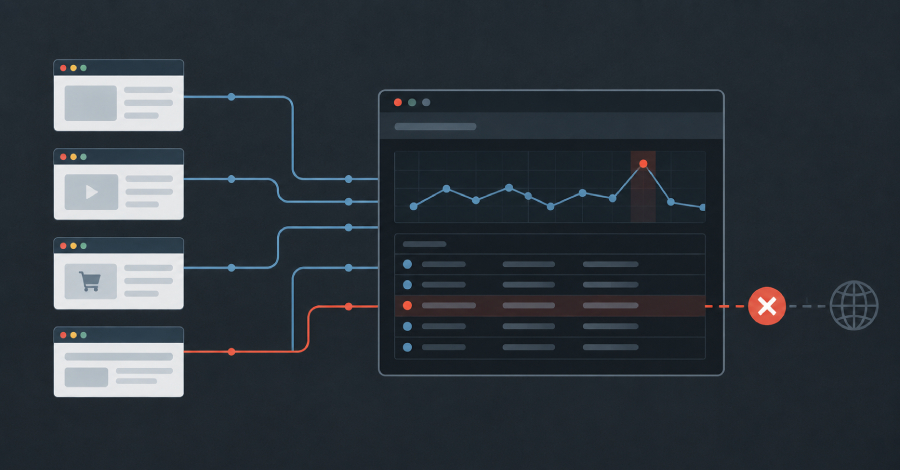
This isn’t a far-fetched scenario. Real-world incidents have demonstrated how re-registered CDN domains and third-party JavaScript endpoints can suddenly begin serving different content to visitors — with no breach on the organization’s own servers and no change to their deployed code. The attack surface doesn’t live where most security tooling looks.
## The Hidden Risk of Hard-Coded Third-Party Dependencies
Organizations routinely embed scripts from external providers to power analytics, advertising, payment flows, and user experience enhancements. These dependencies are treated as trusted by default. But the trust model assumes the third-party endpoint will remain under its original operator’s control indefinitely — an assumption that rarely survives contact with reality.
When a domain expires and gets scooped up by someone else, every website that still references it now fetches content from an entirely different server. That server can serve anything: benign media, intrusive advertisements, or malicious payloads designed to skim payment card data, hijack sessions, or plant malware on visitors’ devices.
The insidious part is the delivery mechanism. A single `