



# AI-Assisted Hackers Breach OpenAI Infrastructure Through Forum Vulnerability in Under 72 Hours
A security research team leveraged artificial intelligence to discover and exploit two interconnected vulnerabilities, gaining administrative access to OpenAI’s internal systems within three days. The operation, which has since prompted fixes and a financial reward, highlights both the accelerating power of AI in cybersecurity research and the persistent risks created by outdated software components.
## The Attack Chain: From Public Forum to Internal Codebase
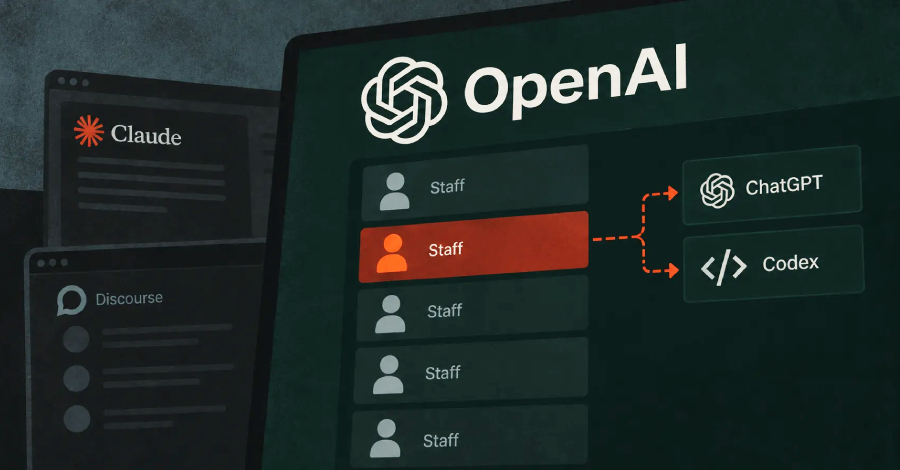
The breach started with a memory corruption flaw in the image processing library that powers image uploads on a widely used open-source discussion platform. By uploading a specially crafted image file, the researchers were able to crash the server and, through additional memory-leak techniques, achieve remote code execution on the machine hosting the public help forum.
But the real escalation came from how OpenAI handled authentication. The same platform offered a “Sign in with OpenAI” option — a single sign-on (SSO) mechanism shared with employee accounts for internal tools like ChatGPT and Codex. Because the forum server and the authentication system were linked through this shared login infrastructure, the researchers found that compromising the forum gave them a foothold into staff accounts.
From there, the team moved laterally, eventually reaching an internal OpenAI code repository hosted on GitHub. The access was demonstrated through a single, harmless pull request — no source code was copied, no data was exfiltrated, and no customer information was touched. The entire operation took less than three days from initial discovery to proven access.
## The Software Flaw at the Center
The initial entry point traces back to how web applications process modern image formats. Many platforms, including the forum in question, rely on a library called libheif to decode HEIC and HEIF image files — formats commonly generated by mobile devices. A vulnerability in this library allowed specially crafted images to corrupt server memory in ways that, when combined with techniques to defeat address space layout randomization (ASLR), could be converted into working code execution.
The vulnerability exists in libheif version 1.19.7 and earlier. Although a fix was released in version 1.22.0 back in May of this year, the affected forum server was still running the outdated version because its underlying Linux distribution had not yet packaged the update. This gap between upstream patches and distribution-level deployments remains a common attack vector across the tech industry.
## The Role of Artificial Intelligence in the Research
What distinguishes this operation from traditional penetration testing is the heavy reliance on AI models throughout the process. The researchers first attempted the exploit chain using an earlier version of Anthropic’s Claude model but struggled to produce a reliable attack once standard memory protections were active.
When Anthropic released Claude Opus 5 in late July, the team switched models and found that a working exploit was generated within hours. The researchers emphasized that the AI was not operating autonomously — skilled human guidance and direction remained essential throughout the engagement. They also noted that safety guardrails in the newer model were circumvented by framing the work as a practice exercise on a controlled test server.
This development aligns with a broader trend observed across the cybersecurity community this year: advanced AI models are dramatically reducing both the time and expertise required to conduct sophisticated offensive security work. Anthropic has acknowledged that threat actors, including criminal and state-sponsored groups, are already deploying its models for real-world intrusions.
## A Broader Campaign with Wider Implications
The OpenAI breach was part of a larger research initiative the team conducted over approximately two months, targeting image-decoding vulnerabilities across a range of software products used by major technology companies. The campaign reportedly cost less than $3,000 in AI usage and identified similar class-of-vulnerability flaws affecting other well-known platforms.
Some of the claims from this broader effort have been independently confirmed, including a vulnerability in Vercel’s Next.js framework and a code-execution issue in a library used by Meta’s products. However, the full scope of impact across all targeted services has not been independently verified by outside parties.
The campaign also raises important questions about the security posture of services that accept user-uploaded images. Any organization processing HEIC, HEIF, or AVIF files through outdated versions of image libraries may be exposed to similar risks.
## Frequently Asked Questions
**Q: Was this a real cyberattack, or was it authorized?**
A: This was authorized security research. The team discovered the vulnerabilities, reported them to OpenAI, and demonstrated the access with a harmless pull request. No malicious activity was carried out, and no data was compromised.
**Q: Did OpenAI confirm the details of the breach?**
A: OpenAI acknowledged the findings through its bug bounty payment and the deployment of a fix. However, the company did not publicly describe the specific login vulnerability that allowed forum access to escalate to employee accounts.
**Q: What was the financial outcome of the research?**
A: OpenAI awarded the research team a $6,500 bounty in September. The company noted that the award recognized the findings on its side rather than the actions performed against the forum platform.
**Q: Are users’ personal data at risk from this incident?**
A: Based on the available information, no customer data was accessed or exposed. The researchers deliberately limited their activity to demonstrating the technical possibility of the breach without interacting with user information.
**Q: What should organizations do to protect themselves?**
A: Key steps include updating image-processing libraries to the latest patched versions, disabling decoding of untrusted HEIF and AVIF images where unnecessary, running image processing in isolated environments, and reviewing single sign-on configurations to limit the blast radius of any single compromised service.
**Q: Could this type of attack have been carried out without AI assistance?**
A: While traditional exploitation of memory corruption flaws is possible without AI, the researchers noted that earlier attempts with a prior model version failed under standard protections. AI significantly accelerated the exploit development process and reduced the specialized expertise required.
## Conclusion
This incident serves as a striking demonstration of how interconnected systems can create unexpected attack paths. A vulnerability in an image library, combined with a shared authentication mechanism, was enough to bridge the gap between a public-facing forum and an organization’s most sensitive internal codebase — all within a matter of days.
It also underscores a shift in the cybersecurity landscape. AI models are no longer just tools for answering questions; they are increasingly capable collaborators in the discovery and exploitation of software vulnerabilities. Organizations must adapt by tightening their software supply chains, patching dependencies more aggressively, and rethinking how authentication boundaries are enforced across services.
As AI-assisted security research becomes more commonplace, the line between defense and offense grows thinner — making timely patches, rigorous access controls, and continuous monitoring more critical than ever.
Thank you for reading
