



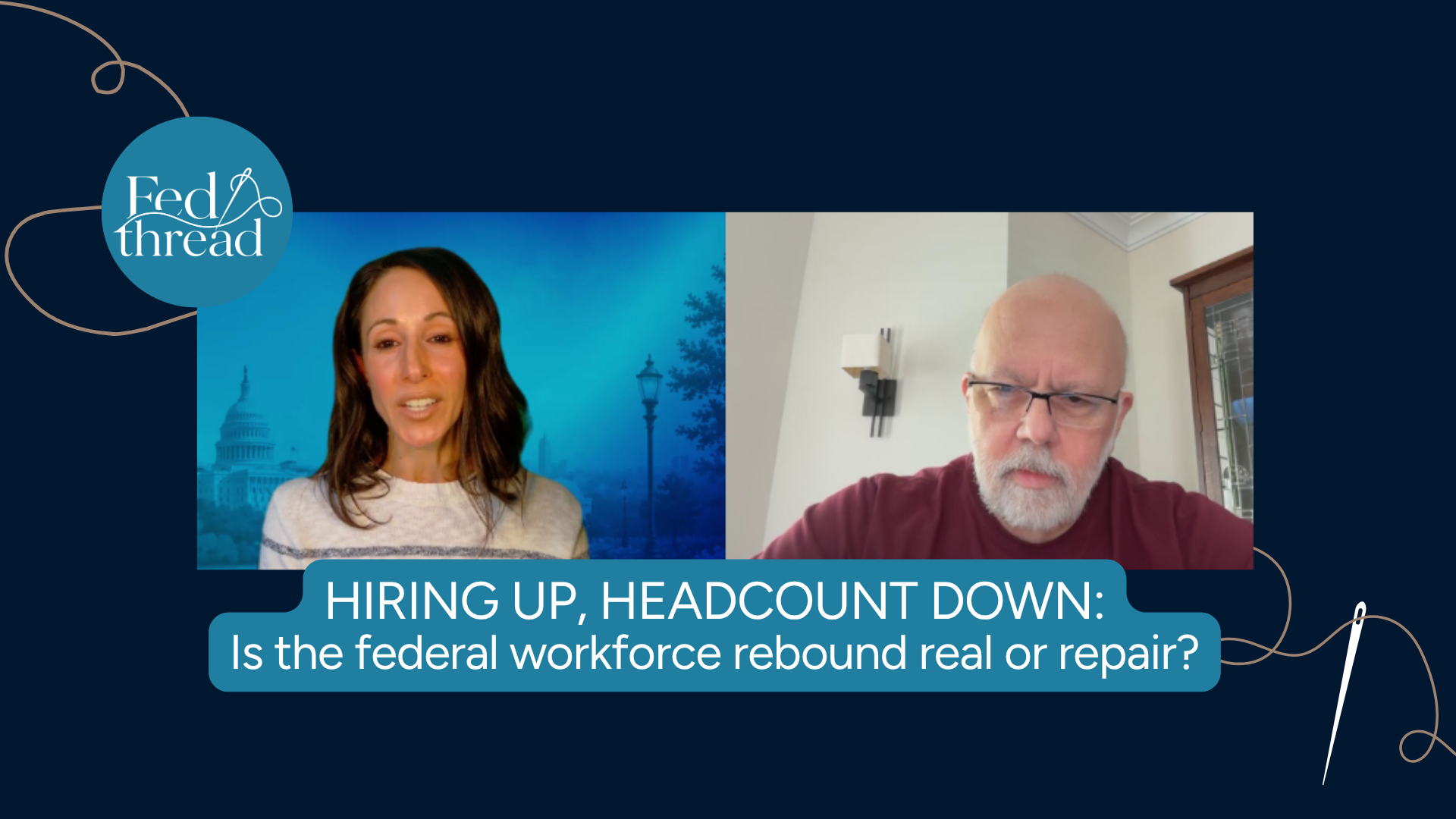
# The Paradox of Federal Workforce Growth: Why Hiring More Isn’t Fixing the Problem
The numbers look promising at first glance. Federal agencies across the government are posting more job openings than ever before, with recruitment rates jumping significantly compared to the previous year. But a closer look at the data reveals a troubling reality: the government is still hemorrhaging talent faster than it can bring in new blood.
## A Shaky Foundation
The current hiring surge didn’t emerge from a position of strength. It came off the back of one of the most dramatic workforce contractions in recent federal history. Years of deferred resignations, aggressive reductions in force, and politically motivated departures carved deep holes in agencies across the board. What looks like a 26 percent rebound is largely recovery from a crater — not evidence of sustainable growth.
When you examine the occupational breakdown, the picture becomes even more sobering. Out of 47 distinct job categories where hiring has accelerated, 45 still employ fewer people than they did at the close of last year. The gap between “more hiring happening” and “fewer people employed” tells a story of a system struggling to catch its own breath.
## The “Oops” Job Phenomenon
Many of the positions now being filled aren’t additions — they’re corrections. Former senior human capital officials describe them as corrective hires, positions that were axed too aggressively and had to be restored once agencies realized the work still needed doing. These roles often fall within immigration enforcement, border security, and other mission-critical functions at the Department of Homeland Security and related agencies.
While filling these gaps is necessary, it raises a fundamental question: what happens after the emergency repairs are complete? The federal workforce has shed decades of institutional knowledge, and you can’t simply refill those positions with a fresh résumé and expect seamless continuity.
## The Hiring Machine Itself Is Broken
Perhaps the most irony-laden challenge facing the government right now is that the people responsible for hiring have been cut alongside everyone else. Estimates suggest the federal HR workforce has shrunk by roughly 15 percent, leaving fewer professionals to manage increasingly complex recruitment pipelines.
The situation is complicated by a skills gap that can’t be bridged simply by importing private-sector talent. Federal hiring operates under a web of classification rules, labor relations frameworks, and regulatory requirements that bear little resemblance to corporate recruitment practices. New HR professionals typically need years of on-the-job experience before they can navigate this environment effectively.
Compounding the problem, many of the robust training pipelines that once developed federal HR expertise have been dismantled. Some newer HR staff have become overly dependent on automated applicant-tracking systems, trusting the technology’s output without the experience needed to question its validity. The result? A flood of algorithm-approved candidates that hiring managers routinely reject as unqualified — wasting time and deepening frustration on all sides.
## Repair or Reinvention?
Opinions differ on whether the current moment represents a temporary fix or a permanent reshaping. What’s clear is that the way the reductions were executed has inflicted lasting damage on government operations. But returning to the pre-crisis status quo isn’t necessarily the answer either — there were recognized inefficiencies in workforce sizing and hiring processes before the cuts began.
The real opportunity lies in reimagining how government recruits, evaluates, and retains talent. That means simplifying a federal hiring system widely regarded as unnecessarily convoluted. In the private sector, the path from job posting to signed offer is relatively straightforward. In the federal government, agencies juggle dozens of different hiring mechanisms, each carrying its own procedural requirements, often resulting in delays that push out stronger candidates while elevating less-qualified ones through bureaucratic technicalities.
## How Federal Employees Can Read the Signs
For government workers anxious about their own job security amid all this churn, there are some practical ways to gauge what might be coming:
– **Follow the budget proposals.** An agency’s funding request reveals far more than a single number — it shows which programs are being expanded, which are being scaled back, and where leadership sees the agency heading.
– **Study the president’s budget documents.** The supporting materials often contain granular details about expected agency activities and priorities, assuming congressional approval.
– **Watch the job boards.** If your occupational field is still being recruited for, that’s a signal. If hiring in your area has gone quiet, that silence speaks volumes.
– **Listen to leadership publicly.** Speeches, testimony, and official statements from agency heads frequently telegraph strategic intentions.
– **Beware of relocation orders.** Moving a position to another city or state can functionally eliminate a role for anyone unwilling or unable to follow, even if the job technically still exists.
None of these strategies offer guarantees, but together they provide federal employees with the most useful early-warning system available.
—
## Frequently Asked Questions
**Q: Is the federal workforce actually growing right now?**
A: Not in overall terms. While hiring rates have increased substantially, the government is still losing more employees than it is bringing on board, meaning the net workforce continues to shrink.
**Q: Why can’t the government just hire faster to make up for losses?**
A: Federal hiring is slowed by a complex web of rules, multiple hiring mechanisms, and a depleted HR workforce. Additionally, the loss of institutional expertise makes it harder to recruit effectively.
**Q: What kinds of jobs are being hired for most aggressively?**
A: Immigration, border security, and related homeland defense positions are among the most active recruitment areas, particularly within DHS and its component agencies.
**Q: Is private-sector HR experience useful in federal hiring?**
A: It transfers only partially. Federal classification, labor relations, and hiring regulations operate very differently from private-sector practices, requiring significant specialized training.
**Q: Can federal employees do anything to prepare for potential workforce changes?**
A: Yes. Monitoring agency budget requests, tracking job postings in their field, paying attention to leadership communications, and watching for relocation orders can all provide early signals about what may be ahead.
**Q: Does the current hiring rebound mean the government is undoing its past cuts?**
A: In many cases, yes — much of the new hiring is corrective in nature, restoring positions that were cut too deeply. However, there is also an element of reshaping the workforce to align with current policy priorities.
—
## Conclusion
The federal government finds itself in a precarious position — appearing to grow on paper while quietly losing ground in practice. Rebuilding a workforce isn’t just about filling vacancies; it’s about restoring the deep wells of expertise, institutional memory, and operational capacity that take years to develop. Until the systems responsible for recruitment, evaluation, and retention are themselves reformed, the cycle of boom-and-bust hiring is likely to continue. The path forward demands not just more hires, but smarter, more streamlined processes that can attract and keep the talent government needs to serve the public effectively.
Thank you for reading
