



Big Tech has come to town. Billion-dollar companies are in a race to build “hyperscale” data centers to fuel their push to power artificial intelligence and cloud computing technologies.
The rural residents that would live next to these projects are marshalling future resistance to them.
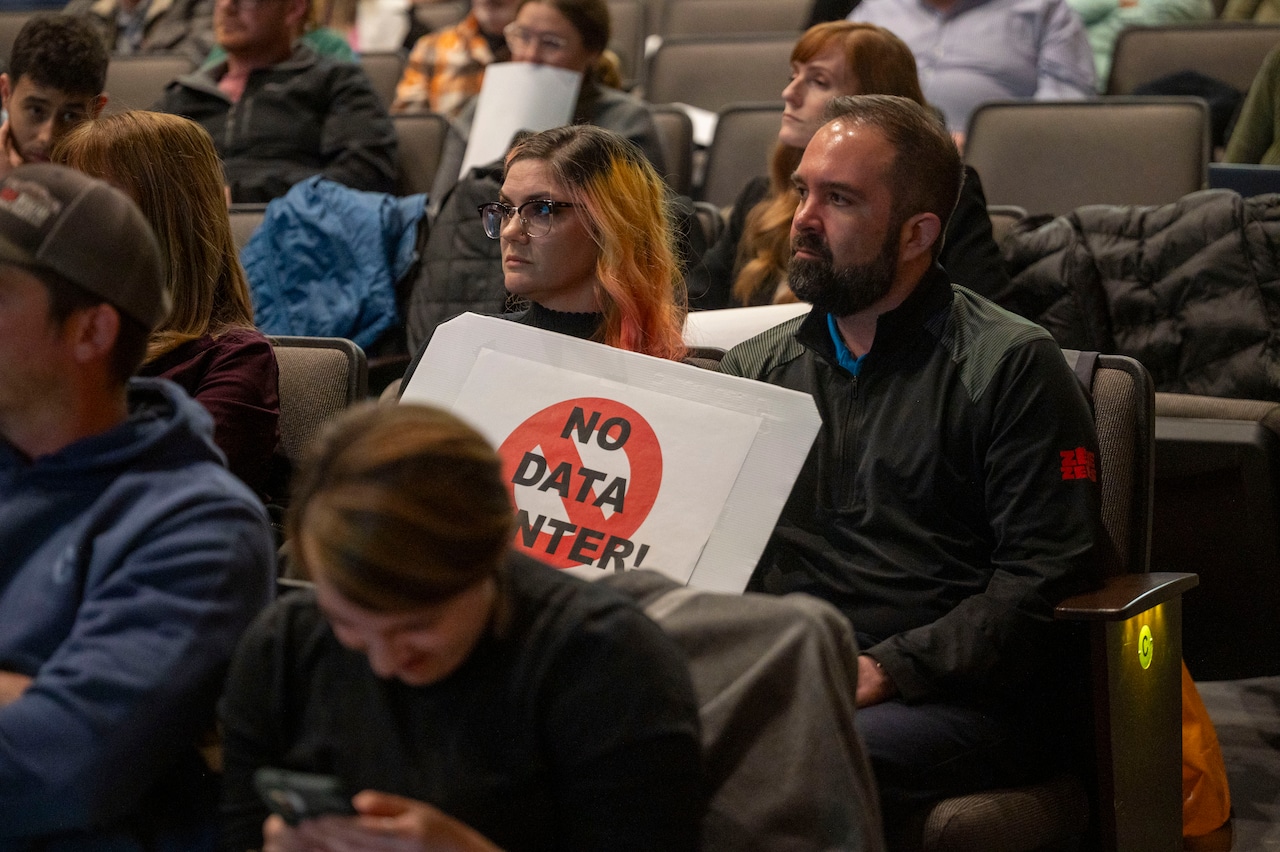
Southeast Michigan communities and their elected officials are grappling with the breakneck speed at which tech giants — the likes of OpenAI, Oracle and Meta — are attempting to push data center projects towards approval. But residents are pushing back by mobilizing opposition, packing local board meetings and urging local and state officials to do anything they can to stop – or at least slow down – the momentum.
One factor frustrating residents: the tech giants powering projects stay behind the scenes of public discourse. Development teams, meanwhile, push to rezone land without publicly disclosing who would use the data centers until they decide to do so.
Developers promise community benefits, tax revenue and mitigations to negative impacts on neighbors and the environment. Many residents are not convinced.
Predominant themes of the opposition revolve around concerns about water usage and electricity rates, environmental and groundwater quality and the loss of communities’ rural characters.
In an emerging new world, local rural communities are trying different approaches to respond to the push to transform thousands of acres of Michigan’s rural landscape with warehouses for data servers and storage.
Saline Township
Saline Township is in the national spotlight as ChatGPT-creator OpenAI and multinational tech firm Oracle plan to construct a 2.2-million-square-foot data center campus off West Michigan Avenue.
Resistance has only begun, as residents berated township officials for agreeing quickly to settle a lawsuit with data center developer Related Digital and landowners instead of fighting it. Township officials there are facing heat even though they initially denied the firm’s request to rezone the land. It left township officials feeling like their hands were tied due to the cost of litigation.
Roughly 45 people from multiple south Washtenaw County townships met in a Saline Township barn Thursday evening, Nov. 20 to strategize the opposition’s path forward.
“I think it’s an uphill trudge, right?” said Jeff Rechten, one of the main residents who spoke Thursday. “But I think that there’s still a path to trudge on.”
Rechten pointed to possible legal solutions, such as hiring their own legal team, but noted it’s difficult to pursue that route without financial backing.

Rallies and protests, including one tentatively for Dec. 1 in downtown Saline, are being organized in advance of a Michigan Public Service Commission virtual hearing Wednesday, Dec. 3. It would take input on special contracts DTE plans to power the 1.4-gigawatt demand from the data center, more than the draw from a million homes.
Industry boosters brush aside those concerns, pointing to assurances from DTE Energy that the project’s big costs won’t increase utility bills, design choices that minimize water usage and a substantial influx in tax revenue and jobs from the more than $7 billion investment.
Some advocates and state regulators say the new demand could be a good thing. DTE projects hundreds of millions in affordability benefits for other customers, as it spreads the fixed costs of running the grid over a larger volume of sales.

Augusta Township
Opponents could be in a better position to stop an undisclosed tech giant from setting up shop in nearby Augusta Township, even though the township board there voted to approve a rezoning for a data center requested by Thor Equities.
More than 800 valid signatures were collected for a local citizen group’s ballot petition to allow voters in Augusta Township to decide whether to rezone about 522 acres of land just outside Milan for a computer data center.
It is expected to appear on the November 2026 ballot for voters in the township, allowing local residents to decide the fate of the rezoning.

Howell Township
In another rural community north of Ann Arbor, hundreds of impassioned residents packed Howell High School early this week for meetings related to Facebook and Instagram owner Meta’s plan of a data center campus on more than 1,000 acres of mostly agricultural land in Howell Township.
The development team has not yet publicly disclosed what Big Tech company they are working for, but a township official confirmed the company’s involvement.
“We’ve heard over and over again from this developer that they are committed to being a good neighbor and doing what’s right,” Lauren Prebenda said during a series of fiery public comments at a Howell Township Board of Trustees meeting Thursday, Nov. 20.
“A good neighbor doesn’t hide their identity and pressure local officials to sign (non-disclosure agreements) to keep information from the public,” Prebenda said.
Residents are urging the township board to reject rezoning the land, with some calling for it to be put on a future ballot for local residents to decide.
The township board voted unanimously to enact a moratorium Thursday, Nov. 20, to pause for six months any consideration or approval of data centers. It will give them time to investigate what local regulations they might want to put in place that would govern data center proposals. Township planners and the Livingston County Planning Commission have recommended the board deny the rezoning.
But the moratorium will not stop them from voting whether to approve, deny or postpone the rezoning request already on the table, which could happen at a meeting set for Monday, Dec. 8.
Monroe County
A data center proposal in neighboring Monroe County is also sparking debate among homeowners in Frenchtown Township.
A large group of Frenchtown Township residents attended an informational meeting to discuss the 200-acre project being proposed by Cloverleaf, a U.S.-based developer that focuses on clean energy and data centers. The project is proposed on a former golf course no longer in use near I-75 and North Dixie Highway in the township.
Pittsfield Township
While Pittsfield Township has not received any proposals from tech giants, local officials are considering creating local regulations to govern where data centers of differing sizes could be located with a bevy of rules and regulations.
The Pittsfield Board of Trustees green-lit a six-month moratorium in the afternoon Thursday, Nov. 20, hours before planning commissioners were originally slated to host a public hearing on an early draft of a potential ordinance. The hearing itself was canceled six days prior.
Ben Carlisle, planner for Pittsfield Township, reiterated a point emphasized by township board members — that the moratorium and cautious approach to the ordinance was to protect residents, particularly as data center controversies erupt across Michigan and the U.S.
“We’re really trying to get ahead of this,” Carlisle said, “and we’re going to be proactive.”
“A moratorium is better than no legal position,” Jim Miller said, acknowledging communities that do not have anything on the books concerning data centers or try to ban them can face legal action from would-be developers.
“Leaving it blank puts you in the position of Saline Township,” he said.
Want more Ann Arbor-area news? Bookmark the local Ann Arbor news page.
If you purchase a product or register for an account through a link on our site, we may receive compensation. By using this site, you consent to our User Agreement and agree that your clicks, interactions, and personal information may be collected, recorded, and/or stored by us and social media and other third-party partners in accordance with our Privacy Policy.
