



Follow ZDNET: Add us as a preferred source on Google.
ZDNET’s key takeaways
- A simple restart or power cycle can resolve many performance delays on Roku devices.
- Updating or reinstalling specific apps helps eliminate bugs and sluggish behavior.
- Always verify your network connection before assuming the issue lies with your Wi-Fi router.
I use several Roku TVs and accessories—like soundbars and speakers—and generally think highly of the platform. That said, I’ll be the first to admit that my Roku occasionally misbehaves. It’s especially frustrating when apps stall during loading, menus respond slowly, or screens freeze so long that I’m tempted to throw the remote at the television. When it gets to that point, it’s definitely time to troubleshoot.
But what’s actually causing the problem—is it my Roku or my Wi-Fi?
Also: Every Roku user should know these 15+ shortcuts
I’m aware that Roku devices can accumulate clutter from app data, experience issues from buggy apps, fall behind on software updates, suffer from limited memory, or simply need a fresh reboot after being left running too long. So rather than immediately unplugging my router or blaming internet connectivity, I start with a few straightforward fixes.
1. Restart or reboot from settings
This is always my first step because it resolves an unexpectedly high number of unexpected Roku glitches. A full system reboot refreshes the device while preserving all your apps, login details, and preferences. It’s also not the same as powering the TV off with the remote—thanks to Roku’s quick-start feature, parts of the system continue running in the background even when “off.”
Also: I replaced my bedroom TV with this $170 Roku projector
To perform a complete restart on your Roku:
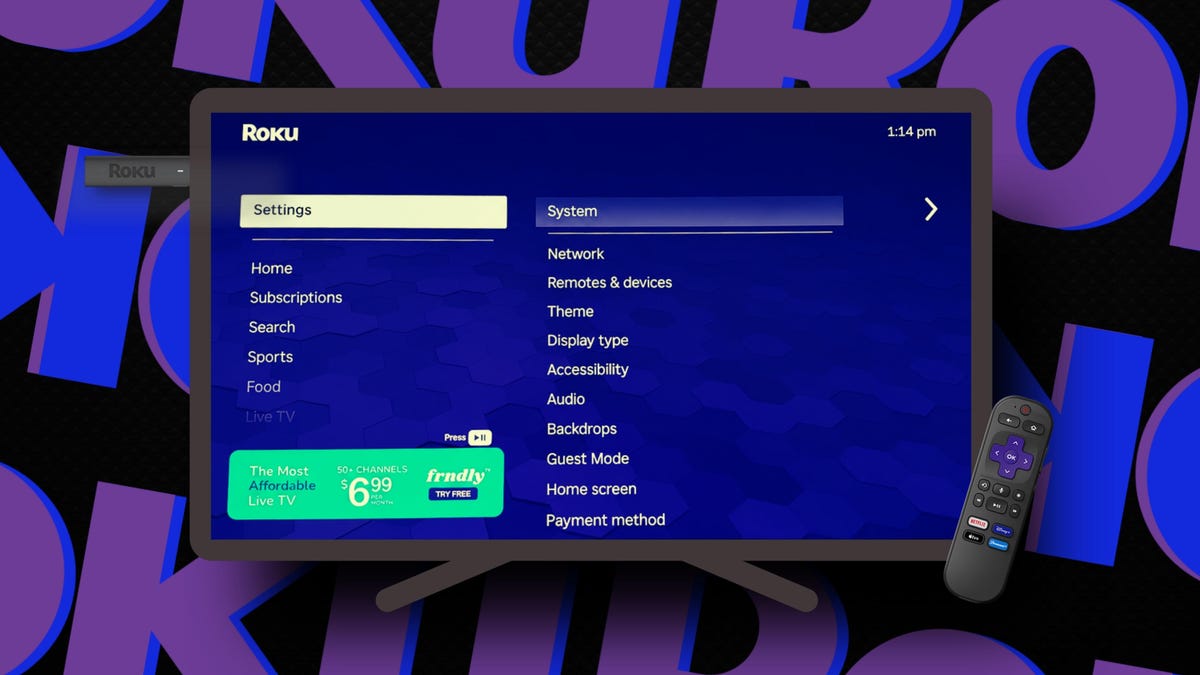
- Navigate to Settings.
- Choose System.
- Select Power—if available.
- Pick System restart.
- Allow the device to reboot fully.
If you don’t see a Power option, try navigating to Settings > System > System restart instead.
2. Unplug for a full power cycle
If a streaming app is completely unresponsive or the Roku itself is frozen, I bypass the settings menu entirely and just pull the power cord from the device or TV. This forces a complete shutdown and initiates what’s known as a full power cycle.
To perform a power cycle:
- Disconnect your Roku device or Roku TV from its power source.
- Wait a minimum of 30 seconds.
- Reconnect the power and wait until the system fully restarts before launching any apps.
3. Clear cache (soft reset)
When apps feel sluggish or the interface lags noticeably, I clear out accumulated temporary data.
Also: How to clear your Roku TV cache (and why it’s critical)
Roku stores temporary files—called cache—to speed up app loading, boost performance, and reduce data usage. However, excess cache can build up over time and actually hinder performance. While Roku doesn’t include a direct “clear cache” option in its settings, there’s a remote shortcut that triggers a soft reset and clears cached data automatically.
To clear the cache on your Roku:
- Press the Home button five times rapidly.
- Press Up once.
- Press Rewind two times.
- Press Fast Forward two times.
- Be patient—your Roku screen may briefly freeze before restarting.
This method works with both the physical remote and the Roku mobile app’s virtual remote.
4. Check for a Roku OS update
While Roku devices typically update automatically, I still manually verify the software version periodically. Pending updates often contain important fixes for bugs, compatibility issues, security vulnerabilities, and overall performance improvements.
Also: Lost your Roku remote? Here are four ways you can still control your TV
To manually check for updates:
- Go to Settings.
- Select System.
- Choose Software update.
- Click Check now.
- Install any available updates, then let the Roku restart.
5. Remove and reinstall glitchy apps
If only a single app behaves poorly—crashing, freezing, or getting stuck—the issue might be isolated rather than system-wide. In that case, removing and reinstalling the app can wipe corrupt data, trigger a fresh download, and ensure you’re running the latest version.
Also: Google TV or Roku: Which is actually worth your time?
To remove and reinstall an app:
- Highlight the problematic app.
- Press the Star button on your remote.
- Choose Remove app, then confirm.
- Open the Streaming Store and search for the app again.
- Select Add app to reinstall it.
- Launch the app and sign back in.
6. Update apps
You may have noticed that apps offer an update option alongside removal. Although reinstalling gives you the newest version automatically, it requires you to log back in. If you’d like to skip that step, try updating the app first. But if it’s already current and still malfunctioning, go ahead and remove and reinstall it.
To update an app:
- Highlight the app.
- Press the Star button on your remote.
- Select Update app or Check for updates.
7. Delete old apps
Roku devices come with limited internal storage and memory. Over the years, accumulated streaming apps, free experimental channels, and trial subscriptions can eat into available resources, slowing everything down. When that happens, it’s time to declutter.
Also: The best streaming deals: Paramount+, Roku sticks, more
To remove unused apps:
- Locate an app you no longer need.
- Press the
- Tap the star icon.
- Choose Delete app.
- Do the same for any apps you haven’t used in several months.
8. Check and refresh the network connection
At this stage, if apps are still running slowly, the issue might lie with your internet connection. Before power cycling your Wi-Fi router, navigate to Settings > Network > Check connection on your Roku to run a diagnostic. The result should show “successful” to confirm internet access. You can also view your IP address and download speed through Settings > Network > About. Aim for a signal strength rated as “good” or “excellent.”
You might also like: Slow internet? Try these 10 proven Wi-Fi fixes
If the connection check fails or the signal is weak after exhausting the steps above, refresh your network connection. This erases your saved network credentials and forces your Roku to establish a clean link, meaning you’ll need to manually reconnect to your Wi-Fi afterward.
To refresh the network link on Roku:
- Open Settings.
- Tap System.
- Choose Advanced system settings.
- Select Network connection reset.
- Tap Reset connection.
- Once Roku reboots, sign back into your Wi-Fi network.
9. Last option: Factory reset
A factory reset is something I only attempt when every other troubleshooting step fails.
This completely erases the device, wiping all apps, login credentials, and preferences, restoring the Roku to its original out-of-the-box state. It’s a useful option if the device is genuinely unreliable, but it’s inconvenient since you’ll need to configure everything again from scratch.
To factory reset your Roku:
- Open Settings.
- Tap System.
- Choose Advanced system settings.
- Select Factory reset.
- Follow the prompts on screen.
When the problem might be your Wi-Fi
If you’ve already rebooted your Roku, cleared the cache, updated the software, updated and reinstalled apps, removed unused apps, and refreshed the network connection — yet the lag persists, then it’s time to unplug and restart your router.
You might also like: Repurpose your old Android phone as a Wi-Fi extender
If all else fails, you could even reach out to your internet service provider.
