



By Marc Kavinsky, Lead Editor at IoT Business News.
Origin Energy has partnered with Landis+Gyr to bring smart gas functionality powered by the Internet of Things to current gas meters throughout Australia. The goal is to allow remote meter readings and deliver up-to-date usage information—all without the need to swap out existing meters.
Gas metering has traditionally fallen behind electricity when it comes to adopting connected technology. This is largely due to the widespread placement of gas meters, their reliance on batteries, and the difficulty in justifying the expense of replacing entire meter fleets. That’s exactly why retrofit solutions are so valuable: they bring digital capabilities to equipment already in the field while sidestepping the high costs and logistical headaches of a full-scale meter replacement initiative.
With this context in mind, Origin Energy and Landis+Gyr are advancing a smart gas rollout across Origin’s Australian gas network. Over the next 18 months, Landis+Gyr will install intelligent IoT modules, communication systems, and a centralized data management platform onto Origin’s existing meters. The initiative will serve both residential and commercial customers connected to Origin’s gas grid, and the companies describe it as one of Australia’s earliest large-scale efforts to bring digital operations to an entire gas customer base.
A retrofit strategy, not a full meter swap
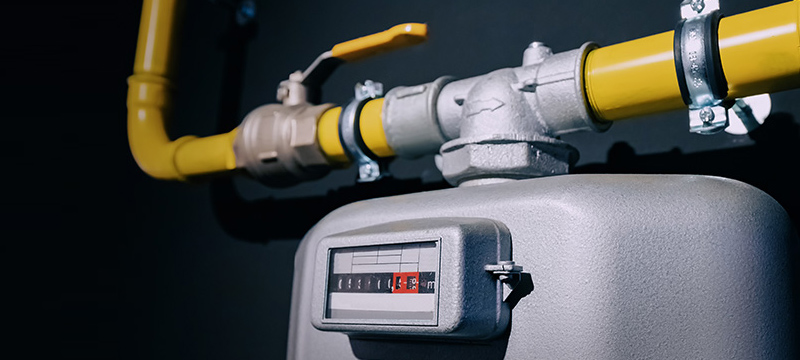
What makes this initiative noteworthy isn’t just that gas meters are being connected—it’s the method being used. Landis+Gyr’s solution involves attaching IoT modules directly onto current gas meters, which enables remote readings and near-instantaneous data access without removing or replacing the original hardware.
This sets the project apart from typical smart metering efforts, which usually center on deploying new meters or overhauling entire advanced metering systems. In this case, the focus is on digitally upgrading meters already in use. For gas networks, this distinction is critical: avoiding physical meter replacements means fewer disruptions for customers, simpler scheduling, and better use of the capital already invested in existing equipment.
The companies have also confirmed that the upgrade process will not interrupt customers’ LPG supply. This is a key operational detail. In utility IoT projects, the technical benefits of connectivity are only part of the picture—the real test often lies in how smoothly field operations, customer coordination, and service continuity are managed during rollout.
The growing importance of the data layer
On the surface, customers will benefit from fewer manual readings and fewer estimated bills. But the bigger shift for IoT is the transition from infrequent, labor-heavy data collection to a fully automated system for tracking gas usage.
For utility providers and energy retailers, remote readings mean faster billing and more precise data. For system integrators, this project underscores the increasing significance of the data management layer in utility IoT. Simply adding modules to meters isn’t enough—the real value comes from how consistently readings are gathered, transmitted, processed, and integrated into operational platforms.
A key takeaway from this approach is that while retrofitting eliminates one set of challenges, it introduces others. It avoids the complexity of replacing entire meter fleets, but it raises the stakes around compatibility with older hardware, installation procedures, network reliability, and long-term maintenance of the added IoT components. These are well-known issues in industrial IoT, but they become especially pronounced when the equipment is spread across thousands of homes and businesses.
Implications for the broader IoT landscape
Australia’s smart utility sector has historically focused more on electricity metering than gas. This project marks a turning point, showing that gas networks are now being integrated into the same digital operations framework—where remote monitoring and real-time data are becoming essential service features rather than nice-to-have upgrades.
For device manufacturers, this reinforces the need for retrofit-friendly products designed to work with legacy infrastructure. For connectivity providers, it highlights utility applications where wide coverage, low power usage, and uninterrupted service matter far more than high data speeds. For businesses and industrial users relying on gas, more accurate and timely meter data can improve consumption tracking and billing accuracy—though the announcement stops short of promising advanced energy management features beyond remote access and data insights.
There’s also a forward-looking opportunity worth noting. Landis+Gyr has indicated that a successful rollout could pave the way for expanding the solution to roughly two million of its gas meters already installed across Australia. While this isn’t a guaranteed next step, it explains why the industry will be watching this project closely: it could serve as a blueprint for digitizing existing gas infrastructure without costly, large-scale replacements.
In essence, this isn’t just a story about a single smart meter—it’s about a scalable deployment model. If the initiative delivers as planned, it will demonstrate how utilities can modernize gas metering by layering IoT connectivity, communication tools, and data management systems onto equipment already in place.
