



**How PPAP Impacts Assembly Line Reliability and Performance**
In assembly manufacturing, consistency is everything. Every station, component, and process must work in harmony to keep the line moving efficiently. Even when operations appear well-tuned, disruptions can emerge unexpectedly—from a source you might not immediately associate with your production floor: the PPAP process.
The Production Part Approval Process (PPAP) is a standardized quality assurance framework widely used in the automotive supply chain. Its purpose is to establish confidence that a supplier’s production processes can consistently deliver parts that meet customer requirements. PPAP is fundamentally designed to reduce risk, ensuring that parts are production-ready before they ever reach your assembly line. However, when misunderstood or mismanaged, PPAP can have the opposite effect, causing delays, increasing costs, and putting overall assembly performance at risk.
—
### **The Smallest Parts Can Stop Your Entire Line**
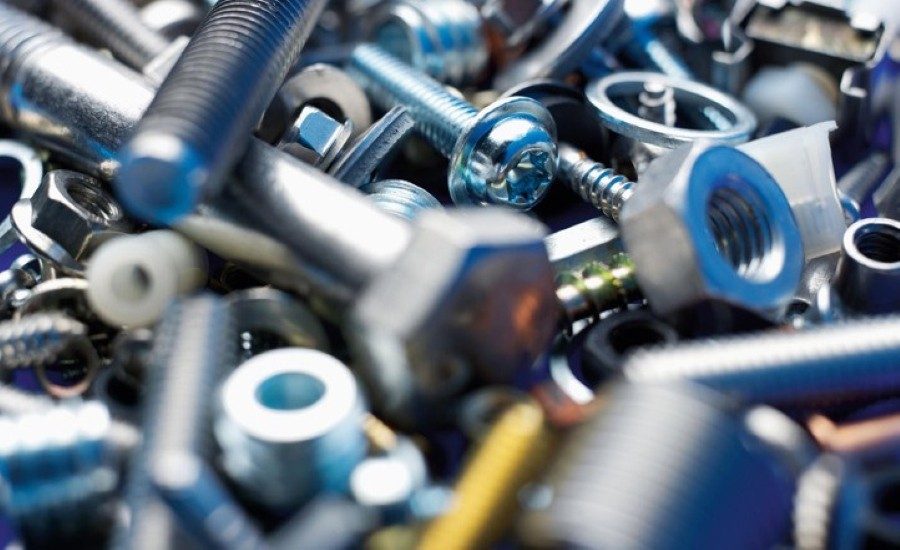
Fasteners and small components may not carry a high individual cost, but they play a critical role in your operation. If even a single part is not approved, available, or performing as expected, your entire line can come to a halt.
This is precisely why PPAP matters more than it might initially appear. It is not merely a quality process; it is a safeguard for your assembly line. When PPAP is disconnected from production realities, the consequences are tangible:
– Parts held up in approval when you’re ready to build
– Documentation issues that force resubmissions
– Last-minute sourcing problems
– Line stoppages because a part is not right
Even short interruptions can quickly cascade into lost hours of production.
—
### **Where Things Start to Break Down**
One of the most common failure points is timing. If PPAP requirements are not defined early—before quoting or supplier selection—you set the stage for downstream issues. These may include:
– Inaccurate quotes that don’t factor in production validation
– Unexpectedly long lead times
– Suppliers scrambling to meet production conditions
A related challenge arises when prototype and production requirements are misaligned. Prototype phases prioritize speed and flexibility, often using temporary tooling or limited runs. Introducing full production-level PPAP requirements too early—or discovering them too late—creates confusion and rework.
It’s important to recognize that not all PPAP levels require parts to be produced from scratch. Level 3, however, includes a process flow diagram that maps the entire manufacturing flow, ensuring a part can be produced repeatedly with consistent quality. For this reason, level 3 typically requires running the part under full production conditions, which extends lead times and increases minimum order quantities (MOQs).
Many buyers pass along requirements from their engineering or quality teams without fully understanding these implications. For prototype or low-volume phases, a simple certificate of conformance (CoC) and material certifications are often sufficient—and can save significant time and money.
What many buyers don’t realize is that prototype parts validate form, fit, and function, while production parts must meet a higher standard of quality. Requirements such as a level 3 PPAP ensure repeatability, traceability, and process control. When these expectations aren’t communicated upfront, suppliers may need to re-run parts, complete additional validation, or generate qualification samples from scratch—resulting in added cost, extended lead times, and operational delays.
The key is aligning expectations to each phase of your program. During prototype builds, the focus should be on fit and function with appropriate interim validation. As you move into production, that shifts to a full PPAP completed under true production conditions. When that distinction is clear from the start, teams avoid late-stage surprises—and the delays and rework that come with them.
—
### **When PPAP Becomes “Just Paperwork”**
Another common pitfall is treating PPAP as a documentation exercise alone. It’s easy to assume that once the paperwork is complete, the process is done. But what really matters is what that paperwork represents.
When PPAP is done correctly, it is validation, not just documentation. It confirms that parts will be dimensionally consistent, that materials and performance requirements are met, and that the process itself is stable and repeatable. Without that foundation, the risk doesn’t show up on paper—it shows up on your line.
That’s when you start seeing fit issues, variability, or defects that disrupt your flow and force reactive problem-solving. For PPAP to protect your assembly operation, it must reflect reality. That means using the same tooling that will be used long-term, the same fully traceable materials, and the same processes running under normal production conditions.
If you’re getting PPAP data from prototypes or early-stage runs, you’re not seeing the full picture. And when production ramps up, that’s when problems will surface—often right when your line needs to be the most stable.
—
### **Why Lead Times and MOQs Increase**
From your perspective, it can be frustrating when parts suddenly come with longer lead times or higher minimums than expected. But those constraints are often driven by PPAP, not inefficiency.
This issue is especially common among buyers who are newer to C-parts or fastener sourcing. While a fastener may seem simple, the manufacturing, validation, and documentation required to support a PPAP level 3 approval can be substantial. One buyer was surprised to learn that a PPAP level 3 fastener could take up to six months to procure and manufacture—roughly the time needed to produce a quarter panel.
My response was straightforward: How many companies request quarter panels vs. how many require fasteners to secure their assemblies? The high global demand for fasteners, combined with a relatively small number of manufacturers, means significant waiting times. Additionally, buyers are often surprised by MOQs when requesting PPAP—especially level 3—at prototype volumes.
Even for small orders, fastener manufacturers must set up their machines, a process that can take one to three days depending on complexity. After investing that time and effort, they run the machines as efficiently as possible. For fasteners, this typically means running an entire wire coil, usually weighing around 2,000 pounds.
The result? Even if you only need 100 pieces, you may end up with an MOQ of a couple hundred thousand pieces, depending on the size and length of the fastener.
This is because, to get a part approved, your supplier must:
– Run production equipment
– Source material in real production quantities
– Perform inspections, testing, and capability studies
– Build out the full documentation package
Even if you only need a small quantity, the effort required to validate the process doesn’t shrink. Once you understand this, it becomes easier to adjust your timeline and avoid surprises that impact your production schedule.
—
### **What You Can Do to Keep Things Moving**
You don’t need to overhaul your PPAP process to see better results—but a few targeted changes can make a significant difference in protecting your line.
First, set expectations early. Make sure PPAP requirements are clear before anything is quoted or sourced. That gives everyone a realistic starting point.
Next, match PPAP to your build phase. Don’t push for full production-level PPAP too early. Use interim validation during prototype stages and save full PPAP for production readiness.
Third, plan for production reality. Ensure tooling, materials, and timelines reflect what actual production will look like—not just ideal scenarios.
Finally, lean on the right partners. Suppliers who understand fasteners and assembly environments can help you avoid common pitfalls and keep everything aligned.
PPAP might happen upstream, but its value shows up on the assembly floor. When it’s done right, you get parts that arrive ready to go, perform consistently, and support smooth operations.
That foundation helps you reduce variability, avoid unnecessary disruptions, and keep production moving as planned. Getting PPAP right isn’t just about meeting requirements—it’s about creating a clear path from prototype to production, ensuring your line has the parts it needs to stay on track, build after build.
For more information, visit www.bossard.com.
*For more information on fasteners and quality, read these articles:*
– *Fastening Failures: The Top 5 Mistakes and How To Avoid Them*
– *Bossard Bolt Enhances Bike Durability, Rider Safety*
– *Choosing Fastener Finishes*
—
### **FAQ**
**What is PPAP, and why is it important in assembly manufacturing?**
PPAP (Production Part Approval Process) is a standardized quality assurance process used to ensure that a supplier’s production processes can consistently produce parts that meet customer requirements. It is important because it reduces risk, validates production readiness, and helps prevent disruptions on the assembly line.
**What are the different levels of PPAP?**
PPAP has five standard levels:
– Level 1: Part Submission Warrant (PSW) only
– Level 2: PSW with product samples and limited supporting data
– Level 3: PSW with product samples and complete supporting data
– Level 4: PSW with custom customer requirements
– Level 5: PSW, product samples, complete supporting data, and on-site audit files
**Why is timing important in PPAP?**
Timing is critical because PPAP requirements must be defined early—before quoting or supplier selection. If introduced too late, it can lead to delays, resubmissions, and production hold-ups, especially if prototype practices are mistakenly applied to production requirements.
**Can all PPAP levels require parts to be manufactured from scratch?**
No. Not all PPAP levels require new production runs. Level 3 typically requires production-level validation and a process flow diagram, which often involves running parts under full production conditions. Lower levels may rely on prototypes or existing data.
**What happens if PPAP is treated as only a paperwork exercise?**
If PPAP is seen only as documentation, the underlying validation is lost. This can lead to fit issues, variability, defects, and disruptions on the assembly line when parts don’t perform as expected under real production conditions.
**Why do lead times and MOQs increase for PPAP-approved parts?**
Lead times and MOQs increase because PPAP validation requires setting up production equipment, sourcing materials in volume, performing inspections and testing, and completing extensive documentation. These steps take time and involve running the full production process, which often results in longer waits and larger minimum orders.
**How can buyers avoid PPAP-related delays?**
Buyers can avoid delays by:
– Defining PPAP requirements early in the quoting process
– Matching PPAP levels to the appropriate build phase
– Planning for real production conditions
– Partnering with suppliers who understand assembly and fastener requirements
—
### **Conclusion**
PPAP is more than a compliance checkbox—it is a critical process that directly impacts assembly line reliability, part availability, and overall production efficiency. When managed correctly and aligned with production realities, PPAP ensures that parts are not only approved but truly ready for the line. However, when misunderstood or misapplied, it becomes a source of delays, rework, and operational friction.
The key is to treat PPAP as a validation tool, not just a documentation task. By setting clear expectations early, aligning requirements with the appropriate development phase, and planning for production-scale validation, manufacturers can avoid common pitfalls and keep their lines running smoothly.
Ultimately, getting PPAP right creates a seamless bridge from prototype to production—one that supports consistent quality, predictable timelines, and uninterrupted assembly operations.
