



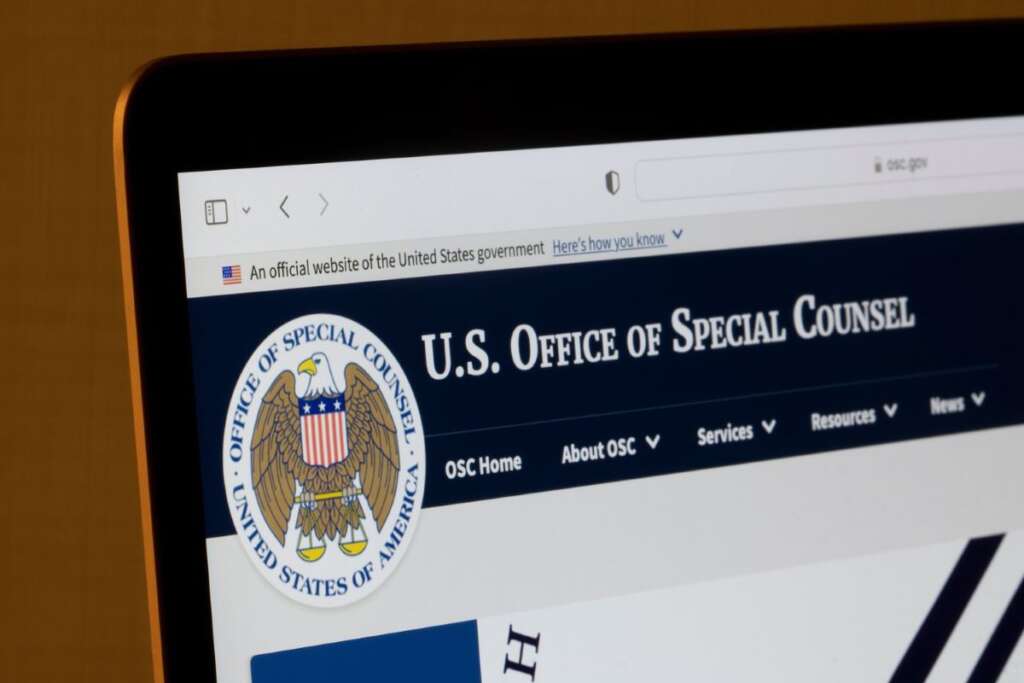
# Federal Watchdog Declines to Punish Agencies Over Partisan Shutdown Messaging on Government Websites
A federal oversight body has concluded that no disciplinary action is necessary against employees at multiple agencies and the White House who published politically charged messages on official websites during the autumn government shutdown that stretched for over six weeks last year.
The office responsible for policing the Hatch Act — a statute originally enacted in 1939 that governs the political activities of federal workers — determined that while some of the published content crossed into partisan territory, pursuing full investigations would consume resources that the office cannot currently spare.
## How It All Started
During the lengthy budget impasse, workers across 37 different federal agencies, along with staff at the White House, used taxpayer-funded digital platforms to assign blame for the funding lapse. The posts frequently targeted one political party, using sharp language that drew widespread public attention.
After the shutdown ended, the oversight body received well over 1,000 formal complaints from individuals alleging that these messages constituted illegal use of government resources for political ends.
## The 2024 Guidance at the Center of the Controversy
Most of the agencies involved pointed to a guidance document issued by the office back in September 2024 to defend their actions. That document suggested that when employees discuss government policy or pending legislation, mentioning a political party alone is generally not treated as prohibited political activity.
The watchdog now acknowledges that this guidance was open to interpretation. Because its own compliance staff was on furlough during the shutdown period, agencies had no way to seek real-time clarification, and the document’s vague wording understandably led them to believe their posts were within bounds.
## What Messages Were Deemed Acceptable
Not all content was treated equally. The office pointed to one routine communication sent by budget officials to federal employees just before the shutdown began. This message, delivered in a neutral tone through internal channels, informed workers about a potential furlough and attributed the funding gap to legislative obstruction in the upper chamber of Congress.
Because it was not released to the general public and served a direct operational purpose, the office considered it permissible under existing rules.
## Where the Line May Have Been Crossed
On the other hand, the office flagged certain website posts that it described as unusually combative. One example, which appeared on the website of an agricultural agency, accused lawmakers of holding public services hostage in exchange for unrelated policy demands, using emotionally charged and divisive terminology.
Similarly, a White House-operated site was also cited as hosting content that could reasonably be interpreted as going beyond legitimate policy discussion into territory the Hatch Act was designed to restrict.
## Why No Formal Investigation Followed
Despite identifying these potentially problematic messages, the office stated that it elected not to pursue individual cases or impose sanctions. The reasoning centers on two key points: first, the reliance by agencies on prior guidance, and second, the practical reality that dedicating investigative resources to fact-finding around each communication would not likely produce a different outcome.
The office emphasized that while some of the messaging “might” have violated the law, the decision to refrain from action was driven by a need to manage its workload effectively.
## Broader Context
The agency responsible for these findings operates independently and handles a wide range of duties, including protecting federal employees from unfair workplace practices and ensuring secure avenues for whistleblower disclosures. It has faced challenges in recent years as political pressures on the federal workforce have intensified and staffing levels have shifted.
The office’s leader recently noted that artificial intelligence tools are being integrated into case management systems to help process the growing volume of complaints more efficiently, marking a significant shift in how the organization manages its workload.
—
## Frequently Asked Questions
**What is the Hatch Act?**
The Hatch Act is a federal law passed in 1939 that limits the political activities of government employees. Its primary goal is to ensure that public administration is carried out free from partisan political influence and that federal workers cannot use their official authority or resources to interfere with elections.
**Why did so many agencies post partisan messages?**
During a prolonged government shutdown, multiple agencies took to their official websites to assign blame for the funding lapse. They relied on a 2024 advisory from the enforcement office that suggested mentioning a political party while discussing policy topics is generally not prohibited, which led them to believe their posts were permissible.
**Did the enforcement office find clear violations?**
The office stated that some of the messaging was inflammatory enough to potentially constitute violations, but it stopped short of making formal determinations. It declined to investigate further, citing the reasonable reliance of agencies on prior guidance and the constraints on its available resources.
**Were any agencies singled out for non-cooperation?**
Yes. Several agencies, including departments related to housing, defense, general services, education, and homeland security, did not respond to the office’s initial request for information about their communications during the shutdown period.
**What happens next?**
At this time, no further action has been announced. The office has closed its assessment without recommending punishments or issuing new rules, though the ambiguity of the 2024 guidance could lead to future clarifications or revised recommendations.
—
## Conclusion
The decision by the federal watchdog not to pursue disciplinary action marks a significant moment in the ongoing conversation about the boundaries of political speech within government agencies. While the content in question was undeniably charged and at times sharply partisan, the office’s choice to prioritize resource management over formal enforcement raises important questions about accountability and clarity in federal communications guidance. As government operations continue to evolve — including the growing role of technology in case management — both employees and agencies will need clear, accessible rules to navigate the complex line between policy discussion and prohibited political activity. The outcome of this assessment may prompt calls for updated guidance to prevent similar disputes in future government shutdowns or politically charged periods.
Thank you for reading
