



# This Week in Cloud Innovation: New Models, Smarter Observability, and Developer Tools Evolving Fast
The cloud landscape continues to shift at a remarkable pace. Over the past several days, major platform providers have rolled out a wave of updates that signal a broader industry trend: the move toward right-sizing intelligence for specific workloads. The era of one-size-fits-all models is fading, and what’s emerging is a more thoughtful approach to matching computational power with practical need.
## New Model Families Arrive on Major AI Platforms
Several high-profile model releases have reshaped the conversation around efficiency and capability. A pair of new offerings from a leading AI research organization introduces two distinct pathways on the intelligence-versus-cost spectrum. One variant is designed for heavy, recurring development and operational workloads, while the other excels at high-volume, repetitive tasks — all at noticeably reduced pricing compared to previous generations.
Meanwhile, a prominent competitor in the conversational AI space launched its latest flagship model, which achieves stronger outputs while consuming fewer tokens. This model is particularly tuned for autonomous coding workflows and extended, multi-step operations — a sign that the industry is increasingly focused on agentic capabilities and sustained task execution.
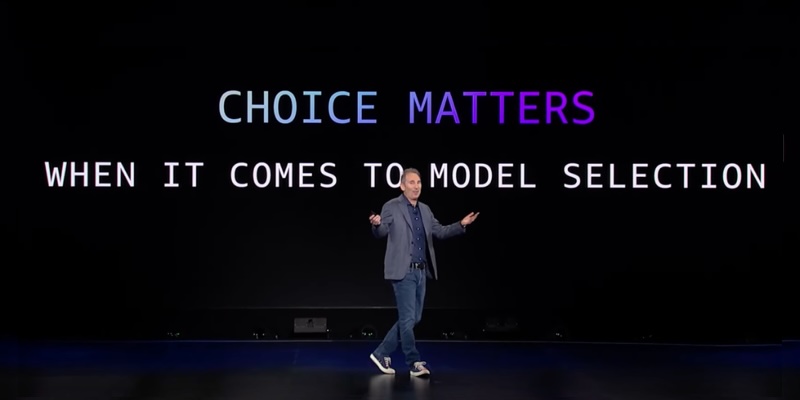
The common thread across all three releases is a philosophy of pragmatism: selecting the appropriate model for a given task rather than defaulting to the largest option available. This approach can significantly reduce both cost and latency without sacrificing quality.
## Observability Takes Center Stage in the Agentic Era
As AI agents become more autonomous, the need for robust observability has never been greater. A major cloud operations platform introduced a unified experience that bridges traditional application monitoring with AI agent supervision. Built on open telemetry standards, the platform allows teams to observe services and intelligent agents in a single, collaborative interface.
Key highlights include automatic service discovery, dependency mapping, and integration with a cloud-native DevOps assistant that can correlate signals and trace root causes during investigations. The platform supports enterprise single sign-on and eliminates the need for console-level access, making it accessible to entire teams through a shared URL.
This development reflects a growing recognition that in agent-driven architectures, correctness and reliability must be measured at the level of individual runs, not just individual services.
## Event-Driven Architecture Gets a Scalability Boost
An event routing service has received significant upgrades designed for organizations that operate event-driven systems across multiple teams and accounts. The enhanced offering introduces a centralized event bus that can be shared across an entire organization through a resource sharing mechanism.
New capabilities include event ordering, simplified subscription management that bundles filtering, target routing, and retry logic into a single construct, and content-based deduplication. Synchronous invocation targets, including serverless compute functions, are now supported natively.
Perhaps most notably, a restructured pricing model replaces the previous compounding cross-account routing charges, making large-scale multi-bus architectures significantly more cost-effective. Legacy event buses continue to function under their existing configuration.
## Inference Optimization on GPU-Accelerated Clusters
A Kubernetes-native inference gateway for GPU-accelerated machine learning clusters has been released, enabling developers to front large language model inference workloads without modifying existing applications. The gateway leverages real-time signals — such as key-value cache utilization, queue depth, prefix cache hit rates, and predicted latency — to make intelligent routing decisions.
In benchmark scenarios involving mixed hardware configurations and bursty traffic patterns, the system has demonstrated reductions in first-token latency of up to 82 percent. The gateway is compatible with any model server that adheres to open standards, including popular inference engines like vLLM and SGLang.
## AI-Powered Messaging Workflows
Two messaging services have introduced AI agent skills that allow developers to compose and send messages using natural language instructions. These skills are accessible through the cloud platform’s model context protocol server and provide step-by-step guidance for tasks such as verifying sender identities, deploying production email campaigns, and building rich messaging experiences with interactive cards and buttons.
The skills integrate with a range of AI coding assistants, enabling developers to complete messaging workflows without toggling between documentation and console interfaces. This lowers the barrier to building sophisticated, branded communication experiences programmatically.
## A New General-Purpose Agent Framework
An open-source agent harness has been released that can be run locally or deployed to virtually any environment. The framework, licensed under a permissive open-source license, requires only a single line of code in Python or TypeScript to connect to a model of choice across multiple major providers, as well as local inference engines.
It ships with intelligent defaults for prompt caching and context window management, including automatic truncation of verbose tool outputs, context compaction when limits are approached, and persistent memory across execution sessions. Early benchmarks suggest it delivers comparable accuracy to alternative frameworks while reducing computational costs by roughly a quarter.
## The AI Adoption Report: What Separates Success from Stagnation
A new research report from a major cloud provider’s executive team compiles insights from over 150 leaders across 25 countries who were interviewed over a nine-month period. The study examines what distinguishes organizations that successfully convert AI investment into measurable business value from those that struggle.
The report is notably candid, acknowledging instances where AI initiatives have fallen short even within the provider’s own operations. Its central finding is that the bottleneck rarely lies in technical capability. Once organizations build quickly and iterate rapidly, the challenge shifts to decision-making, funding allocation, and governance — areas that require as much strategic attention as the technology itself.
## Upcoming Industry Gatherings
A major annual cloud conference is returning to Las Vegas later this year, spanning several days in late November through early December. Registration for reserved seating sessions opens in the coming weeks, and attendees can look forward to technical deep dives, hands-on workshops, and collaborative builder sessions.
Regional summit events are winding down for the year, with the final stop scheduled for a major international business hub in late September, featuring dozens of sessions, an innovation village, and interactive workshops.
—
## Frequently Asked Questions
**Q: Why are multiple model versions being released with different performance profiles?**
A: The industry is shifting toward task-specific optimization. Different workloads have different requirements for speed, cost, and accuracy. By offering multiple variants, providers allow teams to choose the model that best aligns with their specific use case, avoiding unnecessary overhead.
**Q: What does “agentic” mean in the context of AI models?**
A: Agentic refers to AI systems that can autonomously plan, execute, and iterate on multi-step tasks with minimal human intervention. These models are designed to sustain long-running operations, make decisions at each step, and recover from errors without constant oversight.
**Q: How does the new observability platform handle AI-specific monitoring?**
A: The platform integrates traditional telemetry — such as logs, metrics, and traces — with agent-specific signals, enabling teams to track the full lifecycle of AI-driven processes alongside their applications. It correlates data across services to help identify root causes of failures in complex, agent-mediated workflows.
**Q: Is the open-source agent harness production-ready?**
A: Yes. The harness is designed for production use and has been built with sensible defaults for real-world scenarios like context management and memory persistence. Its permissive licensing and lightweight architecture make it suitable for both experimentation and scaled deployment.
**Q: Why should organizations care about centralized event buses?**
A: Centralized event buses simplify governance, reduce operational complexity, and eliminate redundant costs in organizations running event-driven architectures across multiple teams or accounts. They also introduce features like deduplication and ordering that are critical for data integrity at scale.
**Q: What is the main takeaway from the AI adoption research report?**
A: The biggest obstacles to AI value are rarely technical. Building capability is fast; the harder challenges lie in deciding what to build, securing funding, and establishing governance frameworks that keep projects aligned with business goals.
—
## Conclusion
The pace of innovation across cloud platforms and AI infrastructure remains extraordinary. From specialized model releases that challenge the assumption that bigger is always better, to observability tools that keep pace with increasingly autonomous systems, these developments share a common goal: making advanced technology more practical, accessible, and efficient for real-world use cases.
For developers and engineering leaders, the message is clear — the most impactful decisions will come from understanding your specific workload requirements and choosing tools that align with them, rather than defaulting to the most powerful option available. The era of thoughtful, targeted AI deployment is well underway.
Thank you for reading
