



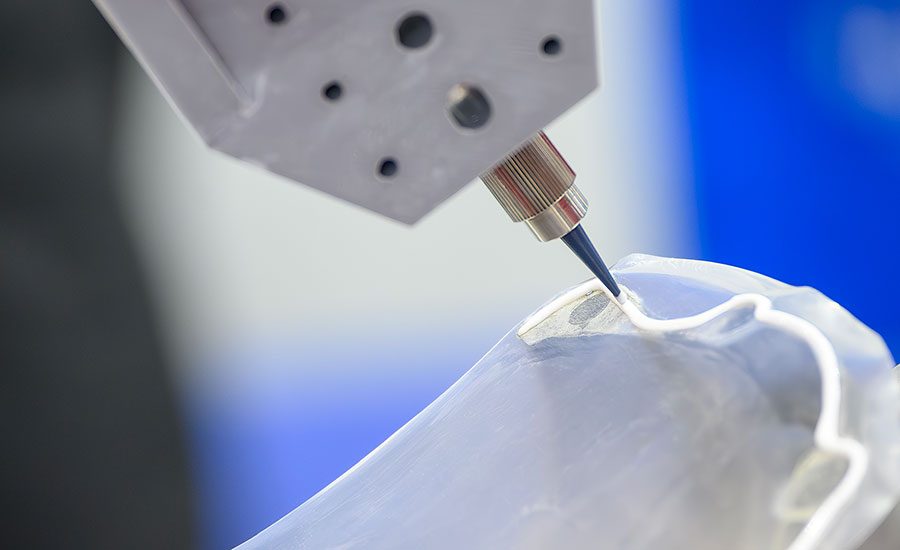
Trimethylbenzoyl diphenylphosphine oxide, commonly known as TPO, is a photoinitiator widely used in UV-curable adhesives, nail polish, inks, and coatings. When exposed to UV light, TPO absorbs the energy and generates free radicals that kickstart the polymerization process, causing the material to harden.
In May 2025, the European Union officially banned TPO in cosmetic products, with the restriction taking effect on September 1, 2025. The EU classified TPO as a Class 1B reproductive toxicant, based on animal studies in which male rats experienced testicular shrinkage at high doses. The EU follows a precautionary principle, meaning it prohibits any chemical that shows potential reproductive toxicity, even if the actual risk to humans has not been confirmed.
While TPO has not been banned in the United States, adhesive manufacturers have already started rolling out updated product lines that eliminate the chemical entirely. Learn more about these new formulations—and other developments—in this article.
Image courtesy of Hoenle AG
Medical Device Adhesives Now REACH Compliant and Free of CMR Substances
Hoenle has launched a new range of advanced UV-cure adhesives designed specifically for medical device assembly that meet current REACH regulations. These adhesives are certified to be completely free of TPO and contain no substances classified as carcinogenic, mutagenic, or toxic to reproduction (CMR).
They are well-suited for assembling cannulas, breathing circuits, catheters, reservoirs, heat exchangers, blood collection sets, and diagnostic devices. The new adhesive line has passed the biocompatibility testing protocols outlined in ISO 10993.
Additionally, these adhesives are formulated without isobornyl acrylate (IBOA), an adhesion-promoting monomer that has been associated with skin irritation in some individuals.
Lab tests have shown that most of the newly developed adhesives match or exceed the bond strength and durability of the original TPO- and IBOA-containing formulations. For instance, Hoenle’s new Vitralit E-7041 T adhesive—designed for needle bonding—contains neither TPO nor IBOA. In testing, it delivered double the bond strength in polypropylene-to-stainless-steel assemblies and 9% greater bond strength in polycarbonate-to-polycarbonate assemblies compared to the original formula.
Looking for quick answers on assembly and manufacturing topics?
Try Ask ASM, our new smart AI search tool.
Ask ASM
In a similar comparison, Hoenle’s new Vitralit E-4050 adhesive for glass syringe bonding achieved a 320% increase in bond strength over the original formula when joining glass to stainless steel.
Visit Hoenle at The Assembly Show, October 27–29, at the Donald E. Stephens Convention Center in Rosemont, IL.
Hoenle AG
www.hoenle.com
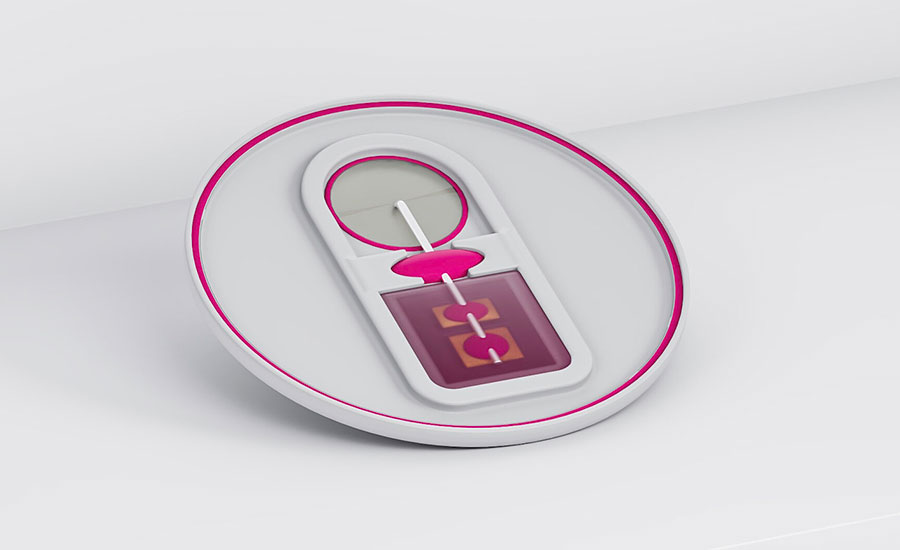
Image courtesy of DELO Industrial Adhesives
New UV-Cure Adhesives Free of IBOA and TPO
DELO Industrial Adhesives has released five new UV-cure adhesives that are completely free of both IBOA and TPO.
The flagship product is Photobond MG4202, engineered for structural bonding applications such as assembling housings for wearable medical devices. This solvent-free adhesive cures in just 1 second under UV light at a wavelength of 400 nanometers and an intensity of 1,000 milliwatts per square centimeter. It is colorless and performs reliably across a temperature range of -40 to 125°C.
Photobond MG4191 is a versatile, multi-purpose adhesive that is entirely free of skin-sensitizing substances. This lower-viscosity version offers excellent water resistance and anti-flow properties, making it ideal for a wide range of medical device uses.
Photobond MG4094 fluoresces under UV light, enabling easy visual inspection during production. Photobond MG4186 provides outstanding peel resistance and long-term reliability. Photobond MG4164 combines blue fluorescence with sealing functionality for gasketing applications.
All five products meet strict medical industry standards, including biocompatibility testing per ISO 10993-5 for cytotoxicity. They comply with RoHS Directive 2015/863/EU and are available in convenient 30 cc cartridges.
DELO Industrial Adhesives
www.delo-adhesives.com
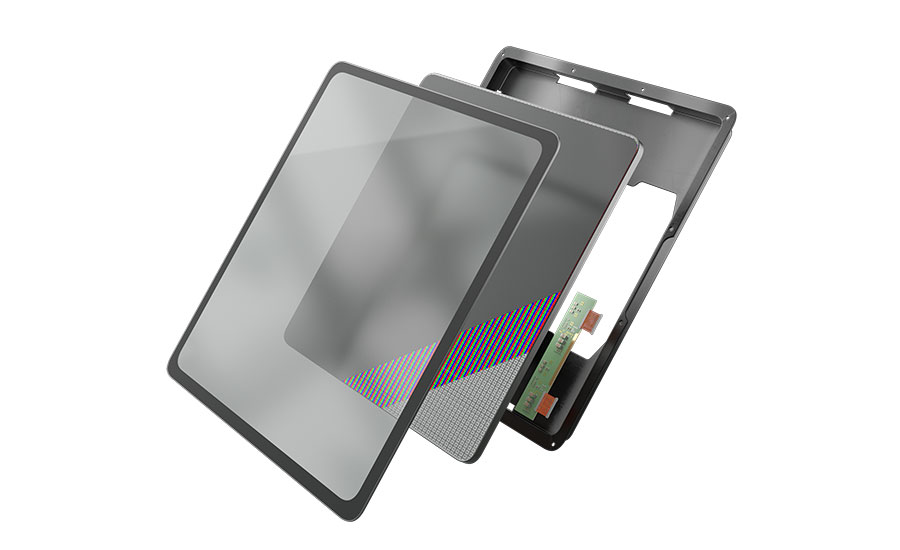
Image courtesy of Henkel Corp.
Flexible Adhesive Designed for Automotive Display Assembly
Loctite MS 9650 is a flexible, durable, and fast-curing adhesive and sealant developed for assembling automotive displays.
Built on a silane-modified polymer chemistry, it cures by reacting with ambient moisture, forming a soft, elastic bond that withstands vibration and delivers strong elastic adhesion. It bonds effectively to a variety of substrates—including glass, metal, painted surfaces, and plastics—and offers good UV resistance. The material exhibits creep behavior similar to silicone-based adhesives but outperforms other silane-modified polymer grades.
By raising temperature and humidity levels, curing time can be significantly shortened. This opens up applications where one-component adhesives were previously ruled out due to long processing times. Curing speed depends on factors such as moisture levels, temperature, and joint depth. The process can be further accelerated using Teroson MS 9371B.
The silicone-free formulation supports low-VOC production, improving workplace safety for operators. It also contains zero isocyanates and PVC, helping to reduce environmental impact and waste.
Henkel Corp.
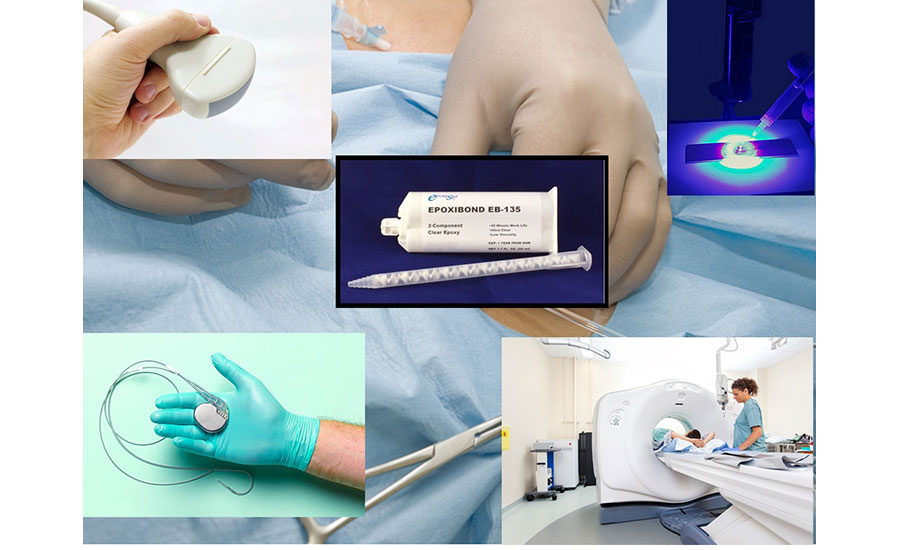
Image courtesy of EpoxySet Inc.
Epoxies and Urethanes Are Biocompatible
EpoxySet Inc. has launched a comprehensive range of epoxies and urethanes that have earned ISO-10993-5 biocompatibility approval. These adhesives, sealants, encapsulants, and coating products are widely utilized in the production of medical devices. Typical uses involve sensors, printed circuit boards, instruments, hearing aids, ultrasound probes, pacemakers, MRI machines, endoscopes, and catheters. A number of these adhesives are designed to endure sterilization methods such as autoclaving, gamma radiation, and ethylene oxide exposure.
The product range features materials capable of withstanding temperatures up to 300 °C (572 °F) and as low as 4 K (−269 °C or −452 °F). A large portion of these materials are optically transparent or possess electrical or thermal conductivity. Some grades are developed for structural bonding tasks. Certain formulations cure at ambient temperature, while others require heat or ultraviolet light to initiate the curing reaction.
EpoxySet Inc.
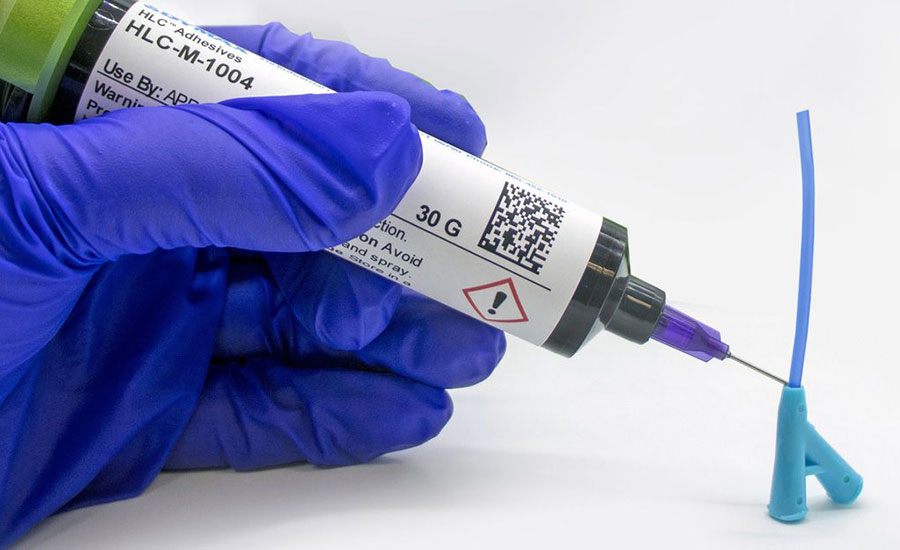
Image courtesy of Henkel Corp.
Low-Viscosity Adhesive for Medical Device Assembly
HLC-M-1004 is a low-viscosity, light-curing adhesive developed for assembling intricate medical devices. Its hybrid chemistry allows the adhesive to cure in areas exposed to light as well as in shadowed sections. The substance cures immediately upon contact in darkened zones, and it polymerizes quickly when subjected to low-intensity UV or visible light.
This adhesive is an excellent choice for catheter assemblies, diagnostic and therapeutic devices, and components constructed with opaque or light-blocking substrates. Its thin flow characteristics enable precise dispensing and allow it to penetrate narrow bond gaps, promoting uniform bonding performance without additional priming agents.
Further advantages include reduced blooming when properly light-cured, enhanced flexibility once set, and superior appearance. The adhesive reaches holding strength rapidly, making it ideal for high-volume production workflows.
HLC-M-1004 complies with ISO 10993 biocompatibility requirements and is free of nonreactive solvents.
Dymax Corp.
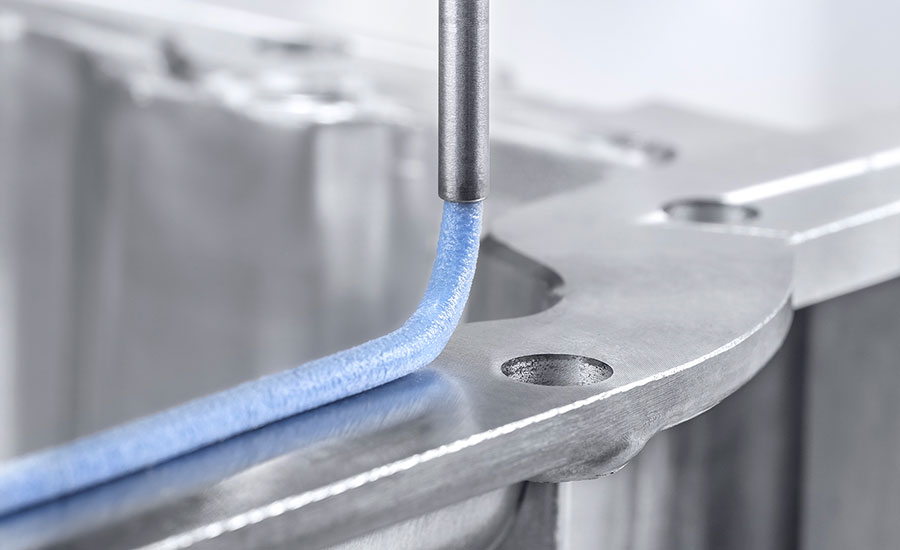
Image courtesy of Wevo-Chemie GmbH
Silicone Seals High-Voltage Battery Housings
Wevosil 23130 is a silicone sealant designed for producing formed-in-place gaskets on electric vehicle battery housings.
The sealant maintains housing airtightness by creating a dependable barrier against gases and smoke that may be emitted during battery thermal runaway events. Simultaneously, it exhibits outstanding resistance to both mechanical and thermal stresses. It also effectively blocks moisture ingress into the housing.
After curing, the material achieves a tensile strength exceeding 2 megapascals (290 psi). It withstands exposure to high-temperature, corrosive gases. The seal remains intact even when internal gas pressure rises substantially.
The formulation is optimized for automated production lines. The particle-free silicone displays favorable rheological behavior, enabling accurate dispensing via conventional mixing and dosing systems—even on intricate three-dimensional surfaces. At ambient temperature, its usable life exceeds 24 hours. Following application, targeted infrared heating to 140 °C (284 °F) will complete the cure in under five minutes.
Wevo-Chemie GmbH
www.wevo-chemie.de
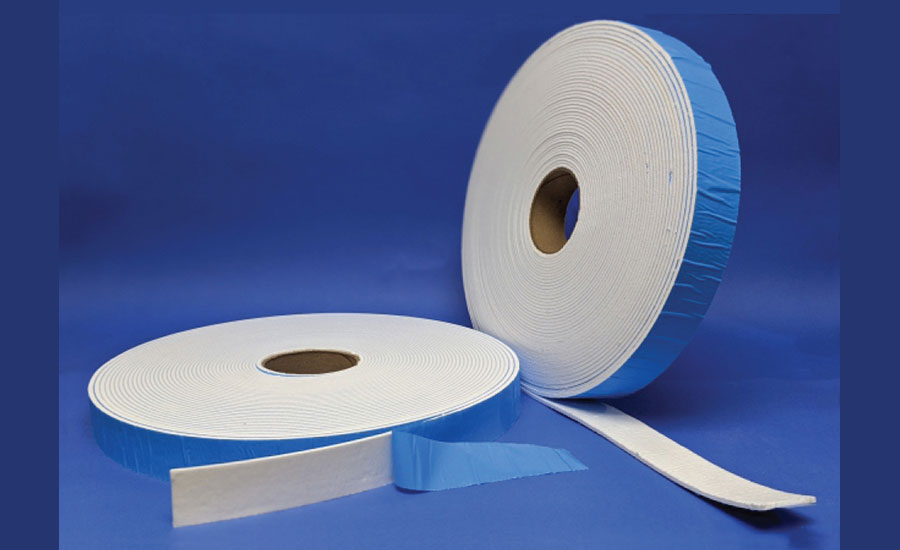
Image courtesy of Cotronics Corp.
Ceramic Tape Provides Thermal Insulation
Ultra-Temp 390PS ceramic tape wraps around pipes and equipment to deliver thermal and electrical insulation at continuous service temperatures up to 2,300 °F (1,260 °C). It adheres well to metals, ceramics, and glass substrates.
The tape comes in four widths—1, 1.5, 2, and 3 inches—and two thicknesses—1/8 inch (3 mm) and 1/4 inch (6 mm). It is manufactured from asbestos-free, aluminum oxide-based refractory fiber. These tapes exhibit low heat capacity and minimal thermal conductivity. They resist thermal shock and provide electrical insulation, strong dielectric properties, and excellent corrosion resistance.
Typical uses encompass high-temperature insulation, furnace linings, mufflers, gas turbines, fans, ovens, chemical reactors, expansion joint packing, filtration at elevated temperatures, fire protection, noise dampening, and stress-relief insulation.
Cotronics Corp.
www.cotronics.com
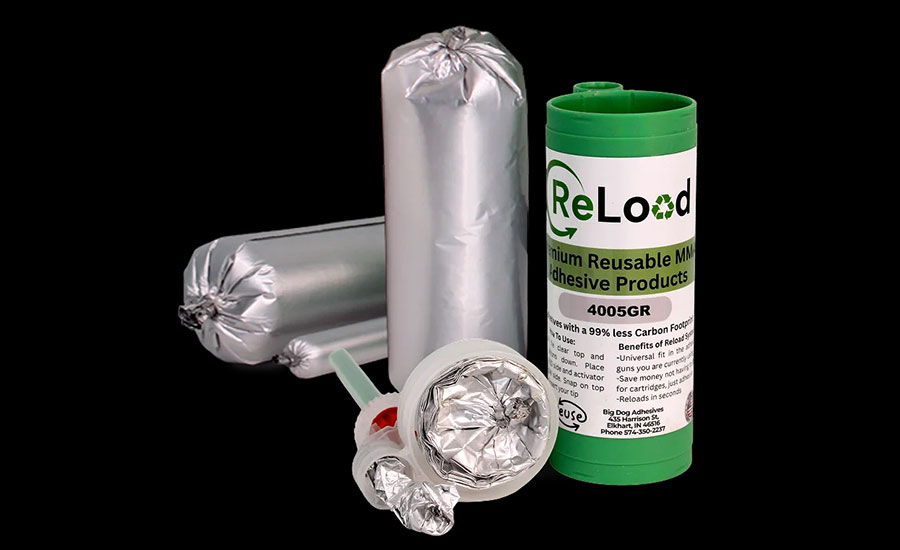
Image courtesy of Big Dog Adhesives
Reusable Dispensing System Reduces Waste
Reload is a reusable adhesive dispensing platform engineered to deliver two-component structural adhesives with reliability while minimizing packaging waste. When compared to traditional cartridge-based dispensing setups, Reload offers more accurate metering, reduced exposure to air and humidity, and decreased material loss. When paired with foil-based packaging, this system can cut single-use cartridge waste by as much as 99 percent.
The system precisely delivers two-part adhesives at mix ratios of 1-to-1 or 10-to-1. The supple foil packaging reduces entrapped air and limits leftover material remaining after dispensing. By shielding adhesive ingredients from oxygen and moisture, the system preserves material quality during storage and throughout operation.
The platform is designed to be compatible with standard manual and pneumatic dispensing tools. No specialized dispensing guns or proprietary static mixer tips are necessary.
Big Dog Adhesives
